Why Your Wedding Dress Alteration Timeline Should Actually Shape Your Workout Plan

Quick Answer: Finish the bulk of any body-change work before the second, more precise fitting — typically 6–8 weeks out — then switch to maintenance. The final alteration usually locks in 2–3 weeks before the wedding, and fabric can only be taken in or let out so many times before it shows.
Most brides build a fitness plan and an alterations schedule as two entirely separate projects. They meet for the first time at the final fitting, and the meeting does not always go well.
The tailor pins. Something sits differently across the back than it did six weeks ago. Nobody did anything wrong — the two calendars were just never introduced.
Why do training and alterations collide by default?
The last alteration appointment is typically locked in two to three weeks before the wedding. Many bridal countdown plans, meanwhile, are still actively changing the body right up to the final week.
Upper-body work is the usual culprit. Noticeable changes in shoulder, back, or arm tone from a bridal arms program shift exactly the measurements a fitted bodice depends on.
There’s also ordinary fluctuation. Water retention in the final week — travel, salt, sleep, cycle timing — moves the fit of an already-altered dress without any change in body composition at all.
And the practical limit: fabric and seams can only be let out or taken in so many times before the wear becomes visible. Bridal salons also book final fittings months in advance, so a missed window is not easily rescheduled close to the day.
How do alteration deadlines constrain a fitness plan?
- Front-load the change. The bulk of any intended toning should complete before the second, more precise fitting — not continue past it.
- Switch to maintenance afterward. Once the final fitting has happened, the goal changes from active change to protecting the fit that’s been locked in.
- Ask about the buffer. Experienced bridal tailors often build a small intentional allowance into the final fit anticipating minor fluctuation. Ask directly rather than assuming.
- Don’t start something new late. Beginning an intense new strength program close to the final fitting is riskier than the program’s intensity by itself.
- Tell the tailor the plan. A tailor who knows you’re eight weeks into a strength program can schedule around it far better than one who’s guessing.
5 Mistakes Everyone Makes
1. Scheduling the first fitting mid-transformation. The tailor ends up measuring a moving target. Establish a few weeks of stable routine first so they’re working from a settled body.
2. Peaking after the final fitting. All the training discipline in the world doesn’t help if the dress was fitted to a body from three weeks ago. Timing beats effort here.
3. Assuming the tailor built in room. Some do, some don’t, and the amount varies. It’s a thirty-second question that prevents a genuinely stressful final week.
4. Starting a brand-new program six weeks out. The third mistake surprises most brides — it’s not the intensity that causes problems, it’s the novelty. New stimulus produces the fastest visible change, right when you want the least.
5. Treating wedding week as a last chance. Aggressive changes, new foods, or a crash approach in the final seven days move the numbers that matter least and the fit that matters most.
What’s the right order of operations?
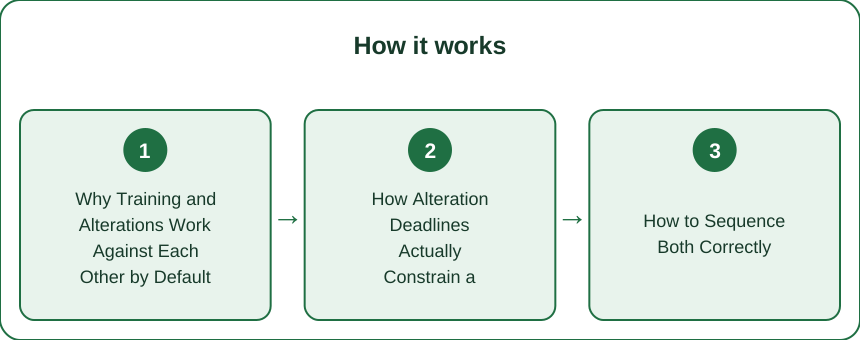
Weeks 12–16 out: start the fitness plan and let it stabilize before the first fitting, so the tailor is measuring a reasonably settled body rather than a rapidly changing one.
Weeks 6–8 out: time the second, more precise fitting to land close to when active toning work is meant to wrap up — not in the middle of a program.
Weeks 2–3 out: final fitting. From here forward, shift to a maintenance routine in the spirit of a pre-wedding destress approach — keep training, stop chasing change.
Wedding week: treat it as a stability period. Steady hydration, familiar food, familiar routine, familiar workouts. Nothing new gets introduced in the last seven days.
Throughout: confirm the tailor’s fluctuation buffer directly rather than assuming it exists.
One genuine caveat — if you’re planning significant weight change, working around an injury, or managing a health condition, run the plan past a physician or registered dietitian first. Wedding timelines create pressure toward aggressive approaches, and a compressed calendar is exactly when it’s worth having a professional set the pace.
FAQ
How much can a wedding dress typically be altered?
It varies enormously by construction, but most dresses have limited seam allowance — often enough for roughly one to two sizes in, and considerably less out. Beaded, structured, or lace-panel bodices have the least flexibility of all, which is why your tailor’s answer matters more than any general rule.
What if my weight is still changing at the final fitting?
Tell the tailor plainly. There are strategies — a slightly later final appointment, a corset back, or a small deliberate allowance — but all of them need to be chosen in advance. Our guide to a final fitting with a changing weight covers the options in more detail.
Should I stop working out before the wedding?
No. Stopping entirely tends to make people feel worse, not better. Shift to maintenance — same movements, same frequency, no progression — so nothing changes structurally while everything still feels good.
TL;DR:
- The two calendars collide because the final alteration locks 2–3 weeks out while many fitness plans are still changing the body in the final week.
- Fabric and seams have a hard physical limit on how often they can be adjusted.
- Establish a stable routine before the first fitting so the tailor measures a settled body.
- Finish active body change before the second, precise fitting — then maintain.
- Ask the tailor directly how much fluctuation their alteration already allows for.
- Wedding week is a stability period: familiar food, familiar routine, nothing new. Consult a physician or dietitian before any significant weight-change plan.
Keep Reading
This article is for general informational and styling purposes only. Fit, sizing, and product availability may vary.