Wedding Dress Hem Height: The Heel Mistake Brides Make

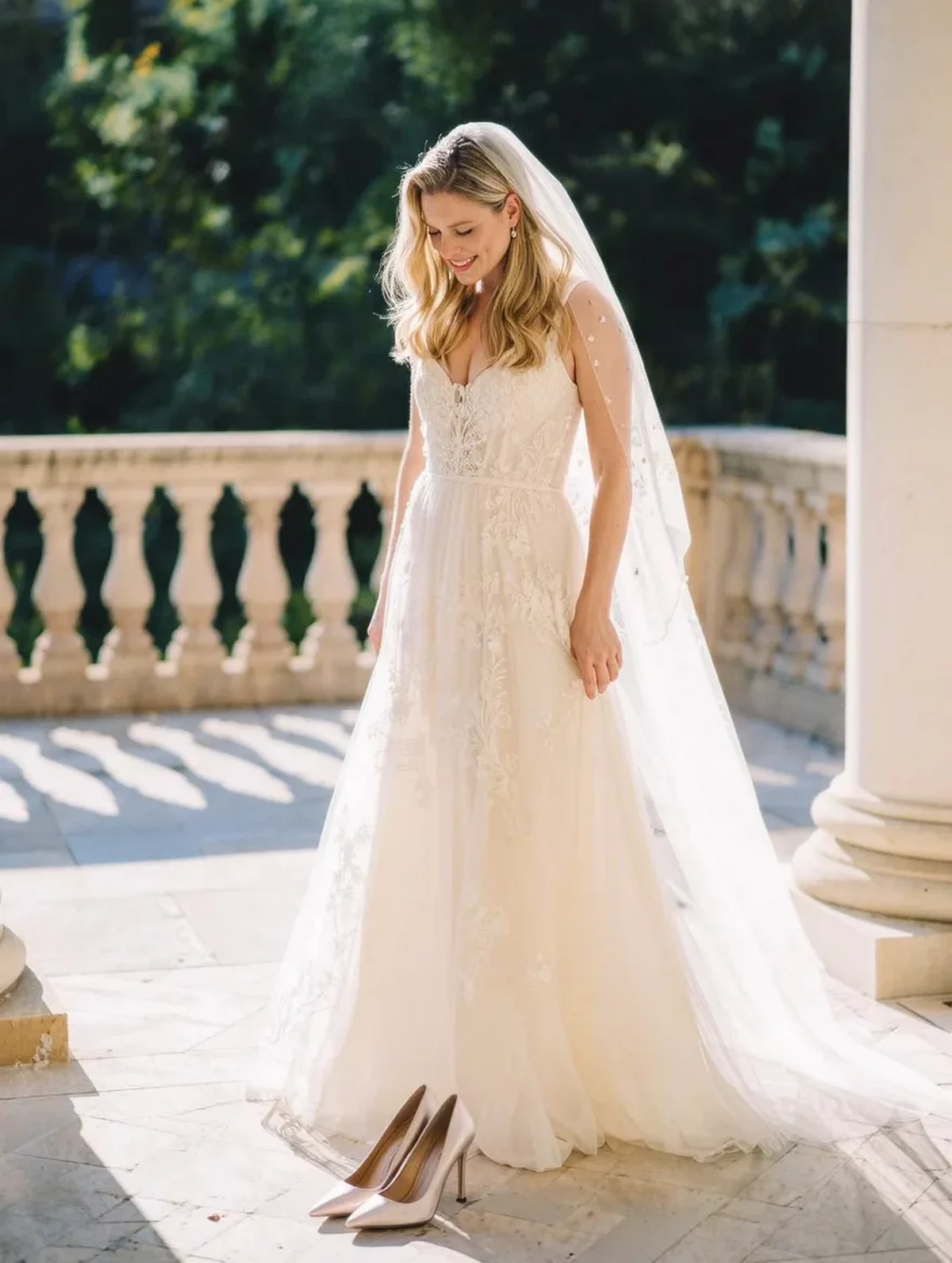
Quick Answer: The right wedding dress hem depends on the exact heels you’ll wear, not the shoes you tried on for fun. Bring your final shoes to the last fitting, and set the hem so it just skims the floor when you stand tall. Most brides look best with a hem that clears the ground by a quarter inch.
Your gown looked flawless in the salon, then the photographer asked you to step forward and the hem snagged on the grass. The problem usually isn’t the dress. It’s that the hem was marked in flat shoes, and your wedding heels are a different height entirely.
Why does the hem height depend on my shoes?
Every inch of heel height changes where your foot sits, and your dress hem follows your standing height. A two-inch difference in heels can shift the hem by a full inch or more, which is enough to cause dragging or an awkward gap.
Wear your real wedding shoes to the final fitting. Bring them in the box, and try them on with the same undergarments and any petticoat or slip you’ll wear on the day.
How do I set the right hem length?
Work through these steps with your seamstress:
- Stand tall on a level floor, with your shoulders relaxed and your weight even.
- Walk a few steps so the seamstress can check the hem during movement.
- Aim for a quarter inch of clearance so the dress skims the floor.
- Check the front and back because they often differ on a train or bustle.
Ask for a sample pin before the final cut. Seeing the line on your body is more useful than measuring on a hanger.
Myth vs Fact: Longer Is Always More Romantic
Myth: A floor-dragging hem looks the most romantic and photographs best.
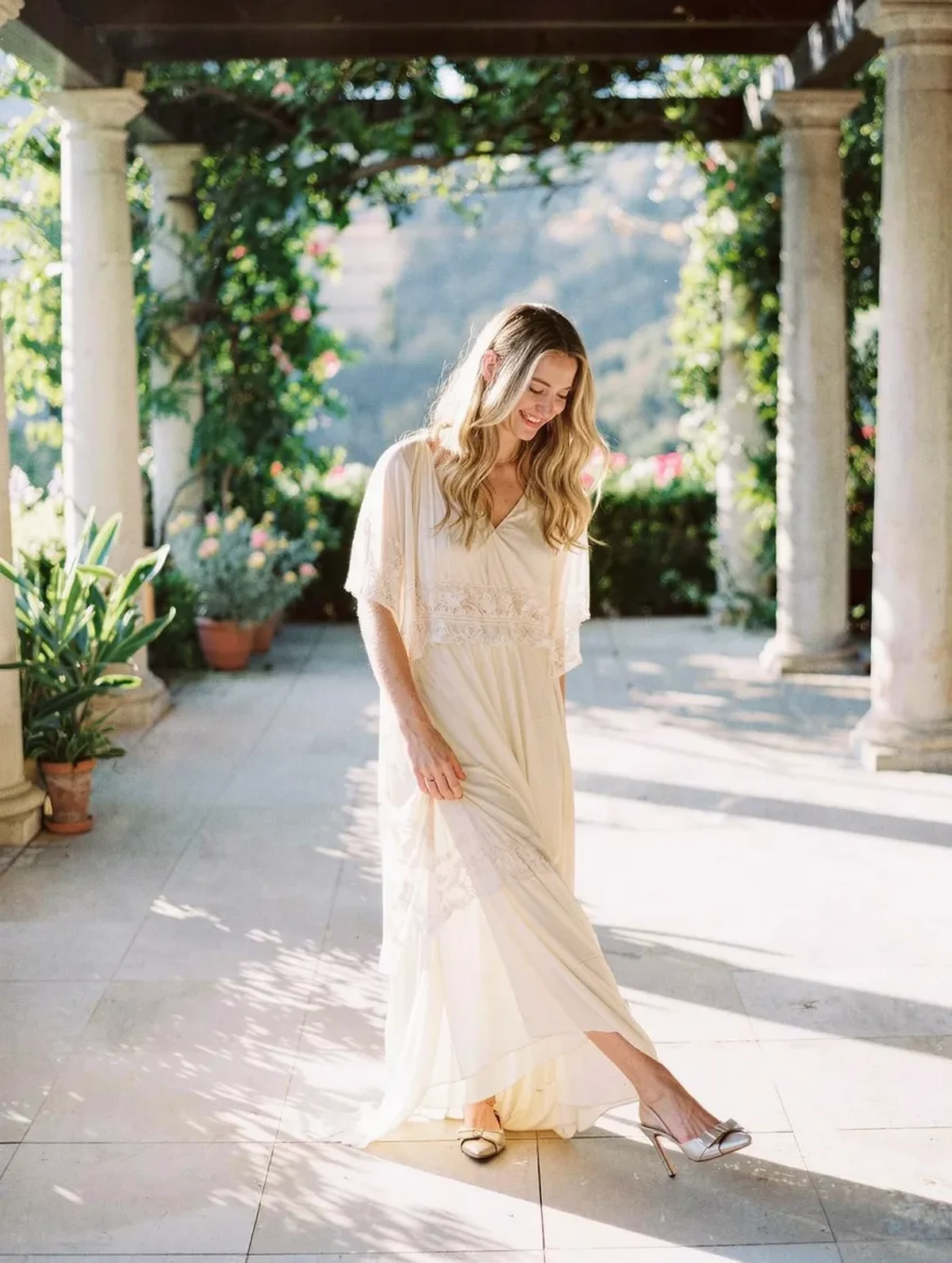
Fact: A hem that drags can pick up dirt, catch on heels, and make you step carefully the whole night. Many photographers prefer a hem that just touches the floor, because it keeps the dress clean and the silhouette clear.
If you love the drama of a train, add it as a separate feature, not as an accident of length.
5 Hem Mistakes That Ruin Wedding Photos
Avoid these easy-to-miss errors:
- Hemming in flat shoes and then wearing heels on the day.
- Skipping the fitting shoes and guessing the height.
- Forgetting the petticoat or slip, which adds length.
- Setting the hem on a hanger instead of on your body.
- Ignoring the bustle, so the back looks uneven in photos.
Fix one of these and your dress will look noticeably better in every shot.
What Should I Ask My Seamstress at the Final Fitting?
The final fitting is your last real chance to fix the hem before the wedding, so come prepared with questions. Bring your wedding shoes, your undergarments, and any petticoat or slip. Ask the seamstress to check the hem with you standing, sitting, and taking a few steps, because the length can change when you move.
Ask how the hem will be finished. A rolled or narrow hem looks light and works well with a flowing skirt, while a deeper hem adds weight for a ballgown silhouette. Your seamstress can explain which finish keeps the shape you want and how much the fabric can be shortened without losing structure.
Ask about the bustle, too. Find out how many points it has, where they sit, and how easy they are to fasten by yourself or a bridesmaid. A bustle that looks simple on the hanger can take several minutes to set on the day, and a quick practice run at the fitting saves stress later.
Finally, ask what happens if the dress needs a small change after the wedding. Check whether the seamstress offers a second short fitting, and confirm how long the final alterations take. Writing these answers down in one place means nobody has to guess on the morning of the ceremony.
Should I Have the Hem Adjusted After the Wedding?
Some brides want a small adjustment after the wedding, usually when the dress has been worn and the fabric has settled. This can make sense if the hem looked right during the fitting but feels uneven after a long day of walking and dancing. Keep this option open by asking the seamstress to leave a little fabric in reserve where possible.
Be careful, though. Once a hem is cut and finished, you cannot add length back without visible seams, and some fabrics are hard to repair. If you plan to keep the dress or pass it on, ask about storage and whether the seamstress can give you a few spare inches of fabric or a matching thread sample for future repairs.
If you do want to change the length after the wedding, schedule the fitting promptly. Hems often shift as the dress hangs in a closet, and a quick check after a few weeks can catch small changes before they become a problem.
FAQ: Wedding Hem Questions, Answered
Should I bring my heels to the first fitting?
Yes, if you already have them. If not, bring a pair with a similar heel height. Change to your final shoes at the last fitting.
How far in advance should I finish the hem?
Plan for the final hem fitting about two to four weeks before the wedding. That leaves time for small adjustments after you have worn the dress for a while.
Can I wear a shorter dress for dancing?
Many brides add a bustle or a removable overlay for dancing. Ask your seamstress to set the bustle points so they are easy to fasten.
This is general information about tailoring, not professional fitting advice.
TL;DR:
- Measure the hem with your actual wedding heels, not flat shoes.
- Aim for a quarter inch of clearance, and check the front and back.
- Include your petticoat or slip in the final fitting.
- Set the hem on your body, and plan the last fitting two to four weeks out.
A perfect hem is the one that looks effortless when you walk down the aisle. Get the shoes right first, and the rest follows.
Keep Reading
This article is for general informational and styling purposes only. Fit, sizing, and product availability may vary.