How to De-Stress in the Weeks Before Your Wedding

Quick Answer: Pre-wedding stress shows up in your skin, sleep, and digestion — the exact things you want at their best. The four highest-return habits: a 20–30 minute walk daily, a protected bedtime with a 60-minute screens-off buffer in the final two weeks, a 5-breath reset whenever the spiral starts, and at least one wedding-talk-banned social evening a week. Managing stress isn’t indulgent here. It’s prep.
The final weeks before a wedding turn into a second job. Seating charts at 11pm. A fitting squeezed into a lunch break. A group chat with your family that you now open with a small sense of dread.
Meanwhile your body is quietly keeping score of every stressful email.
The good news is that the practices that fix this are small, free, and fit into the schedule you already have. Here they are, in order of return.

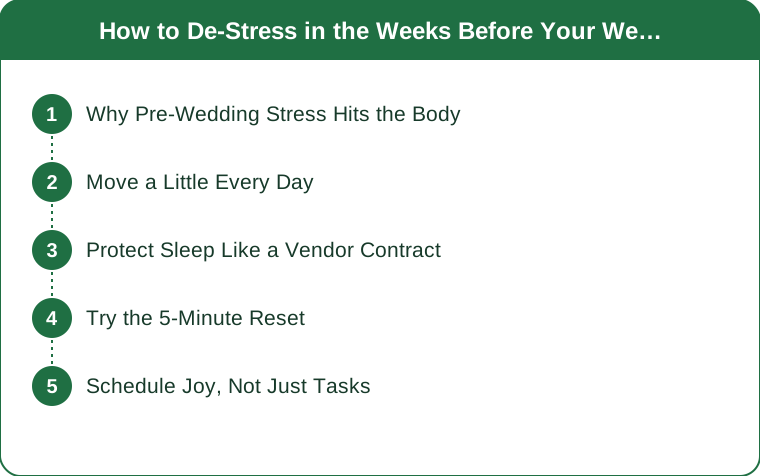
Why Does Pre-Wedding Stress Show Up Physically?
Because sustained stress isn’t only a mood. It’s a hormonal state with visible consequences.
Elevated cortisol over weeks disrupts sleep architecture (you sleep, but not deeply), affects digestion (bloating, appetite swings in both directions), and shows up in skin — stress is a well-documented trigger for breakouts, eczema flares, and general dullness, largely through inflammation and oil production.
Which means every one of these is the same problem wearing a different outfit: the sleep you’re not getting, the skin that’s misbehaving six weeks out, the appetite that’s gone strange.
Managing stress isn’t self-indulgence layered on top of the wedding prep. It is wedding prep, and it’s the cheapest item on the list.
How Much Should You Exercise Before a Wedding?
20–30 minutes of moderate movement, daily. A walk counts. Most days it should be a walk.
Moderate is the operative word. Movement metabolizes stress hormones and improves sleep quality — but hammering yourself with high-intensity sessions in the final weeks adds physiological stress on top of the psychological kind, and the combination is what produces the “I trained hard and I look worse” experience brides describe.
A workable final-month shape:
- Most days: a 20–30 minute walk, ideally outside and ideally without the phone.
- 2–3 days a week: strength or a class you enjoy, at a moderate effort.
- Final week: walks and gentle mobility only. No new activities, no first-ever hot yoga class, nothing that could leave you sore or marked.
The daily walk is doing more work here than any workout program. It’s a pressure valve you can use every single day without a recovery cost.

How Do You Protect Sleep in the Final Weeks?
Treat bedtime like a vendor contract: it’s booked, it’s paid for, and it doesn’t get moved.
A consistent bedtime matters more than total hours, because a regular schedule is what stabilizes your circadian rhythm — and a stable rhythm is what gives you deep sleep rather than seven restless hours.
A 60-minute screens-off buffer in the last two weeks. Not because of blue light alone, but because the planning happens on the screen. Answering one vendor email at 11pm loads your brain with an open loop right as you’re trying to close them all.
Move the worrying earlier. Keep a notebook by the bed, and if something surfaces, write the task down rather than solving it. It’s out of your head and it’ll still be there at 9am.
Sleep is when skin repairs and mood regulates. No single detail of the day matters more than arriving rested — and nobody has ever looked at a wedding photo and noticed the seating chart.
The 5-Minute Reset
When the planning overwhelm hits — and it will, probably in the third week — stop and run this:
- Five slow breaths, exhaling longer than you inhale. In for 4, out for 6.
- Shoulders down and away from your ears. Unclench your jaw.
- A glass of water.
- Pick one small task — not the biggest one, the smallest one — and do only that.
The spiral works by presenting all forty remaining tasks simultaneously as one undifferentiated emergency. This interrupts it by giving your body a physiological off-ramp and your brain a single object.
Use it as often as you need. It’s free and it works at a desk, in a car, or in a fitting room.
5 Mistakes Everyone Makes in the Final Weeks
- Starting a crash diet. Under-eating in the last month tanks your energy, your mood, and your skin — and it’s the single most common regret. It also risks the dress fitting differently than it did at the final alteration.
- Booking a brand-new facial or treatment close to the day. Anything new gets tested at least 6 weeks out, never inside the final two. A reaction you’ve never had before is not the discovery you want at day five.
- Saying yes to every “quick question.” Route vendor and family questions to one person, or to one scheduled block a day. Constant interruption is what turns a manageable list into permanent low-grade panic.
- Cancelling the fun things first. When the calendar tightens, joy is what gets cut. It’s the wrong cut — see below.
- Trying to fix it all with one big spa day. A single reset three days out is lovely and does far less than fifteen small daily ones over six weeks. Frequency beats intensity here, same as everywhere else.
Schedule Joy, Not Just Tasks
Put non-wedding pleasures on the actual calendar, with a time, the way you’d book a vendor.
A movie night. A massage. Dinner with a friend where wedding talk is explicitly banned — say it out loud, make it a rule, let them enforce it. An hour with a book. A weekend morning where nothing is planned at all.
Joy isn’t a reward for finishing the list. It’s the fuel for finishing it, and it’s the first thing that gets deleted when the calendar tightens. Protect it fiercely.
One more thing worth saying: if the stress tips into something heavier — persistent panic, insomnia that doesn’t respond to any of this, appetite changes that worry you, or a low mood that isn’t lifting — that’s worth a conversation with your doctor. Pre-wedding anxiety is extremely common and extremely treatable, and there’s no version of this where toughing it out is the better plan.
Frequently Asked Questions
How far in advance should I start a pre-wedding skincare or wellness routine?
Skin renews on roughly a 4-week cycle, so start at least 8–12 weeks out to see real change and to have time to abandon anything that doesn’t suit you. Nothing new inside the final two weeks, and no first-time treatments inside six.
What should I do the night before the wedding?
Almost nothing. Eat a normal dinner you know agrees with you, avoid heavy drinking, hand every remaining logistics question to whoever is running the day, and go to bed at your usual time. Poor sleep the night before is very common and less damaging than people fear — the adrenaline covers it. Trying to fix five weeks of stress in one evening does not.
Is it normal to feel anxious rather than excited before a wedding?
Completely. A wedding is a large public event, a family logistics project, and a major life transition happening on one day — feeling wound up rather than blissful is the ordinary experience, not a red flag about the relationship. It usually settles once the day itself starts and the planning is out of your hands.
TL;DR:
- Stress shows up as bad sleep, unsettled digestion, and unhappy skin — treat it as prep, not indulgence.
- Walk 20–30 minutes daily; keep intensity moderate and go gentle in the final week.
- Fixed bedtime plus a 60-minute screens-off buffer in the last two weeks.
- Run the 5-minute reset — five long exhales, shoulders down, water, one small task.
- No crash diets and no new treatments inside six weeks of the day.
- Book joy on the calendar, including one wedding-talk-banned evening a week.
Keep Reading
This article is for general informational and styling purposes only. Fit, sizing, and product availability may vary.