The Final Fitting When Your Weight Is Still Moving

Quick Answer: Tell your seamstress the truth about the direction and rate of change, and stop actively changing your weight roughly four weeks before the final fitting. Alterations are cut to a specific measurement; a dress taken in for a body that keeps shrinking will need a second alteration, and a dress taken in for a body that stabilises higher may not have fabric left to let out. Stability is worth more than any further change at this point.
The final fitting is in eleven days and the number on the scale is still moving. So you have a choice to make about whether to tell anyone.
Tell them. This is the entire article, and everything below is why.

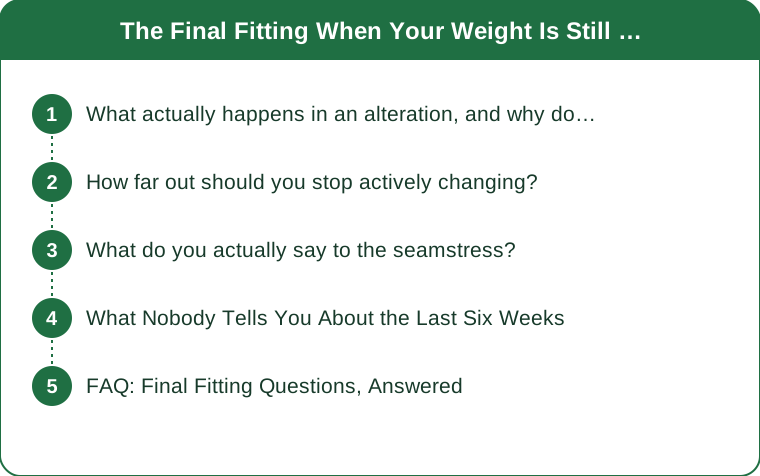
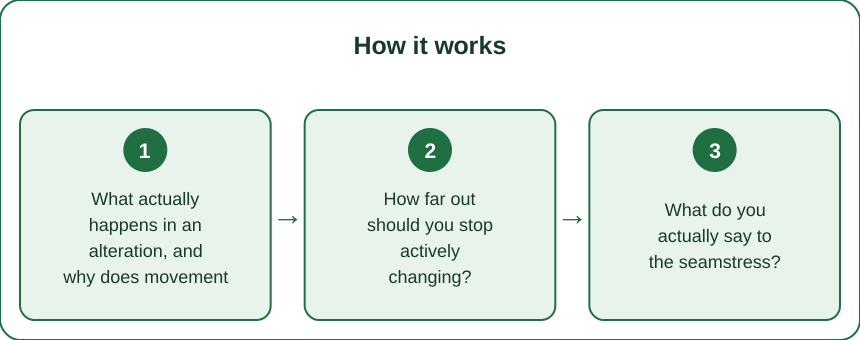
What actually happens in an alteration, and why does movement break it?
An alteration is not adjustment. It is cutting and re-sewing to a fixed measurement, and most of it is not reversible.
When a dress is taken in, the seamstress opens the side seams, removes fabric, and re-stitches. Depending on the construction, the excess is often trimmed — particularly with structured bodices, boning, and lined seams, where leaving bulk inside creates visible ridges. Once trimmed, that fabric is gone.
This produces an asymmetry that most people do not realise until it is a problem:
Taking in is easy. Letting out is often impossible. Most gowns have a modest seam allowance, and structured bridal construction frequently uses less than you would hope. A dress that has already been taken in once may have nothing left to give.
Boned bodices are worse. The boning channels are fixed to the seam positions. Moving the seams means repositioning the boning, which is a substantially bigger job and sometimes changes how the bodice sits.
Beading and lace are worse still. Anything with applied detail across the side seams has to be unpicked, the seam moved, and the detail reapplied by hand. This is expensive, slow, and there is a limit to how many times it can be done.
So movement in either direction has a cost, and movement downward — the direction most people assume is safe — is the one that most commonly forces a second alteration at short notice.
How far out should you stop actively changing?
Roughly four weeks before the final fitting, which for a typical schedule means six to eight weeks before the wedding.
The reasoning is practical. Alterations usually run in two or three appointments: a first fitting where the major work is pinned, a second where it is refined, and a final check close to the day. The measurements taken at the first fitting are what the work is cut to. If your body is different by the second, that work is partially wasted.
What stopping actually means: it does not mean abandoning training or eating badly. It means holding your intake and activity roughly constant rather than running a deficit or a new programme. Continue training — training is genuinely useful for how you feel on the day and for stress — but stop trying to move the number.
Why this feels wrong and is right: the last four weeks are when most people feel the most pressure to push. The reality is that further change in that window produces a small visual difference and a large logistical risk. A dress that fits perfectly matters more to how you look than two more pounds, by a wide margin.
If you cannot stop — if weight is changing for reasons outside your control, including medication, illness, stress, or a medical condition — that is exactly the situation your seamstress needs to know about. There are construction choices that build in tolerance, and they have to be made early. Speak to a doctor about anything unexplained. This is general information, not medical advice.

What do you actually say to the seamstress?
Something specific, not something apologetic.
Seamstresses deal with this constantly and are not judging you. What they need is direction, rate, and confidence level, because those determine which construction approach they use.
A script that works:
I want to flag that my weight has been moving. Over the last six weeks I have gone down about four pounds, mostly around the waist. I am planning to hold steady from now, but I would rather build in some tolerance than promise something I cannot guarantee.
What that gives them:
- Direction — down, so they will be conservative about trimming.
- Where — waist rather than bust changes which seams they prioritise.
- Rate — a pound every ten days is different from a pound a week.
- Confidence — telling them you might not hold lets them choose a reversible approach.
What they can do with the information:
- Leave the seam allowance untrimmed, so there is scope to let out later.
- Use a corset back or add one, which provides real adjustability across a range of a few inches and is by far the most robust solution.
- Delay the final side seam work until the last possible appointment.
- Schedule an extra fitting, which costs money and removes the problem.
None of these are available if you find out about the movement at the final fitting.
What Nobody Tells You About the Last Six Weeks
Your measurements change across a day and across a cycle, and the fitting captures one moment. Try to book fittings at a similar time of day, and if your cycle produces meaningful bloating, mention it — the difference can be a full inch at the waist and it is entirely normal.
Stress itself changes your body. Sleep disruption, appetite changes, and fluid retention in the final weeks are common and they move in unpredictable directions. This is a reason to build tolerance into the dress rather than to try harder.
Bring the actual undergarments and the actual shoes to every fitting. This is the most common cause of a dress that fit in the shop and does not on the day, and it has nothing to do with weight. The hem in particular is cut to the shoes.
A corset back is not a compromise. People treat it as a fallback for uncertainty. It is genuinely the most practical construction for anyone whose body might change, it looks entirely deliberate, and a good one can be added to many gowns. If you are anxious about this, it is the single best thing to ask about.
The dress does not need to be tight to look good. A gown fitted with a small amount of ease reads as elegant. A gown fitted to the absolute limit reads as tight the moment you sit down, eat, or exhale properly — and you will be doing all three for twelve hours.
Nobody is looking at your measurements. They are looking at whether you can move, breathe, and stand comfortably. A dress you are managing all evening is visible to everyone in a way that an inch is not.
FAQ: Final Fitting Questions, Answered
How late can a dress realistically be altered?
Most seamstresses want the final fitting one to two weeks before, with simple adjustments possible after. Emergency alterations in the final days are sometimes possible for small changes but expensive, stressful, and limited by what the construction allows. Do not plan around it.
Is it better to have the dress slightly loose or slightly tight?
Slightly loose, without much argument. A small amount of ease can often be taken in quickly. A dress that is too tight may have no fabric left, and the failure mode on the day is far worse — restricted breathing, visible strain at the seams, and no ability to sit comfortably.
What if my weight changes after the final fitting?
Small changes of a pound or two are usually absorbed by the fit, especially with a corset back. For larger changes, contact the seamstress immediately rather than waiting — availability in the final fortnight of a wedding season is the binding constraint, not the sewing time.
Should I keep training in the last four weeks?
Yes. Keep training, keep eating normally, and stop pursuing change. Training in the final weeks helps with sleep, stress, and how you feel standing for hours, all of which matter more on the day than a small difference in measurement. If you have any health concerns, check with a doctor. This is general information, not medical advice.
TL;DR:
- Alterations cut to a fixed measurement, and taking in is often irreversible. Movement in either direction has a real cost.
- Stop actively changing roughly four weeks before the final fitting — keep training, stop chasing the number.
- Tell the seamstress direction, rate, and confidence. It changes whether they trim the seam allowance or leave tolerance.
- A corset back is the most robust solution, not a fallback, and it looks entirely deliberate.
- Bring the real undergarments and real shoes to every fitting. That causes more fit failures than weight does.
- Slightly loose beats slightly tight. You will be sitting, eating, and breathing for twelve hours.
Stability is worth more than two more pounds. Tell them. This is general information, not medical advice.
Keep Reading
This article is for general informational and styling purposes only. Fit, sizing, and product availability may vary.