Sculpt Your Back and Shoulders for a Backless Dress
You said yes to the backless gown. Then you saw the fitting-room mirror from behind and thought, “wait, that’s the angle everyone gets during the ceremony.” Welcome to the club — the back is the one body part brides never train and every photographer shoots.
Quick Answer: Train your upper back and shoulders 2–3 times a week for 8–12 weeks, built around rowing movements (3 sets of 8–12 reps) plus rear-delt work like reverse flys and band pull-aparts (2–3 sets of 15). Rows build the shape, rear delts round out the shoulder line, and daily posture practice makes both visible. Most brides see noticeable definition in 6–8 weeks because this area is usually undertrained and responds fast.
Why Does the Back Photograph So Well in a Backless Gown?
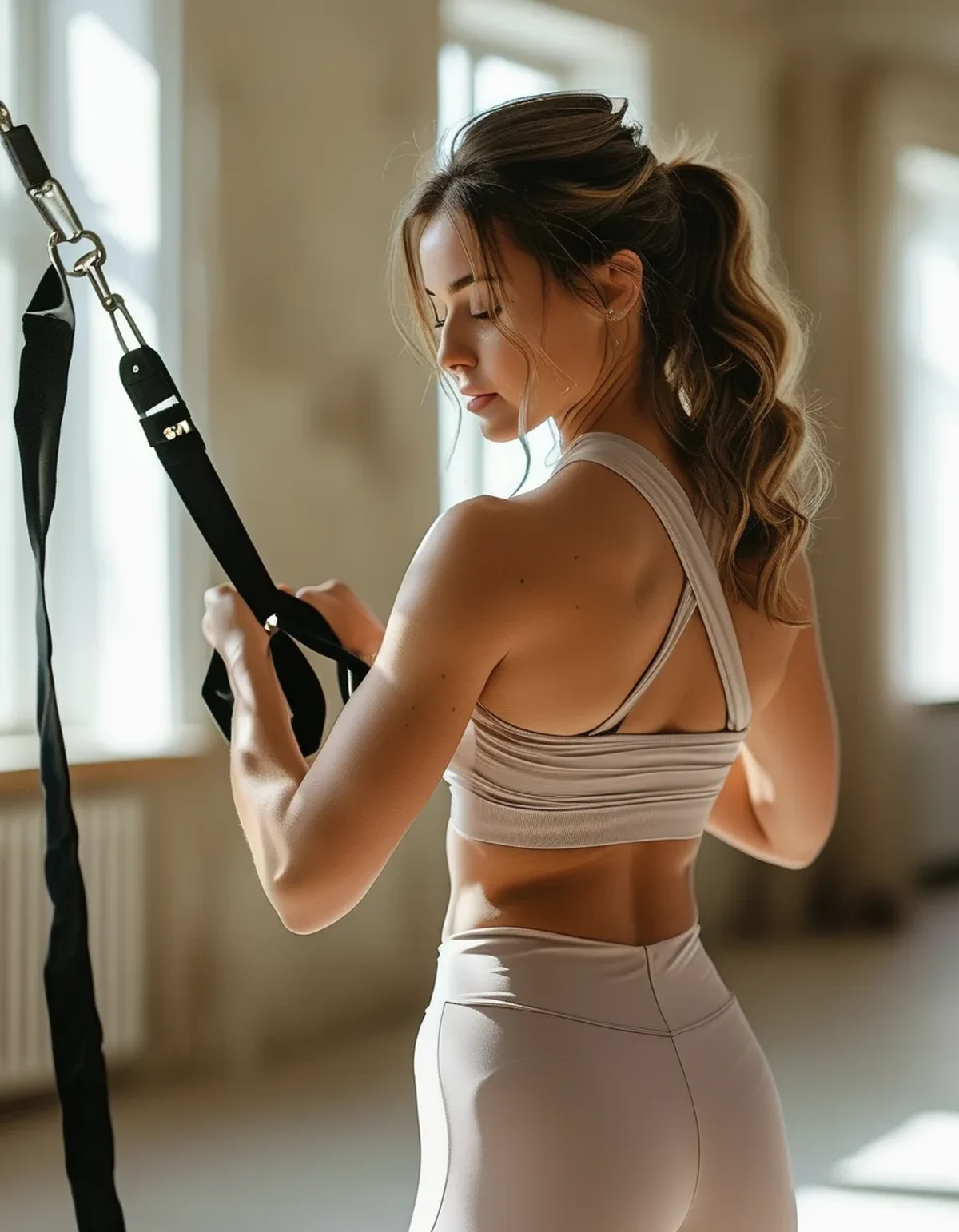
Defined shoulders and a toned upper back create the elegant, elongated line that makes an open-back dress look custom. Photographers know it: the recessional, the first dance, the “look back over your shoulder” portrait — all of them are back shots.
Here’s the encouraging part. Most people spend their gym time on legs, glutes, and arms, which means the upper back is running on years of untapped potential. Muscles that haven’t been trained respond faster than muscles that have. You’re not fighting a plateau; you’re opening a door.
Realistic timeline: with 2–3 focused sessions a week, most brides notice shoulder definition around week 6 and clear upper-back shape by week 10–12.
Which Exercises Actually Build Upper-Back Shape?
Rows. Then more rows. Bent-over dumbbell rows, single-arm rows braced on a bench, seated cable rows, or resistance-band rows anchored in a door — the equipment matters far less than the pattern.
Every row does two things at once: it builds the mid-back muscles that create visible shape, and it pulls your shoulder blades into a better resting position. That second benefit is the sneaky one, because good posture instantly makes any dress fit better.
How to program it: 3 sets of 8–12 reps, 60–90 seconds rest, twice a week. Pick a weight where the last two reps are genuinely hard but your form stays clean. Pull with your elbow, not your hand, and pause for one full second at the top of each rep — that pause is where the shape gets built.
Why Do Rear Delts Matter More Than You’d Think?
The back of your shoulder is what people see when you’re facing away — which, in a backless gown, is a lot of the time. Reverse flys and band pull-aparts target exactly that spot and give the shoulder its rounded, sculpted edge.
These are small muscles, so treat them accordingly: light weight, 2–3 sets of 15–20 reps, slow and precise. If you can swing the dumbbells up, they’re too heavy. Think “spread the shoulder blades apart, then squeeze them together” rather than “lift the weight.”
Band pull-aparts are the best value here because you can do 20 of them anywhere — between work calls, while the coffee brews, during a venue phone call you’d rather not be on.
5 Mistakes Almost Every Bride Makes
- Starting six weeks out. Muscle definition follows a schedule you can’t rush. Twelve weeks is comfortable; eight is workable; four is mostly water and hope.
- Training only arms. Biceps look great in a sleeveless dress and do nothing for a backless one. The shape you want lives between your shoulder blades.
- Going too heavy on rear delts. Momentum recruits your traps instead of the muscle you’re targeting, and you end up with a tight neck instead of a sculpted shoulder.
- Ignoring posture the other 23 hours. You can’t out-train a full day of hunching over a seating chart. Posture is the frame; training is the picture.
- Skipping recovery. Muscles grow between sessions, not during them. Back-to-back back days give you fatigue, not definition — leave at least one rest day in between.
The third mistake is the one that surprises even experienced lifters, because “lift heavier” is usually good advice — just not here.
Does Posture Really Change How the Dress Looks?
Yes, and more dramatically than any single workout will. Slouching collapses the collarbones, rounds the shoulders forward, and hides the exact lines you spent three months building.
Practice the setup now so it’s automatic later: stand tall, roll your shoulders up and back once, then let them settle down away from your ears. Chin level, ribs stacked over hips. Do it every time you catch your reflection and it stops being a pose and starts being how you stand.
Strong back muscles make this feel natural instead of forced — which is really the whole point of the training. On the day, that open, confident posture reads in every frame.
What Does a Realistic Weekly Plan Look Like?
Two to three sessions a week, 25–35 minutes each, with a rest day between:
- Session A: Bent-over rows 3×10 · Reverse flys 3×15 · Band pull-aparts 2×20 · Face pulls 2×12
- Session B: Single-arm rows 3×10 each side · Lat pulldown or assisted pull-up 3×8 · Rear-delt raises 3×15 · Plank 3×30 seconds
- Daily, 60 seconds: 20 band pull-aparts and one posture reset
Pair it with your overall wedding fitness plan and the definition builds steadily rather than in a panic. Train in something with a supportive fit and clean back lines — a squat-proof high waist legging and a racerback top let you actually see your shoulder blades move, which makes the form cues much easier to follow.
A quick honesty note: training changes muscle tone, not skin, bone structure, or how a specific gown is cut. If you have a shoulder injury, persistent pain, or a condition that affects exercise, talk to a physical therapist or your doctor before starting — especially if you’re adding load for the first time.
FAQ
How long before the wedding should I start training my back?
Twelve weeks is ideal, eight weeks is solid, and even four weeks of consistent rowing improves posture noticeably. Definition builds gradually, so earlier always beats harder.
Can I do this without a gym?
Absolutely. A single resistance band and one pair of dumbbells covers rows, reverse flys, and pull-aparts — that’s the whole program. Anchor the band in a door hinge and you have a cable machine for about twenty dollars.
Will lifting make my shoulders look bulky in my dress?
Realistically, no. Building noticeable size takes years of heavy, high-volume training and a calorie surplus. Twelve weeks of moderate rowing gives you definition and better posture, not bulk.
TL;DR:
- Rows are the priority — 3 sets of 8–12, twice weekly, with a one-second squeeze at the top
- Rear delts (reverse flys, band pull-aparts) need light weight and 15–20 reps, not heavy loads
- Start 8–12 weeks out; the upper back is undertrained, so it responds faster than most areas
- Posture is half the result — practice the reset daily until it’s automatic
- Rest a day between sessions; that’s when the shape actually forms
Your back and shoulders deserve a starring role, and they’ll reward focused effort faster than you’d expect. Row often, stand tall, and stay consistent — you’ll turn heads the moment you turn around.
Keep Reading
This article is for general informational and styling purposes only. Fit, sizing, and product availability may vary.