Why Your Wedding Dress Fits Differently in a Cold Venue
Quick Answer: A cold venue changes dress fit through three mechanisms: your muscles hold more tone when cold so your ribcage and shoulders sit differently, fabric behaves differently at low temperature and with humidity, and cold changes your posture — you pull your shoulders up and forward without noticing. The practical answer is to do your final fitting in conditions closer to the day, train the postural muscles that fail when you are cold and tired, and plan a warm layer you actually like.
Every fitting happens in a heated, brightly lit shop where you have just walked in from the car. Autumn and winter weddings happen in stone churches at fourteen degrees, or in barns where the doors keep opening. It is a genuinely different environment, and the difference is not imaginary.
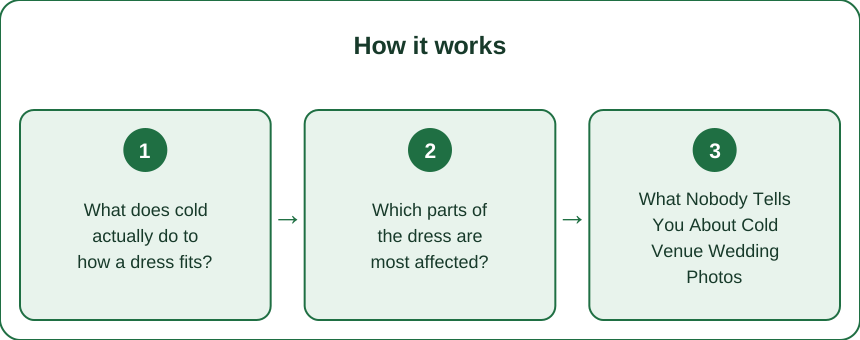
What does cold actually do to how a dress fits?
Three separate things, and they compound.
Your muscles hold more tone. Cold raises baseline muscle tone — that is the mechanism behind shivering, and a milder version of it is happening long before you shiver. The muscles around the upper back and shoulders are the ones that respond most visibly. A structured bodice that fit a relaxed, warm ribcage can feel tight across the back when those same muscles are half a notch more contracted all day.
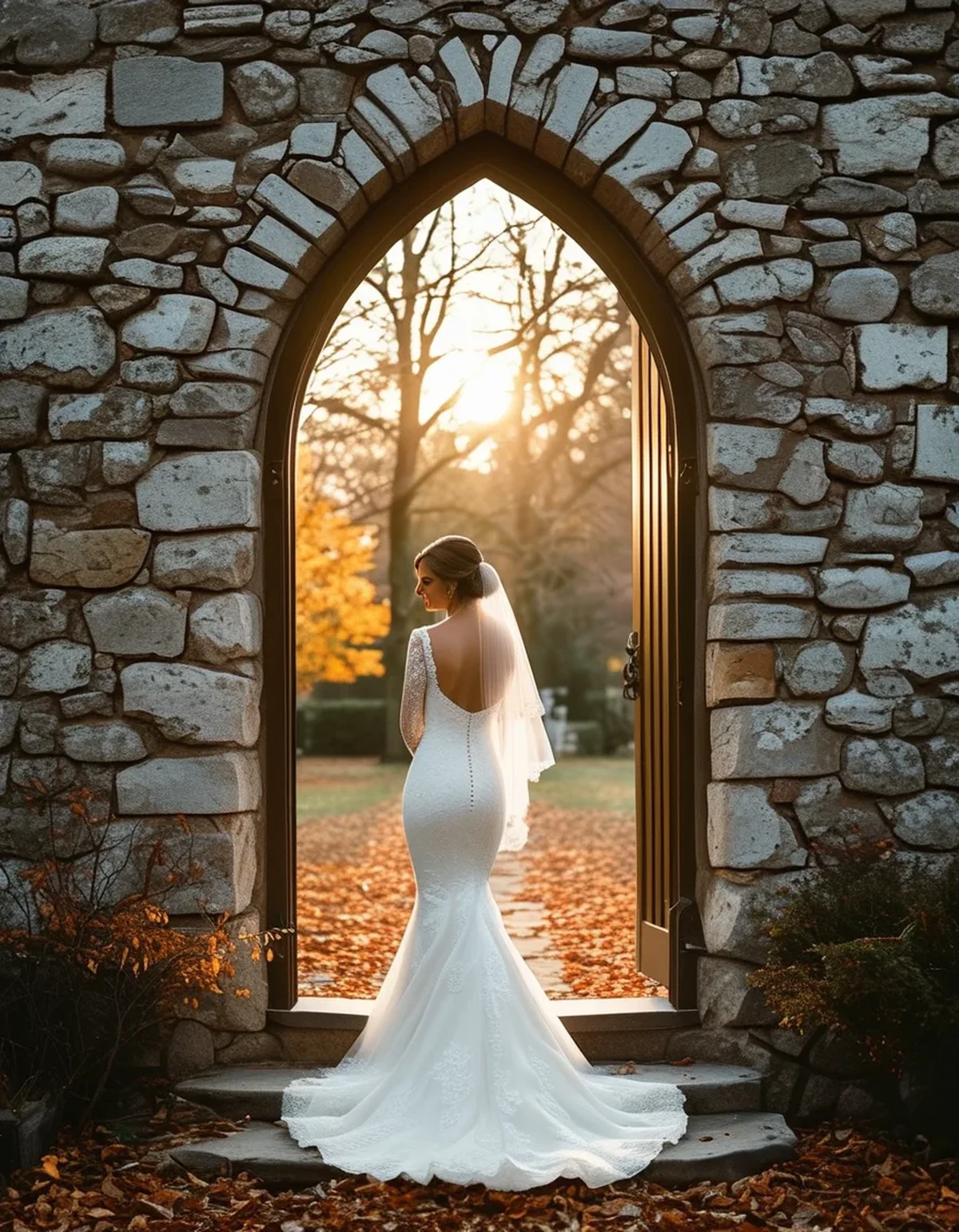
Your posture changes. This is the big one. Cold makes almost everyone round the shoulders forward and lift them slightly towards the ears. It is involuntary. In a fitted gown with a defined shoulder line or a boat neck, that shifts the whole garment forward, which is why brides report straps digging or a neckline that sat perfectly in the shop suddenly gaping or pulling.
And fabric moves. Natural fibres respond to humidity — silk and crepe hang differently in a damp cold church than in a dry heated shop, usually slightly heavier and with a longer drape. Synthetics are more stable dimensionally but become stiffer in cold, which changes how a skirt moves when you walk rather than how it fits when you stand.
Which parts of the dress are most affected?
The bodice back and armhole. Where upper back tone shows up first. If your dress is tight anywhere in the shop, it will be tighter here on a cold day.
The neckline. Because it depends entirely on where your shoulders are. Off-shoulder and bardot styles are the most sensitive — a few centimetres of shoulder elevation is the difference between sitting elegantly and riding up.
The waist, but not the way you expect. Cold does not change your waist measurement. What changes is how long you spend standing versus sitting, and in cold weather people sit less and stand more, which is the posture in which a waist seam feels tightest.
And the hem. In a heavier drape, a floor-length hem that just cleared the ground in the shop can catch. If your venue has stone floors or gravel, this is worth checking in your actual shoes at the actual length.
What Nobody Tells You About Cold Venue Wedding Photos
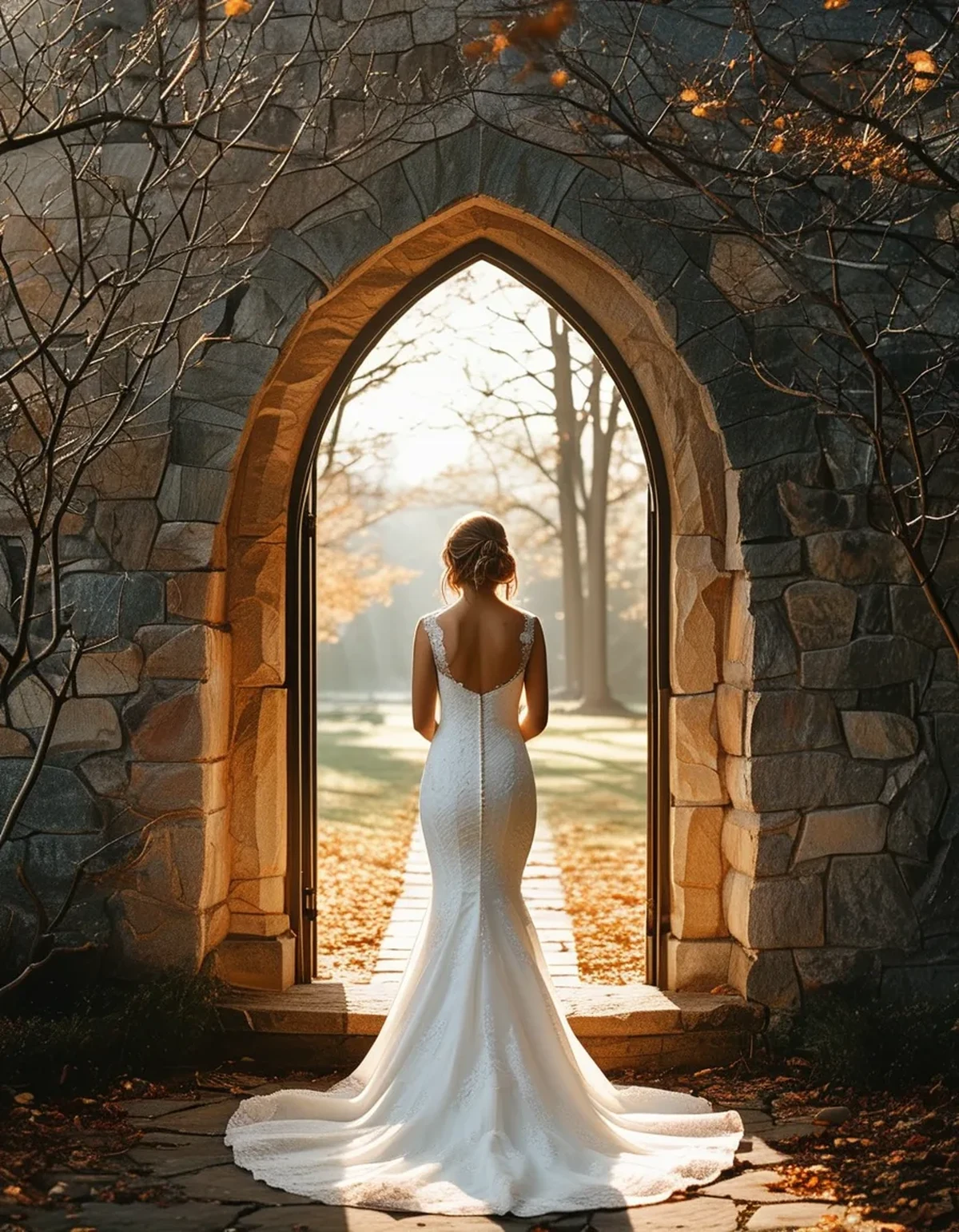
Photographs from cold venues have a look, and it is not about the light.
Shoulders come up and forward. In almost every unposed shot. Your photographer will cue you, but only when they are looking at you, and the group shots are where it shows. The fix is a physical cue you can run yourself: think of drawing your shoulder blades gently down your back rather than pulling them together. Down, not back — pulling back creates its own stiff look.
Arms give it away before faces do. Held close to the body, elbows tucked, hands clasped high. Leaving a visible gap between your arm and your ribcage is the single most useful thing you can do for how your arms photograph, and it becomes much harder to remember when you are cold.
Posture collapses faster than it does in warm weather. The postural muscles fatigue sooner when they are also working on thermoregulation, and the ceremony plus receiving line is typically an hour of standing. This is the actual argument for the training in the next section — not aesthetics on the day you try the dress on, but endurance at hour four.
And you will look better in an extra layer than without one. Everyone in the photographs will be able to tell you were cold. Nobody will be able to tell you were comfortable.
What training actually helps for a cold-weather wedding?
Not more of what you are probably already doing. The demand on the day is postural endurance, not strength.
Train the upper back for time, not for reps. Face pulls, band pull-aparts, and prone Y raises — two or three sets of forty-five seconds rather than heavy sets of eight. What fails at hour four is endurance in the mid-back, and endurance is trained with time under tension at modest load.
Add standing tolerance deliberately. If your ceremony and photographs involve ninety minutes on your feet in heels on uneven ground, practise it. Twenty minutes standing in your wedding shoes, three times a week, in the six weeks before, is unglamorous and it is the thing brides most often say they wish they had done.
Do not diet into the final fortnight. Under-eating hits postural endurance and thermoregulation first, and cold venues punish both. This matters more than it does for a summer wedding.
And warm up on the morning. Ten minutes of movement before you get into the dress — arm circles, marching, gentle spinal rotations. You will be warmer, your shoulders will sit lower, and the dress will settle where it was fitted to sit. It is the cheapest single intervention available on the day.
FAQ: Cold Venue Wedding Questions, Answered
Should I book my final fitting at a different time of year or temperature?
You cannot usually control the shop’s heating, but you can control what happens immediately before. Ask for the last fitting first thing in the morning, arrive without a long warm car journey, and try the dress before you have been standing in a heated room for twenty minutes. It gets you closer to the real conditions.
Will a cover-up ruin the look of my dress?
Chosen deliberately, no — a fitted jacket, a cape or a faux fur stole becomes part of the look rather than an apology for the weather. What reads badly in photographs is a borrowed coat over a gown. Decide early so it can be fitted with the dress rather than found the week before.
My dress feels tighter across the back every time I try it on in autumn. Is it shrinking?
Almost certainly not. It is far more likely to be upper back tone and posture in a cooler room, plus the fact that you are probably trying it on after a car journey rather than after moving around. Mention it to your seamstress rather than assuming, but ask her to check it after you have walked around for five minutes.
TL;DR:
- Cold raises muscle tone and pushes your shoulders forward, which changes bodice, armhole and neckline fit even though your measurements have not moved.
- Fabric drapes heavier in damp cold, so recheck the hem in your real shoes.
- Train upper back endurance for time rather than reps, and practise standing in your shoes — postural collapse at hour four is what shows in photographs.
- Warm up for ten minutes before you get into the dress, and choose a warm layer you actually like rather than borrowing a coat.
A cold venue is not a problem to fight. It is a set of predictable, small changes, and every one of them is easier to handle if you planned for it in October rather than discovering it in the vestry.
Keep Reading
This article is for general informational and styling purposes only. Fit, sizing, and product availability may vary.