Why Your Dress Fits Differently at the Second Fitting Even Though the Scale Did Not Move
Quick Answer: A dress is fitted to circumferences at specific points, not to your weight, and strength training changes those circumferences in different directions at once. Back and shoulder width typically increase, waist and hip often decrease, and posture changes shift where the bust sits relative to the natural waist. The scale can be identical while three of the four measurements that matter have moved by two centimetres. Book fittings around your training, not the other way round, and bring the measurements rather than the number.
You weigh what you weighed in June. The dress zips differently. Nobody is lying to you - the number you have been tracking simply is not the number the dress cares about.

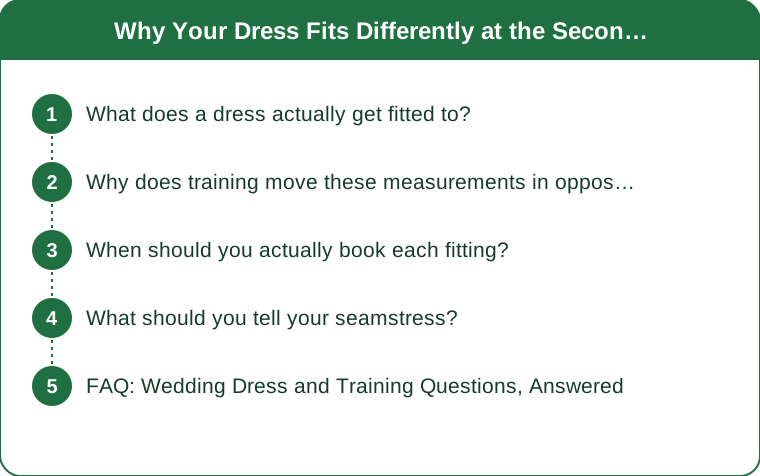
What does a dress actually get fitted to?
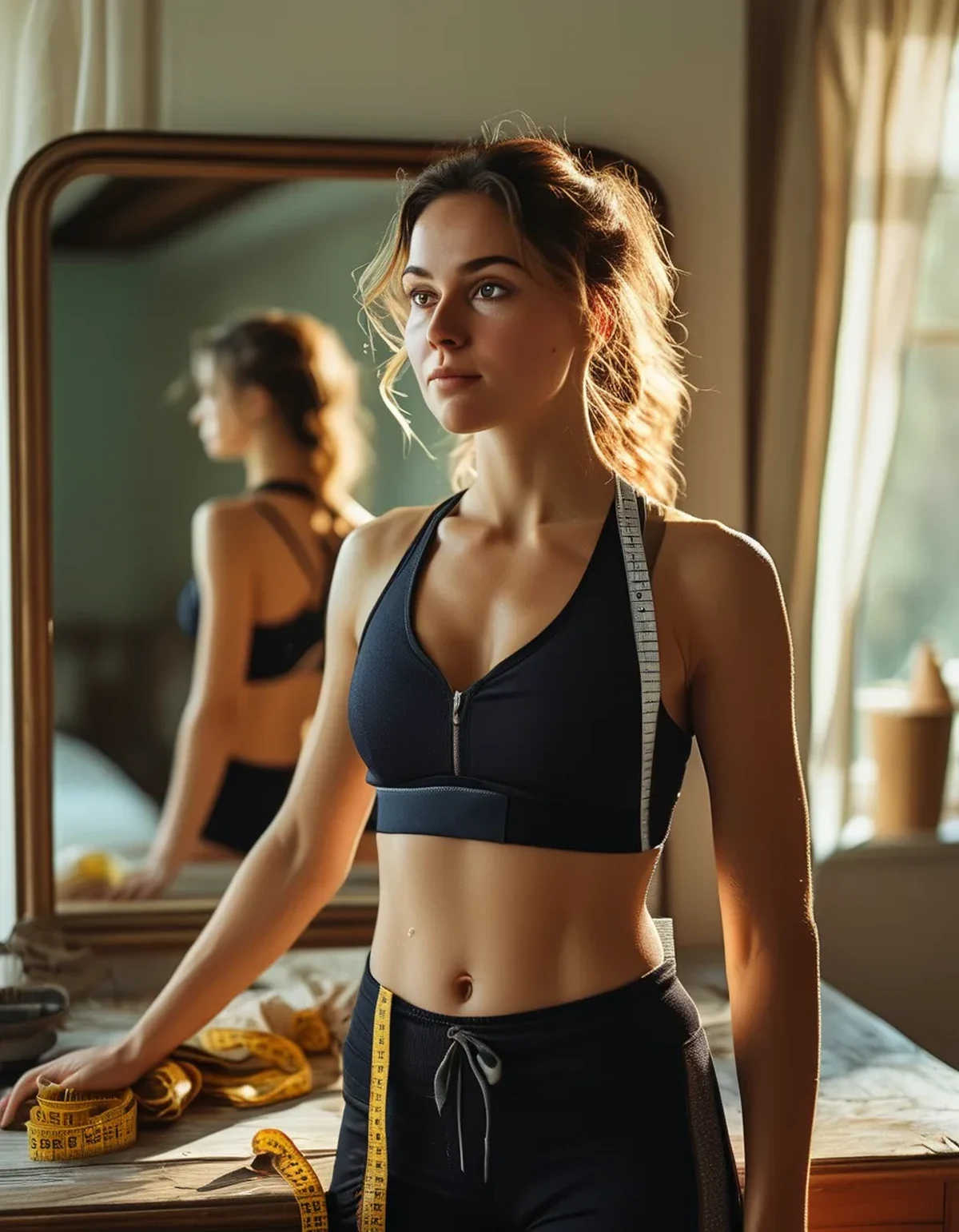
Five circumferences and two lengths, none of which is bodyweight. Bust, underbust, natural waist, high hip, and full hip, plus the distance from shoulder to waist and waist to hem.
The critical detail is that these are independent of each other. You can lose four centimetres from your waist and gain two across your back and the scale will barely register the exchange, because muscle gained in the upper back is roughly balanced by fat lost around the middle.
A seamstress fits to whichever of those measurements is currently the tightest constraint. If your back widened, the bodice pulls across the shoulder blades even though the waist now has room. That is why a dress can feel simultaneously tight and loose, which sounds impossible and is extremely common.
The shoulder-to-waist length is the one nobody anticipates. Improved thoracic posture - which is one of the fastest changes strength training produces - lengthens that measurement by a centimetre or more. A bodice that ended exactly at your natural waist in June now sits above it.
Why does training move these measurements in opposite directions?
Because the tissue you are adding and the tissue you are losing are in different places. Fat loss in most women comes disproportionately from the trunk and hips first. Muscle gain from a typical bridal training programme lands in the upper back, shoulders, and glutes.
So a twelve-week block frequently produces: waist down 3 to 5 cm, hips down 2 to 3 cm, back and shoulder circumference up 1 to 3 cm, and glutes up 1 to 2 cm. Net weight change might be under a kilogram.
This is a good outcome by almost every measure except dressmaking. The back and shoulder change is the one that causes trouble because it is the hardest area to let out - the seam allowance across a fitted bodice back is often minimal, and lace or beading limits what can be done.
The glute change is the second most common surprise, particularly with a fitted or mermaid silhouette, where the full hip measurement determines whether the dress moves with you when you walk.
None of this is an argument against training before a wedding. It is an argument for telling your seamstress that you are training, which a surprising number of brides do not.
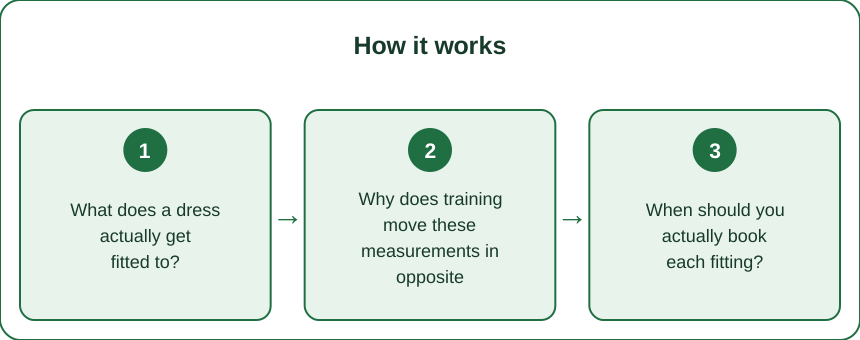
When should you actually book each fitting?
Work backwards from the wedding and align fittings with training phases rather than with the calendar.
If you are running a structured block, the useful rule is to schedule the first fitting after the block has been running for at least six weeks. Measurements move fastest in the first four to six weeks of any new programme, and a dress fitted during that window will be wrong by the second one.
A workable pattern for a twelve-week engagement plan: first fitting at week seven, second at week ten, final at week twelve or in the last fortnight. The final fitting should sit close enough to the day that nothing significant changes afterwards - most seamstresses want it within two weeks.
The more important rule: do not start a new training programme after the first fitting. Continuing what you are already doing is fine and predictable. Starting a new one, or dramatically increasing volume, is what produces the panicked call three days out.
And if you are planning a deliberate fat loss phase, finish it before the first fitting rather than running it through the fitting sequence. Alterations can take a dress in far more easily than they can let it out.
What should you tell your seamstress?
Three specific things, at the first appointment, before she cuts anything.
First, that you are strength training and intend to continue. This changes which seams she leaves generous. An experienced fitter will build extra allowance across the upper back if she knows.
Second, the direction of change you expect. If you are in a fat loss phase, say so and by roughly how much. If you are lifting and expect your back and glutes to grow, say that instead. These need opposite responses.
Third, when your last heavy training session before the wedding will be. Muscle holds water for a day or two after hard training, and a final fitting done 24 hours after a heavy leg session will not represent your wedding-day measurements. Schedule fittings on rest days, ideally at the same time of day each time, since your waist measurement varies by a centimetre or more across a single day.
One practical extra: bring the actual undergarments you will wear on the day to every fitting, not just the last. A different bra changes the bust and underbust measurements enough to matter.
FAQ: Wedding Dress and Training Questions, Answered
Should I stop lifting before the wedding to avoid the problem?
No. Stopping produces its own changes - muscle looks slightly smaller within two weeks of detraining, and the accompanying drop in activity often changes how you carry water. Consistency is what makes measurements predictable, and predictable is what a seamstress needs.
Is it worth taking my own measurements between fittings?
Yes, and it is the single most useful habit here. Measure bust, waist, and full hip once a week, same day, same time, before eating. If any of them moves more than 2 cm between fittings, call your seamstress rather than waiting for the appointment.
What if my back has already grown and the bodice is tight?
Tell them immediately rather than at the final fitting. Options exist - inserting a panel, changing a closure to a corset back, or adding a modesty panel - but they need lead time and fabric matching. A corset back in particular solves this problem elegantly and is often less visible than brides fear.
TL;DR:
- A dress is fitted to five circumferences, not to your weight, and training moves them in different directions at once.
- Expect waist and hips down, back and shoulders up, and a longer shoulder-to-waist measurement from improved posture.
- Book the first fitting after six weeks of a programme, not during the fast-change window, and never start a new programme after it.
- Tell your seamstress you are training and in which direction, and schedule fittings on rest days at a consistent time.
- Measure bust, waist, and hip weekly yourself, and call if anything moves more than 2 cm.
The scale was always a poor proxy for how clothes fit. A wedding dress is simply the most expensive place to discover that.
Keep Reading
This article is for general informational and styling purposes only. Fit, sizing, and product availability may vary.