Why Holding a Bouquet Makes Your Shoulders Hunch in Wedding Photos

Quick Answer: A bouquet makes you hunch because nerves and habit pull it up toward your chest. That bends your elbows tight, lifts your shoulders, and rounds your upper back. Hold it lower, with your hands near your hip bones and your elbows slightly away from your waist, and your shoulders drop without you having to think about posture at all.
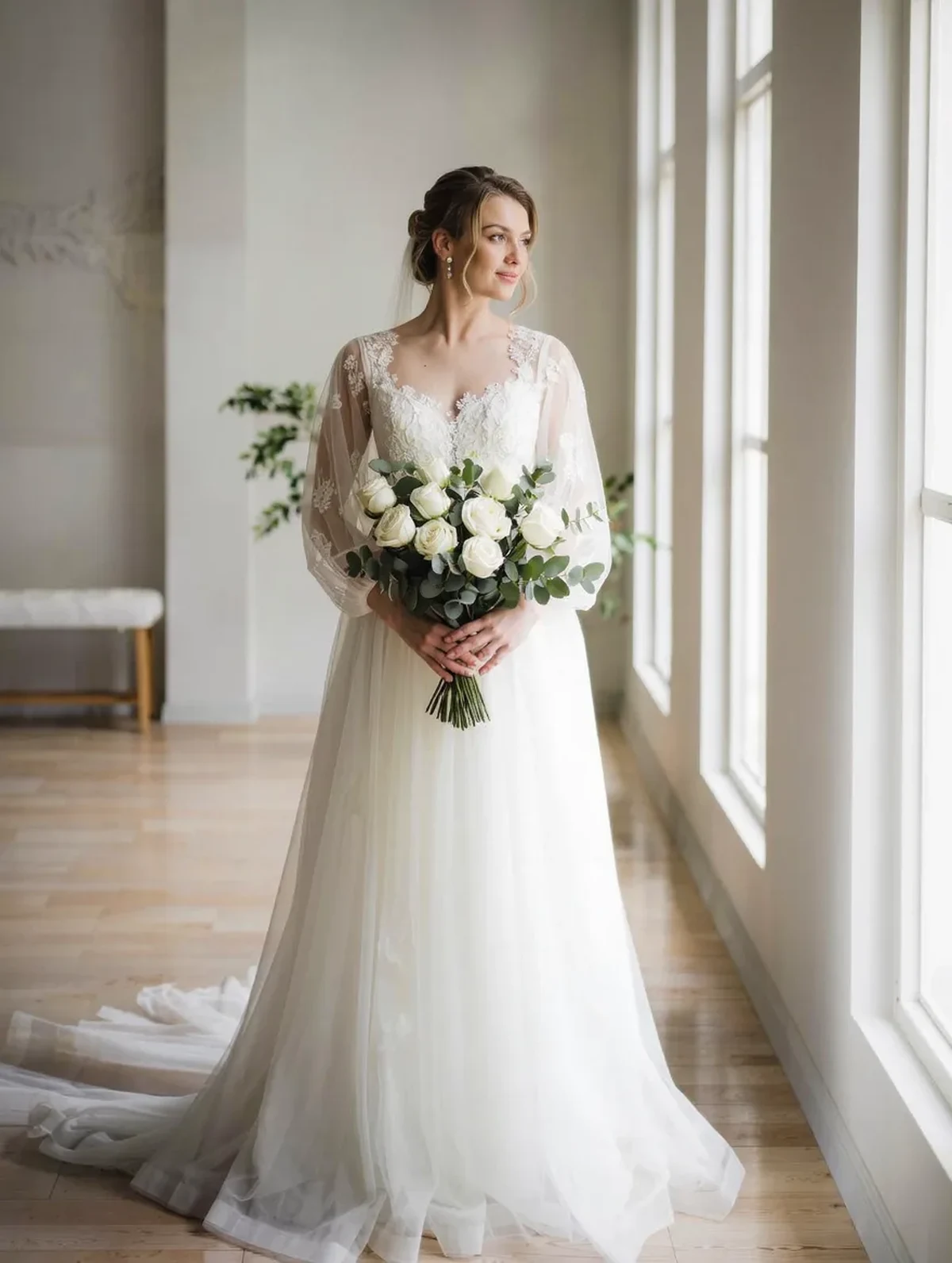
You’ve spent three months on rows and wall slides. Your posture in the fitting room mirror looks great. Then the florist hands you two and a half pounds of roses, and in every practice photo your shoulders are sitting next to your earrings.
Your posture didn’t disappear. The flowers moved it.
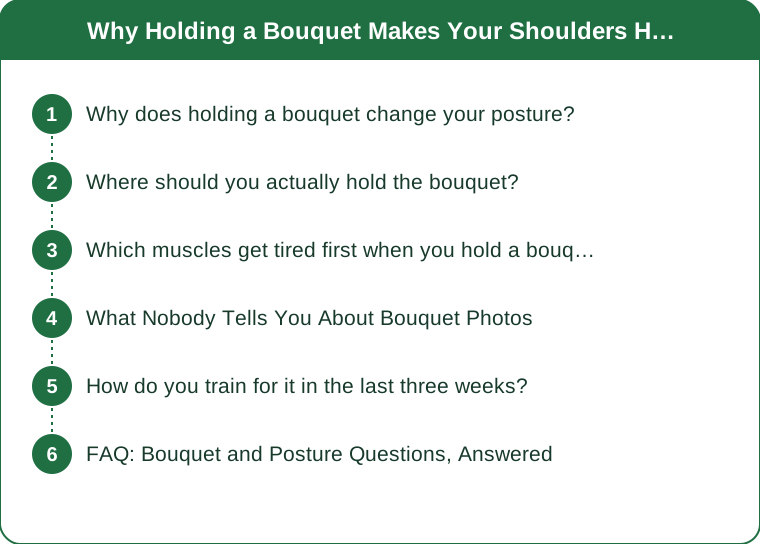
Why does holding a bouquet change your posture?
Watch what your arms do when you’re handed something precious while you’re nervous. You pull it in and up. With a bouquet, that means hands at chest height and elbows pinned against your ribs.
From there the chain runs upward. Tightly bent elbows shorten the biceps and the front of the shoulders. The shoulders roll forward and lift. The upper back rounds to follow them, and the chin pokes forward to balance it all.
In photos, that reads as a shorter neck, a narrower chest, and a hidden waistline. On a strapless or off-the-shoulder dress it also pushes the neckline forward so it gaps.
Weight matters too. A full bridal bouquet commonly weighs 2 to 4 pounds, and a cascading one can run more. Holding that out in front of you for a 20-minute portrait session is a real endurance task for your forearms and upper traps.
Where should you actually hold the bouquet?
Lower than feels natural. The simplest cue is hands at your hip bones, or the flowers centered around your navel.
- Let your elbows open. You want a soft bend with a little daylight between your arms and your waist. That gap shows your shape and stops the upper arm from flattening against your side.
- Tilt the blooms slightly forward, toward the camera, so the flowers face the lens and not the ceiling.
- Hold the stems with a relaxed hand. Thumb and first two fingers do most of the work. A tight fist travels straight up into your shoulder.
- Rest when you can. Between shots, let the bouquet hang at your side in one hand and shake out the other.
A quick test: if you can see your knuckles turning pale, you’re gripping too hard. If you can’t see your waist in the mirror, your elbows are too close.
Which muscles get tired first when you hold a bouquet?
Three areas give out, in a fairly reliable order.
- Forearms and grip. Wrapped stems are narrow and often slippery, so the hand works hard. Tired grip makes you clench, and clenching lifts the shoulders.
- Upper traps, the muscles between your neck and shoulders. They take over when the smaller stabilizers fade, usually around the 5 to 10 minute mark.
- The front of the shoulders, which hold your arms slightly forward of your body the whole time.
The muscles you want sharing the load are lower down: the mid-back muscles that draw the shoulder blades back and down, and the ones along the side of the ribcage. When those are awake, the upper traps don’t have to do everything.

What Nobody Tells You About Bouquet Photos
Most bouquet photos aren’t taken while you walk down the aisle. They’re taken during portraits, where you may hold the flowers for 20 to 40 minutes with only short breaks. That’s when the creep starts.
It happens gradually. Your first frames look relaxed. By frame two hundred, the bouquet has climbed three inches and so have your shoulders, and nobody on set notices because it changed so slowly.
Two things help more than any exercise. First, ask your photographer or a bridesmaid ahead of time to say one word, like ‘low’, whenever the flowers drift up. Second, breathe out fully before each new pose. A long exhale drops the ribs and shoulders by itself, and it takes two seconds.
And the detail brides mention afterward: the stems are often wet when you pick the bouquet up from its vase. Keep a small towel nearby and dry them, because a damp handle makes you squeeze twice as hard.
How do you train for it in the last three weeks?
Ten minutes, 3 days a week. That’s enough to make the low hold feel automatic.
Low hold practice. Stand side-on to a mirror holding something that weighs about 3 pounds, such as a small bag of rice or a full water bottle in both hands. Hands at hip bones, elbows soft. Hold 60 seconds, rest 30, and repeat 3 times. Add 15 seconds each week.
Band pull-aparts. Hold a light resistance band at chest height with straight arms and pull it apart until it touches your chest. 2 sets of 12 to 15. This wakes up the mid-back.
Shrug and drop. Lift your shoulders to your ears, hold 2 seconds, then let them fall completely. 10 reps. It teaches you what ‘down’ feels like so you can find it under pressure.
Wall slides. Back against a wall, arms in a goalpost shape, slide them up and down slowly. 2 sets of 8.
In your final week, practice once in your wedding shoes. Heels shift your weight forward and change how the hold feels.
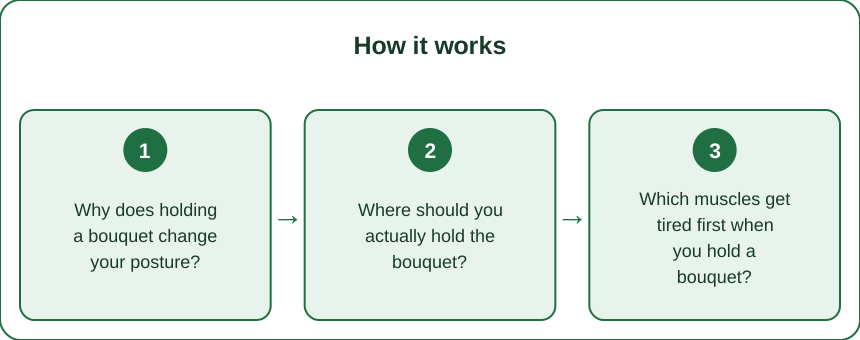
FAQ: Bouquet and Posture Questions, Answered
How heavy is a typical bridal bouquet?
Most fall between 2 and 4 pounds, depending on size, flower type, and how much water the stems are holding. Large cascading designs or ones with heavy blooms can weigh more. Ask your florist for an estimate so you can practice with a similar weight.
Should I hold the bouquet with one hand or two?
Two hands for formal portraits and the walk down the aisle, since it keeps you symmetrical. One hand, with the bouquet relaxed at your side, works well for candid and walking shots and gives your shoulders a break.
What if my arms get tired during photos?
Say so. Hand the bouquet to someone for a minute, roll your shoulders back three times, and take one long exhale. A 60-second break gives you better pictures than pushing through with a tense neck. If you have a shoulder or neck injury, check with a physical therapist about what’s comfortable before the day.
TL;DR:
- Nerves pull the bouquet up to your chest, which pins your elbows, lifts your shoulders, and rounds your upper back
- Hold it at hip-bone height with soft, slightly open elbows and a relaxed grip
- Portrait sessions can mean 20 to 40 minutes of holding 2 to 4 pounds, so grip and upper traps tire first
- Practice a 60-second low hold with a 3-pound object 3 times a week, plus pull-aparts, shrug-and-drops, and wall slides
All the posture work you’ve done still counts. It just needs one more rehearsal, with something in your hands. Keep the flowers low, breathe out before the shutter clicks, and let a friend remind you when they drift.
Keep Reading
This article is for general informational and styling purposes only. Fit, sizing, and product availability may vary.