Why Does the Mirror at Your Dress Fitting Lie to You?
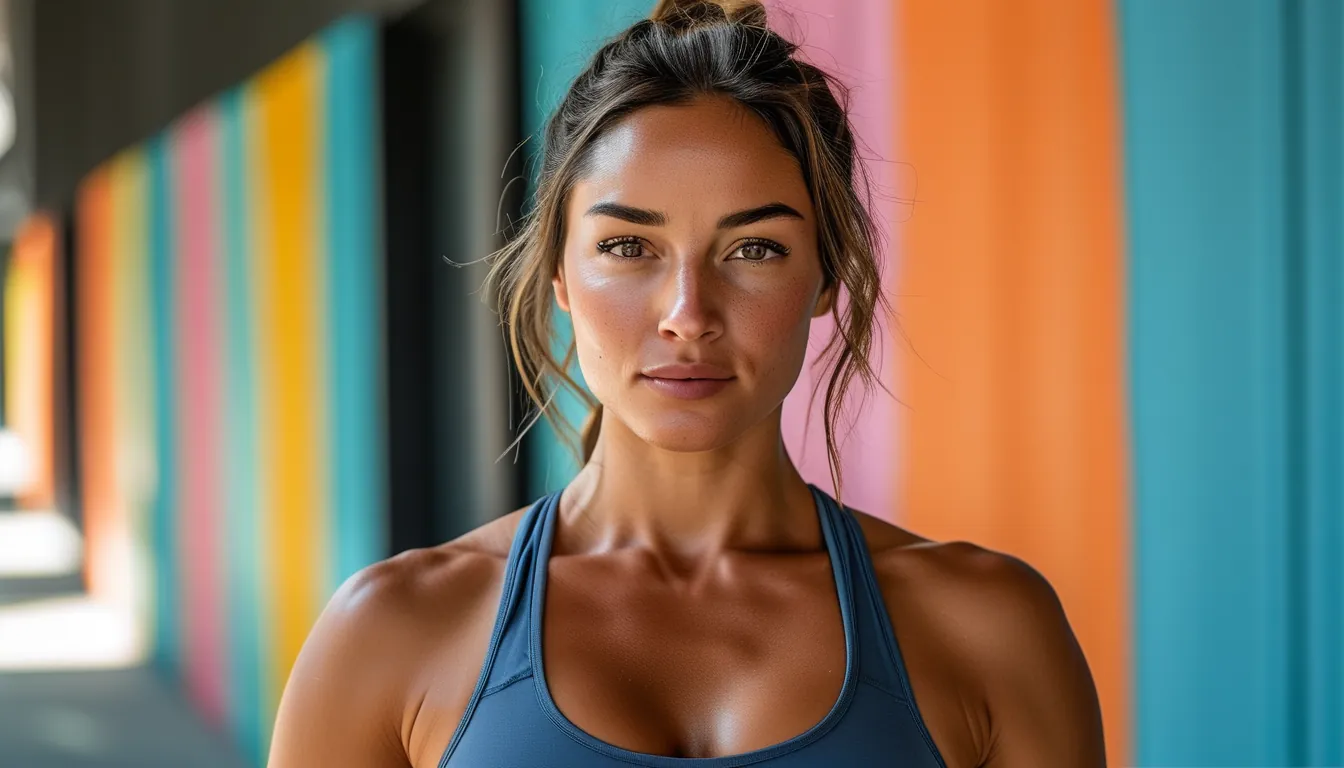
Quick Answer: Most bridal fitting room mirrors sit under harsh, downward-angled fluorescent or LED lighting with a cool color temperature designed for retail clarity, not flattery — it exaggerates shadows under the eyes, arms, and jawline in ways outdoor and venue lighting simply don’t. Your actual wedding photos, lit by soft daylight or warm ambient venue lighting, will look noticeably different — usually better. Knowing this before your next fitting can save you from a body-image spiral over lighting, not your body.
If you’ve walked out of a dress fitting feeling worse about your arms or your stomach than you did walking in, you’re not imagining it — and it’s very likely not really about you at all. It’s about the lighting rig bolted to the ceiling above that three-way mirror.

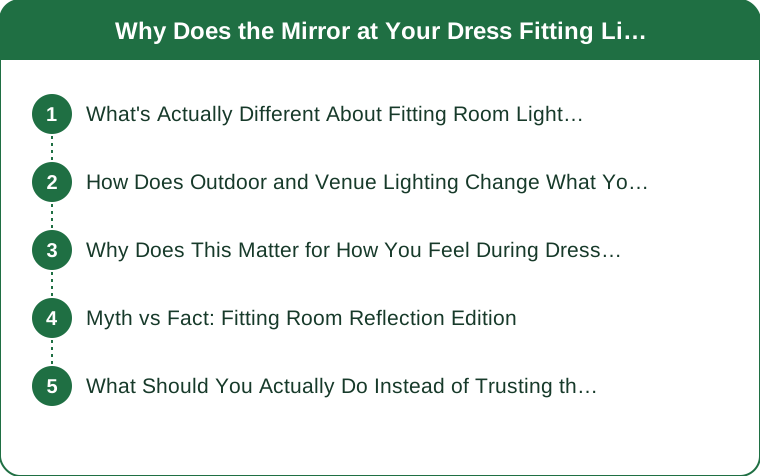
What’s Actually Different About Fitting Room Lighting?
Bridal boutique fitting rooms are typically lit with overhead fluorescent or high-CRI LED panels positioned directly above or slightly behind you, angled downward. That overhead angle is the first problem: light coming straight down casts shadows under your eyes, chin, collarbone, and arms — the same effect you’d get holding a flashlight under your face. It’s not about your features; it’s about geometry.
The second issue is color temperature. Retail fitting rooms commonly run 4000-5000K lighting (a cool, blue-white light), chosen because it renders fabric color accurately for shopping decisions — brides need to see if that ivory is actually ivory, not champagne. But cool light also flattens skin tone and tends to emphasize texture, redness, and under-eye shadow far more than warmer light does.
Third, fitting rooms are usually small, with mirrors placed close to your body. Standing 2-3 feet from a mirror under direct overhead light creates a much harsher, more magnified view than the medium-distance, diffused perspective a camera captures from across a room. Wedding photographers, meanwhile, actively avoid this exact lighting setup — it’s considered one of the least flattering conditions in portrait photography, which is why professional shoots lean on soft, indirect, or golden-hour light instead.
None of this is a boutique doing anything wrong — retail lighting has a real job to do (accurate color, safety, visibility), and flattery isn’t part of that job. But it does mean the mirror you’re judging your dress in is working against you in ways that have nothing to do with how the dress, or you, will actually look on your wedding day.
How Does Outdoor and Venue Lighting Change What You’ll See in Photos?
Outdoor daylight — especially the soft, diffused light of an overcast day or the golden hour an hour before sunset — behaves almost opposite to fitting room lighting. Diffused daylight comes from all directions at once (scattered through clouds or bounced off surroundings) rather than one harsh overhead source, which softens shadows instead of deepening them. This is why professional photographers often prefer a slightly overcast day to full sun: the natural “cloud diffuser” evens out skin tone and reduces harsh lines under the eyes and jaw.
Golden hour light, meanwhile, sits around 2000-3000K — a warm, amber-toned light that flatters skin tone in a way cool fluorescent light structurally cannot. It’s part of why sunset ceremony photos have a reputation for looking universally good on everyone: the light itself is doing a lot of the work.
Indoor venue lighting for receptions is usually warm-toned too — string lights, uplighting, candles, and dimmed ambient fixtures typically run in the 2700-3200K range, closer to the golden-hour range than to a fitting room’s cool overheads. Combined with the fact that reception photos are usually shot from a greater distance with a longer lens (which naturally compresses and softens features compared to a close-up mirror view), the visual gap between “fitting room you” and “wedding photo you” can be significant.
The practical upshot: if a dress felt slightly off under fitting room lights, it’s worth asking to step near a window or under any warmer lighting the boutique has, since that’s a far closer preview of your actual wedding-day look than the standard mirror alone.
Why Does This Matter for How You Feel During Dress Shopping?
Dress shopping is already an emotionally loaded experience — you’re trying on deeply symbolic clothing in front of family, under time pressure, often after a stressful week. Layering harsh, unflattering lighting on top of that is a recipe for a body-image spiral that has nothing to do with your actual body or the dress, and everything to do with a lighting rig.
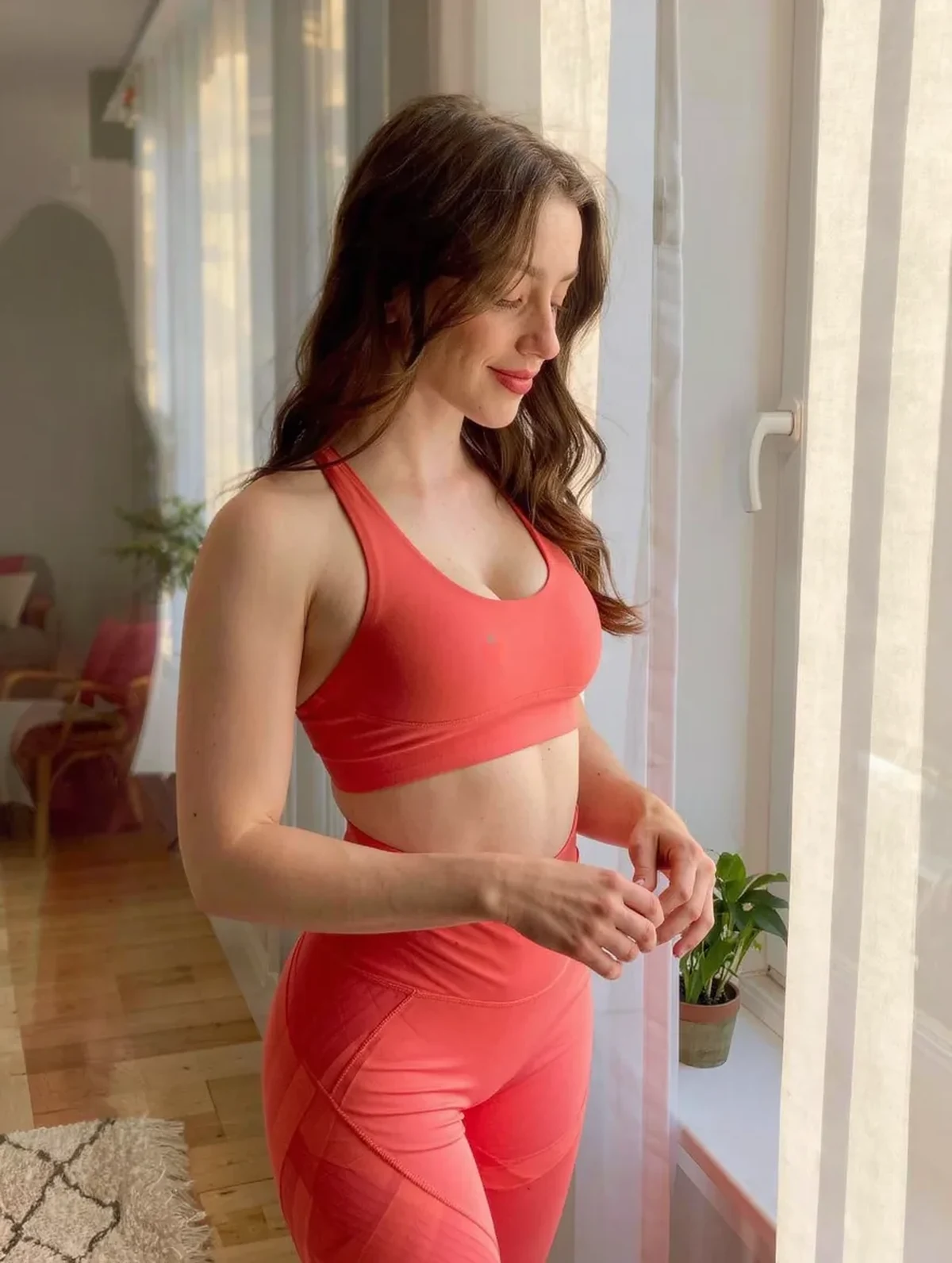
Bridal stylists who work with a lot of clients often mention a common pattern: a bride tries on a dress, feels deflated under the fitting room lights, then sees a photo of herself in that same dress taken near a window or outside and is visibly relieved — sometimes even surprised it’s the same dress. That gap is real and measurable, not just a feeling.
Knowing this in advance changes how you can approach fittings. Instead of treating the mirror as the final verdict, treat it as one data point among several — how the dress feels to move in, how it looks in a photo taken in different light, and how it looks from a few feet back rather than up close. Bringing someone with you specifically to take phone photos from across the room, ideally near any available window light, gives you a far more honest preview than the mirror alone.
It’s also worth remembering that the goal of a fitting is functional (does it fit, does it need alterations, can you move and sit in it) more than it is a referendum on your body under the worst lighting condition in the building. Separating those two things protects your confidence heading into the actual day, when the lighting will very likely be working in your favor.
Myth vs Fact: Fitting Room Reflection Edition
Myth: If a dress looks bad in the fitting room mirror, it’ll look bad in photos. Fact: Fitting room lighting is specifically engineered for cool, harsh, overhead visibility — the near-opposite of the soft, warm, diffused light most weddings are photographed in. A dress that reads as unflattering under fluorescent overheads frequently photographs completely differently in venue or outdoor light.
Myth: Shadows under your arms or chin in the mirror mean the dress doesn’t fit right. Fact: Those shadows are very often a direct result of the light’s downward angle, not the garment. The same dress under front-angled or diffused light typically shows a much smoother silhouette.
Myth: A dress that photographs well needs to look perfect in every mirror first. Fact: Cameras and lenses compress and soften detail from a few feet away in a way an up-close mirror simply doesn’t replicate — a slight double-check in different lighting is more useful than obsessing over the closest, harshest reflection.
Myth: If you feel unflattered in the fitting room, that’s useful information about your body. Fact: It’s much more often useful information about the room’s lighting design. Separating “how do I look under bad light” from “how will I look on my wedding day” is one of the most useful reframes a bride can make during dress shopping.
Myth: Boutiques could just use better lighting if they wanted to. Fact: Cool, bright, overhead lighting exists for accurate color rendering and practical visibility, not flattery — it’s a deliberate retail tradeoff, not an oversight, and it’s the same setup at nearly every boutique for that reason.
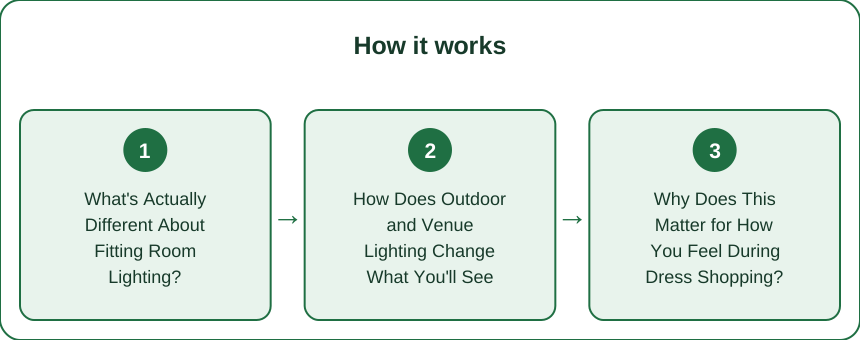
What Should You Actually Do Instead of Trusting the Mirror?
A few small habits make dress fittings far more useful and far less discouraging. First, ask if there’s a window or a spot with warmer, softer lighting near the fitting area — even stepping just outside the fitting room into the main showroom, which is often lit more evenly, can shift what you see meaningfully.
Second, have someone take photos from 6-8 feet away rather than relying only on the close-up mirror view. Distance compresses detail the way a camera at your actual wedding will, and it’s a far more honest preview than a mirror two feet from your face under a spotlight.
Third, if the boutique allows it, try stepping near any available daylight — even a doorway — for a quick comparison shot. The difference between that photo and the fitting room mirror is often the single most reassuring thing a bride can see during the entire dress-shopping process.
Fourth, prioritize how the dress feels — can you sit, walk, raise your arms, dance — over how it looks under the worst lighting in the building. Fit and function carry more real information than a harsh mirror does.
Finally, keep in mind that your actual wedding lighting — golden hour, string lights, candlelight, warm venue uplighting — is, almost across the board, more flattering than a retail fitting room. If you walk out of a fitting feeling less than thrilled, it’s worth pausing before assuming that feeling will carry through to the day. There’s a real, physics-based reason it very likely won’t.
TL;DR:
- Fitting room lighting is cool-toned (4000-5000K) and overhead, which exaggerates shadows under eyes, arms, and jawline
- Wedding photos are usually lit by warm daylight, golden hour, or venue ambient lighting (2700-3200K) — a structurally more flattering setup
- The close-up, harsh mirror view isn’t a preview of how you’ll look from camera distance in soft light
- Ask to check near a window, get a photo from a few feet back, and prioritize fit and movement over the mirror’s verdict
- A dress that feels “off” under fluorescent overheads very often looks completely different in your actual wedding-day light
The mirror isn’t measuring you — it’s measuring the room’s light bulbs, and your wedding day almost certainly has better ones waiting.
Keep Reading
This article is for general informational and styling purposes only. Fit, sizing, and product availability may vary.