Why Do Cold Hands and Feet Wreck More Wedding Photos Than You'd Think?
Quick Answer: Cold temperatures trigger your body to pull blood away from your hands and feet and toward your core, a survival response called vasoconstriction — and it shows up in photos as pale, blotchy, or stiff-looking fingers and toes right when the camera is closest, during ring shots and shoe details. A short, deliberate warm-up routine before those specific photo moments — movement, hand warmers, and timing — keeps circulation flowing and your extremities looking natural instead of visibly cold.
If you’re getting married outdoors or between an outdoor ceremony and reception this fall, there’s a detail almost nobody warns you about: your hands and feet are the first part of you the cold gets to, and they’re also two of the most photographed close-ups of the entire day.
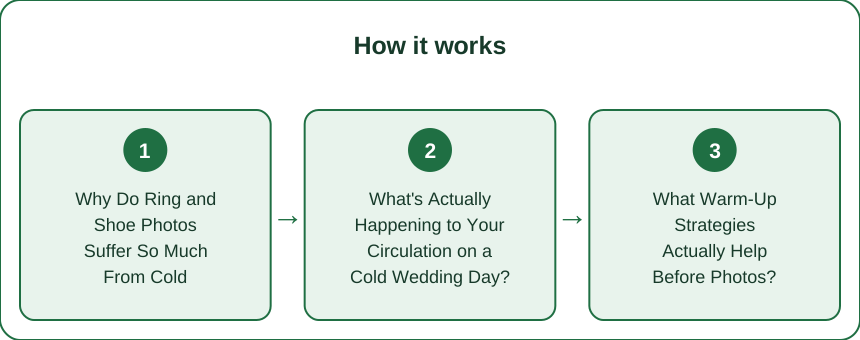
Why Do Ring and Shoe Photos Suffer So Much From Cold Weather?
Ring shots and shoe detail photos are some of the most zoomed-in images of your entire wedding gallery — a macro lens capturing every inch of your hand or foot with nowhere for cold-related color changes to hide. Unlike a wide shot of you walking down the aisle, these close-ups have no distance to soften what’s happening to your skin.
Cold hands don’t just feel unpleasant — they visibly change color and texture. Reduced blood flow to the fingers causes noticeable paleness or a mottled, blotchy red-and-white pattern (a normal response called acrocyanosis in mild cases), along with visibly tighter, less relaxed-looking finger positioning because stiff joints don’t rest naturally. A ring photo taken on cold fingers often needs far more editing to look warm and natural than one taken on comfortably warm hands.
Feet face a similar problem, compounded by the fact that wedding shoes — heels especially — already restrict circulation somewhat on their own by compressing the foot. Add outdoor cold on top of that, and toes can go from slightly pink to visibly pale or purplish within 15-20 minutes of standing outside, which shows clearly in barefoot or open-shoe detail shots.
Photographers who shoot a lot of fall and winter weddings often schedule ring and shoe shots as early as possible in the outdoor portion of the day, precisely because they know cold exposure compounds the longer a bride is outside. Knowing this in advance means you can plan for it instead of being caught off guard mid-shoot with hands that don’t look like your own.
What’s Actually Happening to Your Circulation on a Cold Wedding Day?
Your body treats cold exposure as a threat to your core temperature, and it responds with vasoconstriction — narrowing the blood vessels in your extremities to reduce heat loss and preserve warmth for vital organs. Hands and feet are the first places this happens because they have a high surface-area-to-volume ratio (lots of skin, not much mass to hold heat) and sit farthest from your core.
This response can kick in surprisingly fast — noticeable finger cooling can begin within 5-10 minutes of exposure to temperatures in the 40-50°F range, which describes a lot of fall wedding days perfectly. It’s not about being unfit or overly sensitive to cold; it’s a universal physiological response, though it does vary somewhat person to person based on circulation, body fat distribution, and even stress levels (adrenaline from wedding-day nerves can actually amplify vasoconstriction).
Standing still makes it worse. Muscle movement is one of the main ways your body generates and circulates heat, so the long stretches of standing still for photos — exactly when you need your hands and feet to look their best — are also exactly when circulation to them is dropping the most. It’s a frustrating mismatch: the moments that demand stillness are the moments your body is least equipped to keep your extremities warm and photo-ready.
Understanding this mechanism is what makes the fix obvious: since movement drives circulation, short bursts of movement timed right before the still moments are far more effective than just bundling up and hoping for the best.
What Warm-Up Strategies Actually Help Before Photos?
The most effective fix is simple: move your hands and feet deliberately in the minutes right before a photo that needs them exposed. Making fists and releasing them 10-15 times, or doing ankle circles and toe curls, pumps blood back into your fingers and toes through active muscle contraction — the same mechanism your body uses naturally, just sped up on purpose.
Disposable hand warmers (the shake-to-activate kind) are worth having on hand literally — keep one in each pocket or have your coordinator hold a pair, and warm your hands for 2-3 minutes right before any ring shot. The same works for feet: warming them inside boots or a blanket between outdoor photo segments, then switching to wedding shoes only right before the shot, keeps toes pinker and more relaxed-looking than hours of continuous cold exposure would.
Timing your outdoor photo segments matters too. Grouping all the shots that need bare hands or feet into the shortest possible window, rather than spreading them across a long outdoor session, limits total cold exposure time. If you can, discuss this sequencing with your photographer in advance — many will already plan for it, but it doesn’t hurt to ask specifically about ring and detail shots.
A warm drink (not too hot, and ideally non-alcoholic before formal photos since alcohol can actually worsen vasoconstriction rebound) held between shots can help too, along with a warm layer like a wrap or shawl you can wear until seconds before the shot and put right back on after.
None of this requires a major wardrobe or schedule overhaul — it’s a handful of small, well-timed habits that protect the specific close-up shots most vulnerable to cold.
5 Mistakes Brides Make on Cold-Weather Wedding Days
1. Standing still outdoors for long stretches before photos. Stillness is exactly what worsens circulation. Keep moving — even shifting weight or gentle stretching — between shots instead of standing frozen in place.
2. Saving ring and shoe shots for last. The longer you’re exposed to cold, the more pronounced the color and stiffness changes become. Front-loading these specific shots, before extended outdoor exposure, produces better results.
3. Wearing wedding shoes the entire outdoor portion of the day. Heels compress circulation on their own; adding hours of cold on top compounds the effect. Switch into warm boots between shoe-shot moments when possible.
4. Not having hand warmers or a warm-up plan at all. Assuming “it’s not that cold” for a 40-50°F day underestimates how fast vasoconstriction kicks in — often within 5-10 minutes. A small warm-up routine costs nothing and prevents a lot of photo frustration.
5. Having a drink to “warm up” before formal photos. Alcohol dilates blood vessels temporarily but often causes a rebound constriction and can worsen how flushed or blotchy skin looks in photos shortly after. A warm non-alcoholic drink is the safer choice before camera time.
Small adjustments to timing and preparation go a long way toward protecting exactly the close-up shots you’ll want to love for decades.
How Do You Plan the Day-Of Timeline Around This?
Build a little cold-weather buffer directly into your day-of timeline rather than leaving it to chance. If you’re doing an outdoor first look or ceremony, ask your coordinator or photographer to schedule ring and shoe detail shots within the first 10-15 minutes of stepping outside, before extended cold exposure sets in.
Pack a small “warm-up kit” for your day — a couple of hand warmers, a cozy wrap or oversized cardigan you can throw on between shots, and a pair of warm socks or slippers to switch into whenever you’re not actively being photographed in your wedding shoes. Assign this kit to a bridesmaid or your coordinator so it’s always within reach without you having to think about it.
If your venue allows it, keep the true outdoor portion of your photo session as short and focused as possible, saving longer outdoor segments (like sunset shots, if you’re doing them) for after the close-up ring and shoe shots are already done and can be shot with warmer coats and boots on top of your dress.
Finally, build in short indoor warm-up breaks between outdoor segments if your schedule allows — even five minutes inside with hands wrapped around a warm mug does a lot to reset circulation before heading back out. A little planning here means the difference between wincing at pale, stiff-looking hands in your ring photos years from now, and genuinely loving every detail shot from your day.
TL;DR:
- Cold triggers vasoconstriction, pulling blood from hands and feet — often within 5-10 minutes at 40-50°F
- This shows up in close-up ring and shoe photos as pale, blotchy, or stiff-looking extremities
- Deliberate movement (fist pumps, ankle circles) and hand warmers right before shots keep circulation flowing
- Schedule ring and shoe shots early in the outdoor portion of the day, before extended cold exposure
- Skip alcohol before formal photos — it can worsen the flushed, blotchy rebound effect after warming
A few minutes of warm-up planning protects the exact close-up shots you’ll be looking back at for years — worth the small extra effort on a cold wedding day.
Keep Reading
This article is for general informational and styling purposes only. Fit, sizing, and product availability may vary.