How to Train for Your Wedding Without Losing Your Personality

Quick Answer: Keep at least one workout format you already genuinely enjoy untouched in your weekly schedule, and add wedding-specific goals around it rather than replacing your entire routine with a generic bridal fitness plan.
Most bridal fitness plans are built around a countdown and a generic aesthetic goal, which can quietly replace workouts you actually liked with ones chosen purely for a deadline — and that’s a fast route to burnout well before the wedding itself.

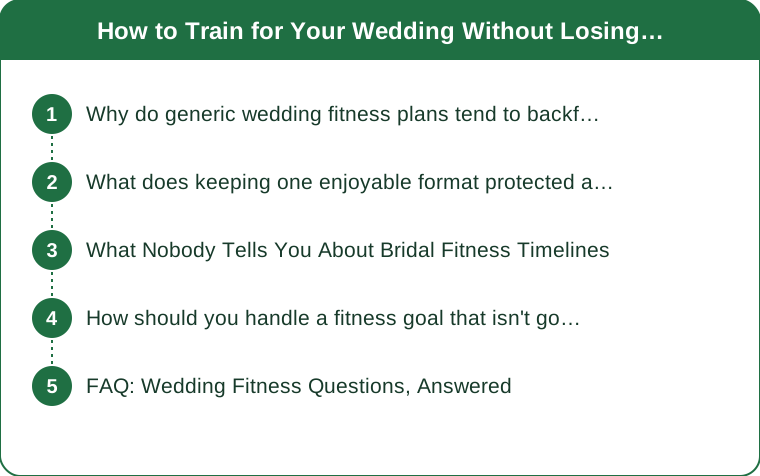
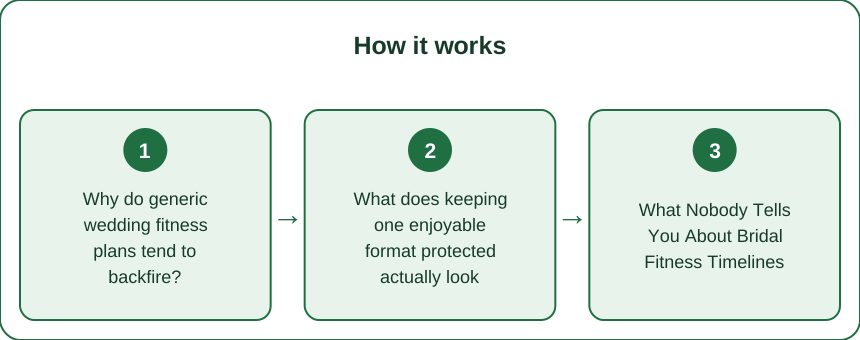
Why do generic wedding fitness plans tend to backfire?
They’re built around a fixed timeline and often a generic goal (a specific dress size or look) rather than what actually keeps you consistent, which works fine short-term but tends to produce burnout or resentment as the wedding approaches and stress rises from other planning demands. Consistency, not intensity, is what actually shows results by the wedding date — and consistency requires enjoying the process at least somewhat.
What does keeping one enjoyable format protected actually look like?
If you love a specific class format, keep attending it at your normal frequency, and layer any wedding-specific goals (arm definition for a sleeveless dress, for example) into your other training days rather than replacing the class you love. This protects the part of your routine most likely to keep you showing up when wedding stress is highest.

What Nobody Tells You About Bridal Fitness Timelines
Wedding planning stress itself often undermines fitness consistency more than the training plan does. The weeks leading up to a wedding are frequently the most stressful of the entire process, and a workout routine that depends on high motivation and willpower is more likely to break down exactly when planning stress peaks — a routine built around enjoyment holds up better under that stress.
How should you handle a fitness goal that isn’t going as planned close to the wedding?
Shifting focus from a specific aesthetic outcome to how you want to feel on the day (energized, confident, rested) with a few weeks left tends to reduce stress without abandoning fitness altogether — a rigid goal that isn’t hit close to the date often does more emotional harm than adjusting the goal itself.
FAQ: Wedding Fitness Questions, Answered
How far out should wedding-specific training realistically start?
Most trainers suggest 3-4 months for meaningful, sustainable change, though shorter timelines can still support feeling more energized and confident without dramatic physique goals.
Is it normal to want to skip workouts during peak wedding planning stress?
Yes, very common — building in flexibility (a shorter alternative workout option) for those weeks specifically helps maintain some consistency without all-or-nothing pressure.
Should I try a completely new workout format for my wedding body goal?
Only if you’re also genuinely curious about it — starting something brand new purely for aesthetic results, with no interest in the format itself, is a common reason bridal fitness plans get abandoned.
TL;DR:
- Keep at least one workout format you already love untouched in your schedule
- Consistency built on enjoyment holds up better than intensity built on willpower
- Wedding planning stress often undermines fitness more than the training plan itself
- If a goal isn’t landing close to the date, shift focus to how you want to feel, not a fixed metric
Keep Reading
This article is for general informational and styling purposes only. Fit, sizing, and product availability may vary.