Train for Your Wedding Shoes, Not Just Your Dress

Quick Answer: Wedding shoes need a training plan the same way anything else does - start eight weeks out, wear them indoors for increasing periods, and build calf and foot strength alongside. Most wedding-day foot pain isn’t from the shoe being wrong; it’s from wearing an unfamiliar heel height for twelve consecutive hours after months of trainers. Buy a second flat pair for the evening and stop treating that as a failure.
The dress has been fitted three times. The shoes have been out of the box once.

Why is the wedding-day foot problem so predictable?
Because the load is unlike anything in a normal week, and nothing about the preparation acknowledges that.
Consider the actual demand: ten to fourteen hours upright, mostly standing rather than walking, in a heel height you don’t wear daily, on varied surfaces - grass, gravel, wooden floors, dance floors - with very few opportunities to sit down, and with the physical and emotional intensity of the day layered on top.
If someone described that as a training session, you’d prepare for it. Wearing new shoes for twelve hours is exactly the kind of sudden load increase that produces blisters, arch pain, and calf cramping in any other context.
Heels change the mechanics substantially. A raised heel shifts your weight forward onto the ball of the foot, shortens the calf muscle and Achilles tendon in a held position, and changes how your ankle and knee handle load. Your body adapts to this over weeks of regular wear - and if you wear trainers all week and heels twice a year, you don’t have that adaptation.
Standing still is harder than walking. Walking cycles the muscles and moves blood; standing still is a sustained isometric hold with pooling in the lower legs. Wedding days involve enormous amounts of standing still - photos, receiving lines, conversations - which is the specific thing that produces the ache people describe at hour six.
What does the eight-week plan look like?
Progressive exposure, exactly like any other training progression.
Weeks 1-2: Indoor short wears. 20-30 minutes at a time, at home, on carpet. The goal is finding pressure points early, while there’s time to do something about them. Note anywhere that rubs, and stop before it hurts.
Weeks 3-4: Extend and add hard floors. 45-60 minutes, including time on wooden or tiled floors. Walk around, go up and down stairs, stand still for a few minutes at a time. Standing still is the specific thing to practise because it’s what the day mostly is.
Weeks 5-6: Full evening wears. Two to three hours. Wear them while cooking, watching something, moving around the house. This is where you’ll discover whether the shoe is genuinely comfortable or merely acceptable for an hour - and it’s still early enough to buy alternatives.
Weeks 7-8: Practise the actual day. Wear them with the dress if you can, at least once. Practise walking on the surfaces you’ll be on - grass, if the venue is outdoors. Practise standing for photographs, which is a different posture from standing normally.
Throughout - the strength work that makes the difference:
- Calf raises, 3 sets of 15, three times a week. The calf is doing the most work in a heel and it’s the most common cramping site.
- Single-leg balance, 30 seconds each side, daily. Heels narrow your base of support considerably.
- Toe splaying and foot doming exercises, daily, 2 minutes. Intrinsic foot strength directly affects how long you tolerate forefoot load.
- Calf and Achilles stretching, daily, especially in the last two weeks.
5 Mistakes People Make With Wedding Shoes
Mistake 1: Buying for the photo rather than the day. A shoe that’s barely visible under a floor-length dress is being chosen for about four photographs. If the dress covers them, prioritise comfort ruthlessly - and if it doesn’t, there are still comfortable options at every price point.
Mistake 2: Choosing a heel height you’ve never worn. The wedding day is the worst possible time to debut a 4-inch heel. A 2-inch block heel worn confidently looks considerably better than a 4-inch stiletto worn carefully, and the difference is visible in how you move.
Mistake 3: Skipping the second pair. Having flats for the evening is not a failure of planning - it’s the plan. Buy them, break them in too, and put them somewhere you can actually reach at 9pm. Trainers under a dress at a reception is now completely unremarkable.
Mistake 4: Ignoring the surface. A stiletto on grass sinks; a stiletto on old wooden floors catches; a smooth sole on a polished floor slides. Ask what the surfaces are before buying, and scuff or grip smooth soles before the day.
Mistake 5: Leaving it to the last fortnight. Two weeks isn’t enough time to identify a problem and solve it. Eight weeks means you can return a shoe that doesn’t work, which is the actual value of starting early.
What Nobody Tells You About Feet on a Wedding Day
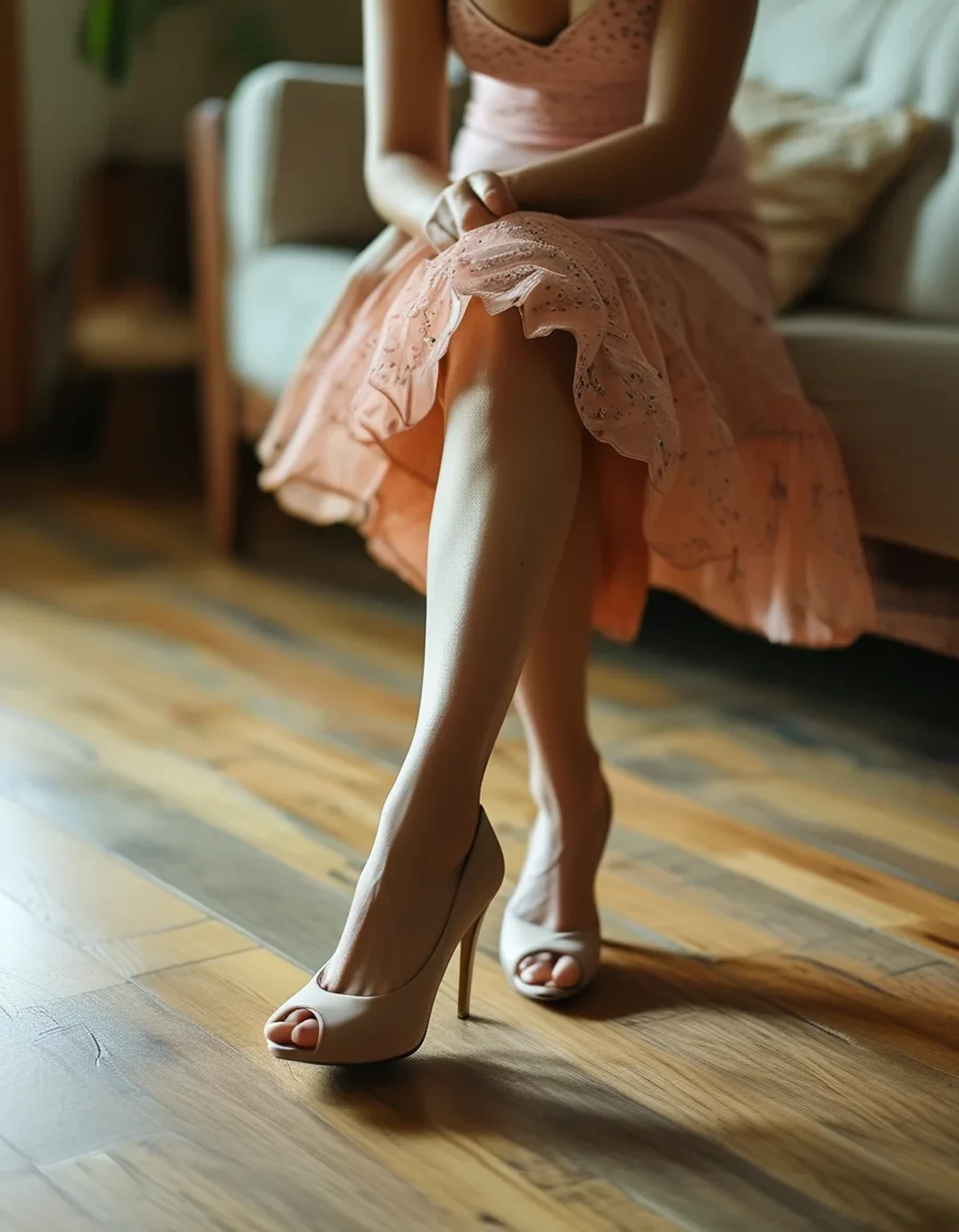
Your feet swell over a long day, particularly in heat and after standing. A shoe that fits perfectly in the morning can be noticeably tight by evening. Buy with a small amount of room, and try shoes on in the afternoon when your feet are already slightly larger.
The dress hem length is set by the shoe. Changing shoe height after the final fitting means the hem is wrong - too long with flats, too short with a higher heel. Decide the shoe before the final fitting and bring them to it, and if you plan to change into flats later, factor that in or accept a slightly longer hem in the evening.
Blister prevention beats blister treatment by a wide margin. Apply protective tape or blister plasters to known friction points before the day starts, not after they hurt. Anti-friction balm on the ball of the foot and the heel is cheap and effective. Once a blister forms, nothing available on the day will make it comfortable.
Gel forefoot pads are the highest-value pound you’ll spend. The ball of the foot carries the majority of the load in a heel, and metatarsal cushioning meaningfully extends how long that’s tolerable. Fit them during your training wears, not on the morning.
Sit down deliberately. Not when your feet hurt - before. Ten minutes seated at intervals through the day resets the load far more than an hour of rest at the end, and the natural rhythm of a wedding gives you those opportunities if you take them.
And an emergency kit that lives with someone else: blister plasters, anti-friction balm, a small pair of scissors, spare shoes, and painkillers if you use them. Someone other than you should be carrying it, because you’ll be holding a bouquet.
What about the rest of the outfit and the day itself?
A few things adjacent to shoes that affect how the day feels physically.
Practise walking in the dress, not just the shoes. A long or heavy skirt changes your stride and how you manage stairs. Practise stairs specifically - up and down, with the dress, in the shoes. It’s the single most common moment of difficulty and it takes ten minutes to rehearse.
Eat and drink. Both get skipped on wedding days with remarkable consistency, and low fuel and dehydration make everything - standing, heat, emotion - considerably harder. Assign someone to hand you water, because you won’t do it yourself.
Plan the shoe change point. Typically after the formal photographs and the first dance. Decide it in advance and tell someone, so that the flats appear rather than needing to be found.
If the venue is outdoors, get heel protectors. The small caps that fit over a stiletto tip and stop it sinking into grass cost very little and prevent a specific, common, entirely avoidable problem.
And keep the expectations honest: even with good preparation, twelve hours upright is a lot. The goal isn’t feet that feel fresh at midnight - it’s feet that don’t become the thing you remember about the day. That’s an achievable target and the plan above reaches it.
If you have an existing foot condition - plantar fasciitis, bunions, neuroma, or anything that already limits your footwear - that’s worth a conversation with a podiatrist well ahead of the day rather than a gamble on the day itself. This is general information, not medical advice.
FAQ: Wedding Shoe Questions, Answered
How far in advance should I buy the shoes?
At least eight to ten weeks, and before the final dress fitting. That gives time to break them in and to return them if they don’t work.
What heel height is realistic?
Whatever you can currently stand in comfortably for two hours, or slightly less. For most people who don’t wear heels regularly, that’s a block heel of two inches or under.
Is it acceptable to wear flats or trainers?
Entirely, and it’s increasingly common. Comfort on the day is worth more than the four photographs where the shoes are visible.
How do I stop new shoes rubbing?
Break them in over weeks rather than days, tape known friction points before symptoms appear, use anti-friction balm, and add gel forefoot pads during your practice wears so the fit accounts for them.
TL;DR:
- Twelve hours upright in an unfamiliar heel is a load you’d train for in any other context
- Eight-week plan: 30 minutes indoors, building to full evenings, on the surfaces you’ll actually be on
- Calf raises, balance work, and foot strengthening three times a week alongside
- Buy the second pair of flats - it’s the plan, not a failure of one
- Tape friction points and fit gel forefoot pads before anything hurts, not after
You fitted the dress three times. Give the shoes two months.
Keep Reading
This article is for general informational and styling purposes only. Fit, sizing, and product availability may vary.