Wedding Dress Fittings and Your Training (How to Not Undo Your Alterations)

Quick Answer: Your dress is cut to the body you had on fitting day, so a body that’s still changing means a dress that keeps needing re-cutting. Front-load your training in the months before your first fitting, then switch to maintenance about 4–6 weeks out so your shape holds steady. And tell your seamstress you’re training — including what kind, because strength work changes your back and shoulders in ways cardio doesn’t.
You booked the fittings. You booked the training. Nobody mentioned the two would spend three months quietly fighting each other.
Here’s the collision: alterations are precision work done on one specific day’s measurements, and consistent training is a slow, deliberate campaign to change those measurements. Do both at full speed at the same time and you’ll pay for the same alteration twice.

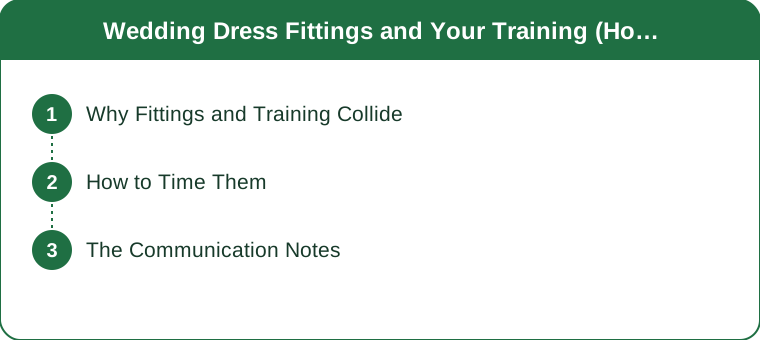
Why Do Fittings and Training Conflict?
Because you’ve got two moving targets and only one of them knows about the other.
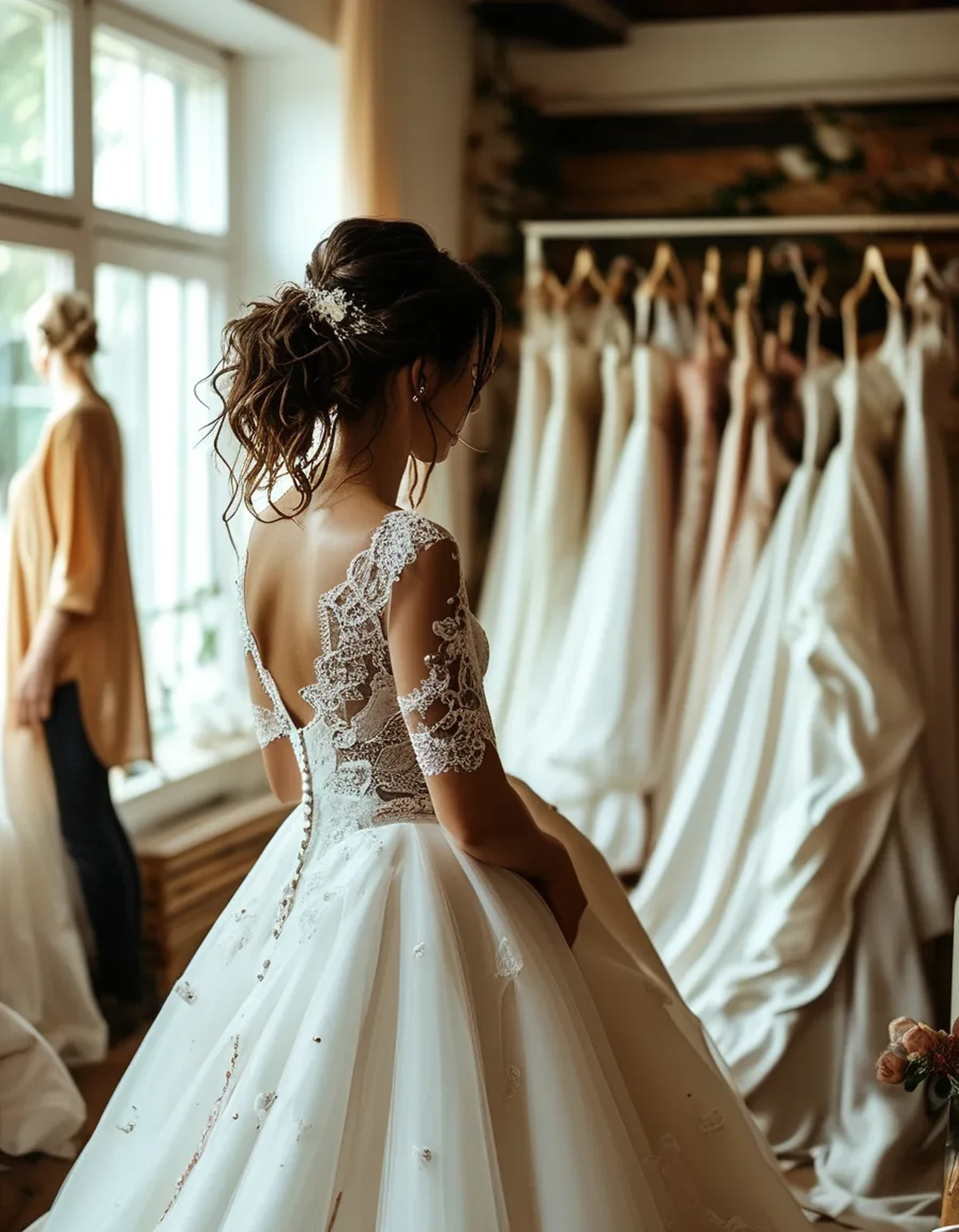
The dress is cut to that week’s body. A seamstress pins to what’s in front of her on the day. She’s not forecasting where your lats will be in six weeks — she’s fitting the measurements in the room.
Training keeps changing you. That’s the entire point of it, and it doesn’t pause because a bodice has been taken in.
Strength training changes shape, not just size. This is the part that catches brides out. You can hold exactly the same weight on the scale and still outgrow a bodice, because rowing and pulling work builds the upper back and shoulders — the two places a fitted wedding dress has the least give. A dress that fits your waist perfectly can go tight across the back in five weeks with no number on the scale moving at all.
Refits cost real money. Alterations aren’t a free do-over. Each round of re-cutting is another bill, and by the third one you’re funding a small honeymoon dinner in seamstress fees.
And nobody warns you about any of it. That’s the whole reason this article exists.
The reframe that fixes it: stop treating fittings and training as two parallel tracks. Treat them as a sequence — training does its work first, then the dress gets cut to the result.
How Should You Time Training Around Fittings?
The whole strategy is front-loading. Big changes early, small changes never.
Do the bulk of your training well before fittings start. If your first fitting is 12 weeks out, the real work belongs in the months before that, not the weeks after.
Schedule the first fitting after the main changes have happened. Not before. A first fitting booked too early is just an expensive rehearsal for the fitting you’ll need later.
Stabilise before the final fitting. Aim for a steady shape for roughly the last 4–6 weeks. Steady doesn’t mean stopping — it means training to hold what you built instead of chasing more.
Switch to maintenance, don’t push. Keep 2–3 sessions a week at a load you already handle comfortably. You’re preserving, not progressing.
Don’t start anything new late. A new programme six weeks out is a new stimulus, and a new stimulus is exactly what your alterations don’t need. New shoes, new bootcamp, new anything — after the wedding.
Watch upper-back and shoulder volume specifically. If you keep one thing conservative in the final stretch, make it pulling volume. That’s the region your bodice is least forgiving about.
Keep it consistent rather than escalating. Consistency is easy to fit a dress around. A programme that ramps every week is not.
Leave a buffer for one final adjustment. Build in time for a last tweak in the final 1–2 weeks. Something always needs it.
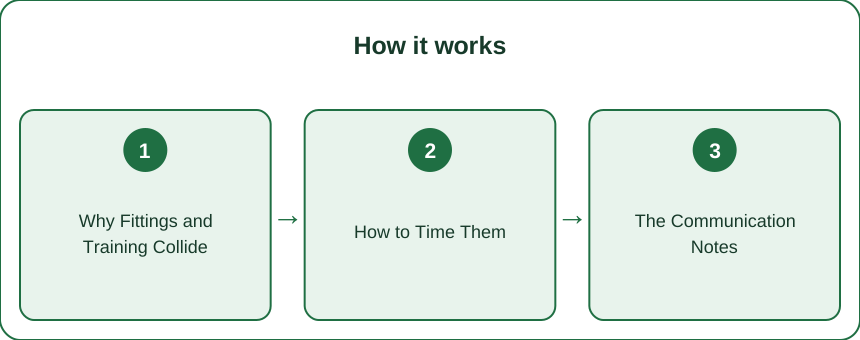
What Should You Tell Your Seamstress?
More than you think, and earlier than you think.
Tell her you’re training. This is the single highest-value sentence in the whole process, and most brides never say it.
Say what kind. “I’m working out” tells her nothing. “I’m lifting three times a week, mostly rows and pull-downs” tells her the back panel is the one to leave room in. Strength and cardio produce genuinely different fit problems and she can only plan for the one she knows about.
Ask about the alteration order. Some alterations are easy to redo late, others are structural and effectively final. Ask which is which so the irreversible work happens last.
Be honest, not optimistic. “I’ll probably drop another size” is a forecast, not a measurement, and a dress cut to a forecast is a dress that needs re-cutting. Give her where you actually are.
Wear the real underwear to every fitting. Every single one. The bra you’ll actually wear changes the fit more than a week of training does, and it’s the cheapest variable to get right.
Let go of a target size. Posture and strength change how a dress sits more than a number on a tag does. A bride who stands well in a size 12 photographs better than a bride hunched in a size 10.
5 Mistakes Brides Make With Fittings and Training
- Booking the first fitting too early — while the biggest changes are still in progress. You’re paying for a rehearsal.
- Starting a new programme after the first fitting — the classic “I’ve still got eight weeks!” move that ends in a third refit.
- Never mentioning the training at all — leaving your seamstress to plan blind.
- Ignoring back and shoulder work — the region that quietly outgrows a bodice while the scale sits perfectly still.
- Wearing the wrong underwear to fittings — and then wondering why the fit felt different on the day.
Frequently Asked Questions
Should I stop training before my wedding?
No. Stopping isn’t the goal — stabilising is. Keep training 2–3 times a week at a comfortable, familiar load in the last 4–6 weeks. You keep the strength and the posture, and your dress keeps fitting.
How far out should the final fitting be?
Most brides do best with the final fitting roughly 2 weeks out, with a small buffer for one last adjustment after it. That assumes your shape has been steady for the month before — if it hasn’t, the buffer is where you’ll find out.
Can strength training make my dress tighter even if I lose weight?
Yes, and it’s the most common surprise in the whole process. Back and shoulder work adds width exactly where a fitted bodice has the least room, so the tape can go down at the waist while the dress goes tight across the back. Tell your seamstress you lift and this stops being a problem.
What should I wear to train in during fitting season?
Anything you’ll actually wear consistently — consistency is the whole strategy here. A pair of squat-proof high waist leggings you don’t have to think about beats an outfit you have to plan around, especially for the maintenance sessions in the final weeks.
When to Get Professional Input
If you’re planning significant weight change on a deadline, or you’re training through an injury, loop in your doctor or a qualified trainer rather than improvising. Wedding timelines create pressure to do more, faster — which is precisely when people get hurt. And on the alterations side, an experienced bridal seamstress will have opinions about sequencing; ask for them early, when they’re still useful.
TL;DR:
- Alterations fit the body in the room that day — training keeps changing that body, and refits cost real money.
- Front-load training well before fittings; stabilise for the last 4–6 weeks; switch to maintenance rather than pushing.
- Never start a new programme late, and keep upper-back and shoulder volume conservative near the date.
- Tell your seamstress you’re training and what kind — strength work changes shape even when the scale doesn’t move.
- Wear the real underwear to every fitting, ask which alterations should come last, and leave a buffer for one final tweak.
Keep Reading
This article is for general informational and styling purposes only. Fit, sizing, and product availability may vary.