The Wedding-Day Body Emergency Kit Every Bride Should Actually Pack
Quick Answer: Pack blister pads and a friction stick, a digestive aid, basic pain relief, safety pins and fashion tape, a protein snack with water, and backup deodorant and blotting papers. Wedding-day hiccups aren’t bad luck — they’re the predictable result of new shoes worn for 14 hours, skipped meals, adrenaline and long stretches in fixed positions. Treat each one at the first twinge rather than pushing through.
You planned the skincare for six months. You planned the dress for nine. Nobody plans for the blister.
The wedding checklist covers the venue, the flowers and the seating chart, and then says nothing at all about the body that has to get through 14 hours in shoes it has never worn before. Here’s the kit that fills that gap.
Why Do So Many Small Things Go Wrong on the Day?
Not bad luck. An unusual day, working on your body in unusual ways.
Adrenaline changes your chemistry. Wedding-day nerves affect digestion, appetite and even how you perceive pain. Your body is running a different programme than it runs on a Tuesday, and it will surprise you accordingly.
Everything you’re wearing is new. New shoes, new undergarments, and — critically — worn for the entire day rather than the 20 minutes of a fitting. First-time wear at full duration is the single biggest risk factor on this list, and it’s the one nobody rehearses.
Meals get skipped. Between nerves and a schedule stacked from 7am, breakfast gets three bites and lunch never happens. Low fuel then makes every other problem on this page worse, which is why one snack solves more than it should.
You’ll be in fixed positions for hours. Standing for the ceremony, sitting still through hair and makeup, holding poses for photos. Areas that never normally sustain a hold spend the day sustaining one.
Emotion has a physical cost. Crying, laughing and running high all day produces genuine headaches and genuine fatigue. It isn’t in your head — well, the headache is, but you know what we mean.
What Should Actually Be in the Kit?
Small, unglamorous, and specific to what actually happens.
Blister and friction supplies. Blister pads, a friction stick, and a few plasters. This is the most common need by a wide margin — new shoes plus a full day is close to a guarantee. Pack more than one pad; the second one is always for a bridesmaid.
Quick bloating relief. A simple anti-gas or digestive aid. Nerves alone can do it, rich catering can do it, and the two together very reliably do it.
Headache and pain relief. Tension headaches on wedding days come from two directions: stress, and an updo pinned tightly enough to survive a dance floor. Basic pain relief covers both.
Safety pins and fashion tape. The fabric standbys, for a hem that drops, a strap that shifts, or a gap that appears the moment you sit down.
A protein snack and water. Something substantial for the gap between getting-ready chaos and the ceremony, plus water you actually drink. One snack prevents an entire category of problems.
Deodorant and blotting papers. A long, warm, high-adrenaline day produces sweat regardless of how composed you feel. This isn’t a nerves failure; it’s thermodynamics.
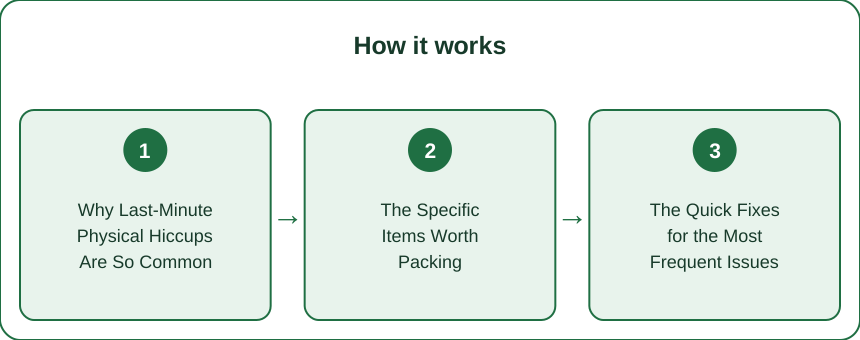
What Do You Actually Do When Something Goes Wrong?
The rule for all of it: act at the first twinge, not at the point it’s ruining things.
Blister: apply the pad the moment you feel a hot spot, before it’s an actual blister. Two minutes in a quiet room at 4pm saves the last four hours of the night. Waiting until it hurts properly means it’s already too late to prevent.
Bloating: take the digestive aid at the first sign, and don’t add anything new or heavy right before photos. This is not the day to try the canapé you’ve never had before.
Energy dip: protein and water, not sugar. Sugar spikes fast and drops you 40 minutes later — usually somewhere around the speeches. A handful of nuts does more than a slice of cake, though obviously have the cake too.
Headache: if the hairstyle is the source, ask for a pin or two to be loosened — a good stylist can ease the tension without touching the shape. Take pain relief early rather than pushing through and hoping.
Emotional overwhelm: two minutes alone and a few slow breaths. Genuinely that simple, genuinely that effective. Send someone to guard a door if you need to; it resets more than an hour of pretending you’re fine.
5 Mistakes Everyone Makes
- Wearing the shoes for the first time on the day — break them in for a few hours at home across two weeks and half this article stops applying.
- Skipping breakfast because of nerves — the cheapest, most avoidable problem on the list.
- Handing the kit to nobody — pack it, then give it to a specific named person. A kit in a car boot is a kit that doesn’t exist.
- Pushing through the hot spot — “I’ll deal with it after photos” is how a hot spot becomes a limp.
- Chasing an energy dip with sugar — a fast lift and a faster crash, timed almost perfectly for the reception.
Frequently Asked Questions
Who should carry the emergency kit?
One named person — usually your maid of honour — who stays near you all day and knows what’s in it. Not “someone will have it.” A kit whose location is unclear at 6pm is functionally not packed.
How do I stop blisters before they start?
Break the shoes in for a few hours at a time over the two weeks beforehand, apply a friction stick to your heels and toe edges in the morning, and pack flats for the reception. Most brides change shoes after dinner anyway — plan for it instead of improvising.
What should I eat on the morning of the wedding?
Something with protein and fat that you’ve eaten many times before — eggs, yoghurt, toast with nut butter. Familiar food only. The morning of your wedding is a bad day to introduce your digestive system to something new.
What should I wear while getting ready?
Something that comes off without going over your head, so it can’t touch your hair or makeup — a button-through robe or shirt. If getting-ready runs long, comfortable high waist leggings underneath keep you warm through several hours of sitting still, and slip out from under the dress without a fight.
When to Get Professional Input
Most of this is a plaster-and-a-snack situation. But chest pain, fainting, a genuine migraine rather than a tension headache, or an allergic reaction are not kit problems — tell someone immediately and get medical help. And if wedding anxiety has been affecting your sleep and eating for weeks beforehand, that’s worth raising with your doctor before the day rather than managing on it.
TL;DR:
- Wedding-day hiccups are predictable: new garments worn all day, skipped meals, adrenaline, and hours in fixed positions.
- Pack blister pads and a friction stick, a digestive aid, pain relief, safety pins and fashion tape, a protein snack with water, deodorant and blotting papers.
- Treat everything at the first twinge — a blister pad at the hot-spot stage saves the whole evening.
- Protein and water for energy dips, never sugar; loosen a tight updo before reaching for painkillers.
- Two minutes alone and slow breathing resets emotional overwhelm faster than anything else in the kit.
- Hand the kit to one named person, and break the shoes in beforehand.
Keep Reading
This article is for general informational and styling purposes only. Fit, sizing, and product availability may vary.