Wedding Day Fuel: Eating So You Don't Faint at Your Own Party

Quick Answer: Eat a real breakfast with protein even if nerves have killed your appetite, station snacks in three places (getting-ready suite, getaway car, head table), never drink on an empty stomach, and ask the venue to plate your dinner first or box it. Wedding-day fainting is almost always a blood-sugar problem with a very simple solution.
Every wedding has a quiet villain. She last ate at 7am, got laced into a dress at noon, held a champagne flute at five, and went a bit grey during the first dance.
You planned the seating chart with a spreadsheet. The eating plan takes about four minutes and prevents the one thing nobody photographs well.

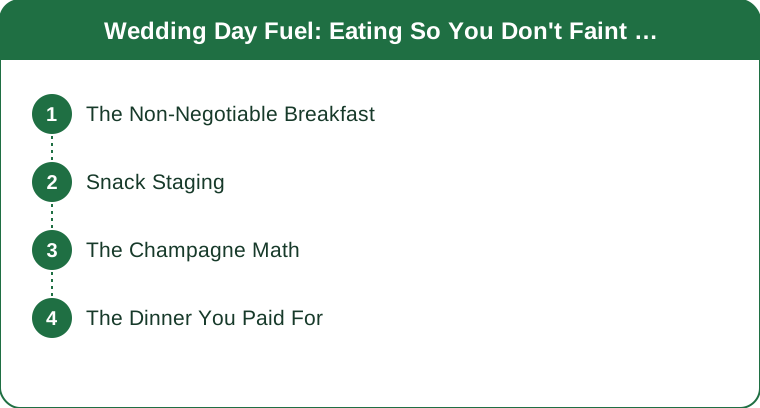
Why do brides forget to eat?
Three reasons stack up, and they’re all predictable.
Nerves suppress appetite. Adrenaline is an appetite suppressant. You genuinely won’t feel hungry, right up until you feel terrible.
Nobody hands you food. Everyone else at a wedding gets served. The bride gets photographed, hugged, adjusted, and moved between rooms. Food never arrives unless someone was assigned to bring it.
The dress creates a fear of eating. Fitted bodices make people eat cautiously, which is fine at dinner and a genuine problem across a 14-hour day.
The result is a classic setup for low blood sugar: no food since morning, hours on your feet, warm rooms, tight clothing, and alcohol. That combination causes lightheadedness in perfectly healthy people.
What should you eat for wedding-day breakfast?
Protein plus complex carbs, nothing experimental. Eggs with toast, Greek yogurt with granola and fruit, or oatmeal with nut butter. Aim for roughly 20 to 30 grams of protein — that’s what keeps blood sugar steady through the morning rather than spiking and crashing by 10am.
Eat it even if you don’t want it. Especially if you don’t want it.
Skip the brand-new smoothie recipe or the restaurant you’ve never tried. Wedding morning is the worst possible day to discover a food doesn’t agree with you.
If you truly can’t face solids, a smoothie with protein powder, banana and nut butter goes down when nerves are high and does the same job.
Hydrate early. Two glasses of water before you get in the chair. Dehydration and low blood sugar produce nearly identical symptoms, and you’re about to be in warm rooms under lights for hours.
How do you make sure food actually reaches you?
Deputize someone. Genuinely — assign a bridesmaid the role of Snack Marshal, out loud, in advance.
Station supplies in three places:
- The getting-ready suite — protein bars, nuts, crackers, cheese, cut fruit. Anything that doesn’t stain or crumble catastrophically.
- The getaway car or transport — the gap between ceremony and reception is the longest unfed stretch of the day.
- Near the head table — a small stash for the reception, when you’re being pulled in fourteen directions.
Choose no-stain, no-crumb food. Nut butter packets, cheese cubes, plain crackers, almonds, banana. Not berries, not tomato anything, not powdered sugar. You are wearing white and it’s not negotiable.
Set actual reminders. A phone alarm every two hours, or the Snack Marshal’s job to physically hand you something at set times. You will not remember. Nobody remembers.

What about alcohol?
Every glass on an empty stomach counts roughly double, and the wedding is exactly the setting where you’re most likely to drink one on an empty stomach without noticing.
The rules that work:
- No bubbles before the ceremony without food on board. A getting-ready mimosa on an empty stomach at 10am is how the ceremony gets wobbly.
- Alternate water. One glass of water per alcoholic drink, minimum. Warm venue plus dancing plus a fitted dress means you’re losing fluid faster than a normal night out.
- Eat something with the toast. A few bites before the champagne round makes a measurable difference.
- Watch the “just holding it” glass. People keep topping it up. You have no idea how much you’ve had.
Radiant beats wobbly in every single photograph, and the photos last considerably longer than the party.
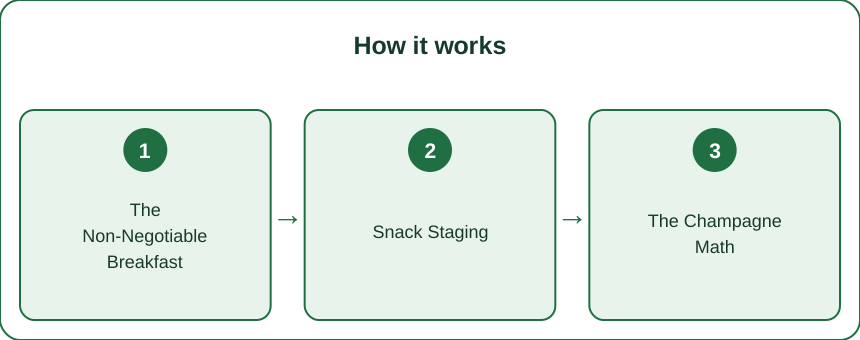
5 Mistakes Everyone Makes on Wedding Day
- Skipping breakfast because of nerves. The nerves are exactly why you need it. Appetite is not a reliable signal on this particular day.
- Not eating the dinner you paid for. Couples famously never eat their own catering. Ask the venue to plate yours first, or to box it for later. You taste-tested that menu three times.
- Dieting or fasting the week before. Restricting right up to the wedding leaves you depleted for a 14-hour physical day. The dress was fitted to the body you actually have.
- Trying a new supplement or energy drink. New stimulants on a high-adrenaline day is a recipe for jitters and a crash. The third mistake catches the most people, but this one catches the most spectacularly.
- Assuming someone will handle it. Nobody handles it unless you name them. Say the words: “You’re in charge of making sure I eat.”
What if you feel faint anyway?
Sit down immediately, ideally with your head lower than your heart, and ask for water and something sweet followed by something with protein. Loosen anything constricting if you can. Most wedding-day dizziness resolves within minutes with sugar, fluid and a chair.
Worth taking seriously rather than pushing through: actual loss of consciousness, chest pain, an irregular heartbeat, or repeated episodes across the day. And if you have diabetes, a heart condition, or you’re pregnant, plan the day’s eating with your doctor in advance rather than improvising — the schedule matters more for you than for anyone else in the room.
FAQ
What snacks are best for a wedding day?
Protein-forward and non-staining: nuts, cheese, protein bars, nut butter packets, plain crackers, banana. Skip anything red, powdered, or greasy.
Should I eat before the ceremony if I’m nervous?
Yes. Even a few bites of something with protein. Nerves suppress appetite but not your body’s need for fuel, and the ceremony is often two to three hours before dinner.
How do I eat in a fitted wedding dress?
Small, frequent portions rather than one large meal — which is the same approach that keeps blood sugar steady anyway. Use a napkin barrier, and let someone hold the skirt while you sit.
TL;DR:
- Real breakfast with 20 to 30g protein, even with zero appetite. Hydrate early.
- Station snacks in three places: getting-ready suite, transport, head table.
- Appoint a Snack Marshal out loud, and set two-hourly reminders.
- No alcohol on an empty stomach; alternate water one for one.
- Ask the venue to plate your dinner first or box it. You paid for it.
Keep Reading
This article is for general informational and styling purposes only. Fit, sizing, and product availability may vary.