Why Your Wedding Day Adrenaline Changes How Your Dress Fits by the Reception

Quick Answer: Wedding-day adrenaline and stress hormones shift fluid distribution, breathing pattern, and posture over several hours — which is why a dress that fit perfectly at the fitting or at 2pm can feel different by the reception. It’s a real physiological shift, not something you did wrong.
Your dress fit exactly right at the final fitting a week ago, and even that morning. By the reception, something feels different — a little tighter around the ribs, or the waistline sitting slightly off from where it did at the ceremony. That shift has an actual explanation, and it isn’t about anything you ate or didn’t do.
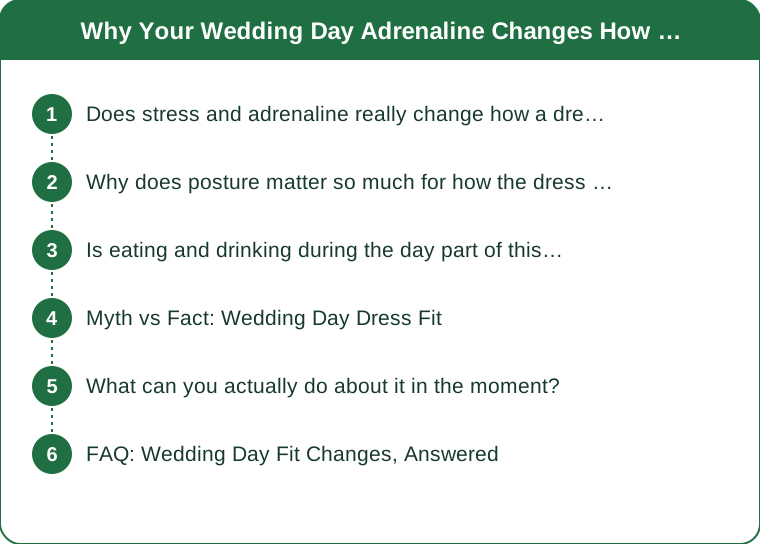
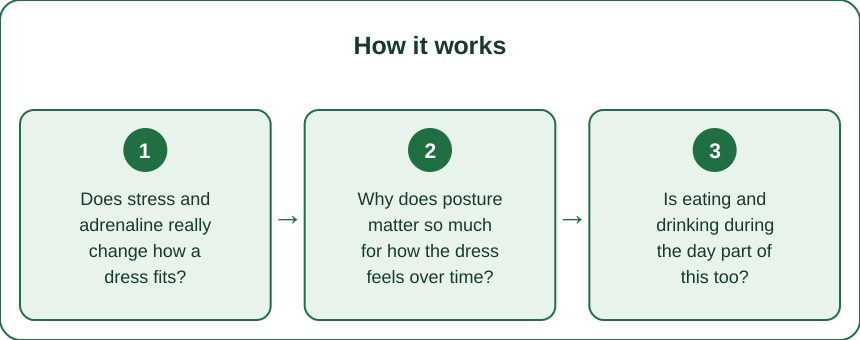
Does stress and adrenaline really change how a dress fits?
Yes, through a few compounding mechanisms. Acute stress hormones affect fluid distribution and can cause mild, temporary bloating in some people, while sustained adrenaline throughout an emotionally intense day changes breathing pattern — often shallower and higher in the chest — which shifts how your ribcage and waistline sit compared to the relaxed breathing you had standing still at a fitting.
None of this is dramatic on a physical level, but wedding dresses are fitted with enough precision that even small shifts become noticeable to you, even if they’re invisible to everyone else.
Why does posture matter so much for how the dress feels over time?
A fitting happens with you standing still, relaxed, for a few minutes at a time. A wedding day involves hours of a mix of standing, hugging, sitting for photos, walking down an aisle, and eventually dancing — each with different posture demands that a fitted dress interacts with differently.
By the time you’re at the reception, cumulative postural fatigue (tired shoulders, a slightly more slumped stance late in the evening) changes how the same garment drapes and sits, independent of any actual body change.
Is eating and drinking during the day part of this too?
Somewhat, but usually less than people worry about. Normal eating and drinking causes minor, temporary digestive bloating for most people regardless of the day — a wedding just happens to be a day where you’re paying much closer attention to how your body feels in a fitted garment than you normally would.
The adrenaline and posture factors above are usually doing more of the work than food is, especially since most brides eat lightly and are moving around too much for a large post-meal bloat to be the main driver.

Myth vs Fact: Wedding Day Dress Fit
Myth: If the dress feels different by evening, the fitting was done wrong. Fact: A precisely fitted dress reveals normal daily fluid and posture shifts more than a looser garment would — the precision of the fit is exactly why you notice it, not evidence the fitting failed.
Myth: You should eat as little as possible on the wedding day to avoid this. Fact: Under-eating on a long, high-adrenaline day increases fatigue and lightheadedness risk far more than it prevents minor bloating — steady, light meals are the better trade-off.
Myth: This means you ‘need’ the dress altered again for future wear. Fact: The shift is temporary and tied to the specific stress and activity of that one day — it says nothing about how the dress will fit on an ordinary day.
What can you actually do about it in the moment?
Very little needs doing, and that’s genuinely fine — most of this shift is invisible to guests and resolves within the day itself. If it becomes uncomfortable rather than just noticeable, a bustle adjustment, a quick moment to reset your posture and take a few slow breaths, or simply loosening a corset-back lacing slightly for the reception portion are all normal, low-drama fixes many brides use without anyone noticing.
FAQ: Wedding Day Fit Changes, Answered
Should I ask for a slightly looser final fitting to account for this?
Most stylists deliberately build in a small margin for exactly this reason — mention it at your final fitting if you’re prone to noticing these shifts, and they can adjust accordingly.
Does this happen to everyone, or just some brides?
Most people experience some version of it given how emotionally and physically demanding the day is, though how noticeable it is varies a lot by how fitted the dress style is and individual sensitivity to the shift.
Is there anything I can do in the weeks before to reduce this?
Normal hydration and consistent eating patterns in the days before (rather than a last-minute diet change) keep your baseline more stable, which tends to make day-of shifts smaller and easier to predict.
TL;DR:
- Wedding-day adrenaline and stress hormones shift fluid distribution and breathing pattern over the course of the day
- Hours of mixed posture (standing, sitting, dancing) change how a precisely fitted dress drapes by evening
- Eating and drinking play a smaller role than most brides assume — posture and adrenaline usually matter more
- Most shifts are invisible to guests, resolve within the day, and don’t reflect anything about the fitting itself
A dress feeling different by the reception is a normal physiological footnote to an intense day — not a sign anything went wrong.
Keep Reading
This article is for general informational and styling purposes only. Fit, sizing, and product availability may vary.