Training Through the Hen Weekend Without Losing Eight Weeks of Work

Quick Answer: A three-day break does not undo eight weeks of training - measurable strength loss takes considerably longer than a long weekend. What actually costs you is the week after, when the routine does not restart. Plan the return session before you leave, accept that the weekend itself is not a training window, and treat sleep and hydration as the only two things worth managing while you are there.
The anxiety is understandable and largely misplaced. The physiology is on your side for a weekend. The habit is what is fragile.

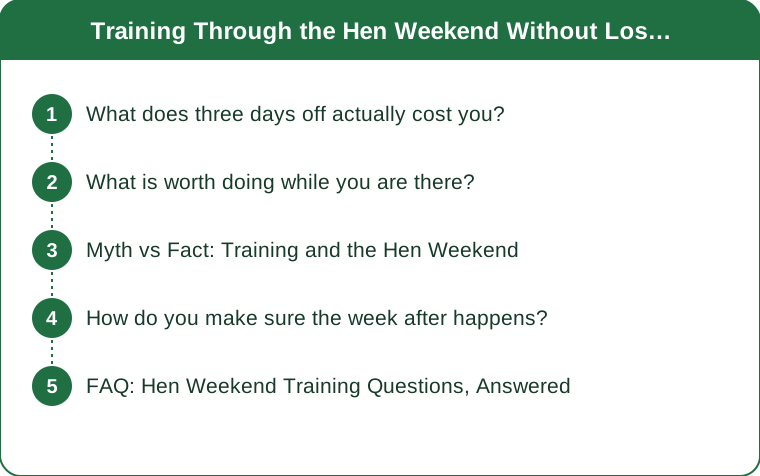
What does three days off actually cost you?
Very little, physically.
Strength. Measurable losses in strength generally take around two to three weeks of complete inactivity to appear in trained individuals, and even then they are modest at first. A three-day break is well inside the range where nothing meaningful changes. Some people come back slightly stronger, because they were carrying accumulated fatigue.
Muscle mass. Detectable changes take longer still. A weekend is not a factor.
Cardiovascular fitness. The first measure to decline, but still on a timescale of one to two weeks rather than days.
What does change over a weekend: water balance and glycogen. Alcohol, disrupted sleep, salty food, and less movement produce a noticeable shift in how you look and feel and on the scale. This is almost entirely water, it is not fat gain, and it resolves within a few days of normal eating. Knowing this in advance is worth a lot, because seeing a number two kilograms higher on Monday morning is precisely what makes people abandon a plan that was working.
What genuinely costs you is the following week - the session that does not happen on Monday because you are tired, then Tuesday because you are catching up at work, and by Thursday the block has lost a week rather than a weekend.
What is worth doing while you are there?
Less than you might think, and it should be enjoyable or it will not happen.
A morning walk. The best option by a distance. Forty minutes before anyone else is up, ideally somewhere you would not otherwise walk. It helps the hangover, it is sociable if anyone joins, and it makes no demands on the day.
One short session if the mood is there. Twenty minutes of bodyweight work in the room - squats, press-ups, split squats, a plank - three rounds. This is a maintenance gesture, not a training session, and its main value is psychological continuity rather than physiological.
Whatever the activity is, count it. Hen weekends frequently involve dancing, walking miles around a city, paddleboarding, or a class of some kind. This is genuine activity and counting it as such is more accurate than dismissing it because it was not a planned session.
What is not worth doing: trying to run a full programmed session on three hours of sleep. It will be a bad session, it will make you feel worse for the rest of the day, and it buys nothing that the week either side does not.
And the two things that actually matter: water and sleep. Alternating alcoholic drinks with water, and protecting one decent night out of the three, does more for how you feel on Monday than any workout you could squeeze in.

Myth vs Fact: Training and the Hen Weekend
Myth: A weekend off will set your training back. Fact: Meaningful strength loss takes around two to three weeks of inactivity. A long weekend is within the range where a short break often improves performance by clearing accumulated fatigue.
Myth: You need to train harder the week before to compensate. Fact: You cannot bank training, and a deliberately overloaded week beforehand raises your injury risk and leaves you tired for the weekend. Train normally.
Myth: You should do extra sessions the week after to catch up. Fact: Trying to make up missed sessions by doubling up is how people get hurt eight weeks before a wedding. Return to the normal schedule at the normal volume and carry on from where you were.
Myth: The weight gain on Monday is real. Fact: It is water and gut content from alcohol, salt, disrupted sleep, and different food. It resolves within a few days. Weighing yourself the morning after a hen weekend gives you a number that means nothing.
Myth: Drinking alcohol ruins your training block. Fact: A heavy weekend does affect recovery, sleep quality, and the following day’s performance, and that is worth knowing rather than pretending otherwise. Across an eight-week block, one weekend is noise. Every weekend is a pattern.
Myth: You have to choose between enjoying it and staying on track. Fact: This is the framing that causes the most damage, because it sets up a weekend of either guilt or abandonment. Three days is not a decision about your training.
How do you make sure the week after happens?
This is where the whole thing is won or lost, and it takes about ten minutes of planning before you leave.
Book the return session before you go. Put it in the diary with a time. If you train with someone, tell them you are coming. A session that exists as a plan survives; one that exists as an intention does not.
Make it Tuesday, not Monday. Monday after a weekend away is realistically a write-off - you are tired, behind at work, and probably travelling. Planning for Monday and failing sets the tone for the week. Planning for Tuesday and turning up sets a different one.
Make the first session back easier than usual. Same exercises, roughly 70% of the usual load, and stop while you still have something left. The purpose is to restart the habit, not to prove anything. An overly ambitious first session back produces soreness that costs you the next two.
Sort the food before you leave. Something in the fridge for Monday and Tuesday removes two decisions on the days you have the least capacity to make them. This is genuinely the highest-return ten minutes of preparation.
Do not weigh yourself until Thursday. By then the water has resolved and the number means something again.
And check the timeline against the dress fittings. If a fitting falls in the week after the hen weekend, move it if you can. Being measured while retaining water from a weekend away is how people end up with alterations based on a number that was not representative.
If you are the bride, one more thing worth saying plainly: the point of an eight-week block is to arrive feeling strong and like yourself. A weekend with your friends is not in conflict with that.
FAQ: Hen Weekend Training Questions, Answered
Will a weekend off ruin my wedding training?
No. Measurable strength loss takes around two to three weeks of inactivity, and a long weekend often leaves you fresher. The risk is not the weekend itself - it is the following week not restarting.
Should I work out on a hen weekend?
Only if you want to. A morning walk is the best option, and any dancing or activity already counts. A full programmed session on very little sleep is a bad trade for how it will make the rest of your day feel.
Why do I weigh more after a weekend away?
Water and gut content, from alcohol, salt, disrupted sleep, and different food. It is not fat gain and it resolves within a few days of normal eating. Wait until Thursday to weigh yourself if you weigh at all.
How do I get back on track after a break?
Book the first session back before you leave, schedule it for Tuesday rather than Monday, run it at around 70% of your normal load, and have food in the fridge for the first two days. Do not attempt to make up missed sessions.
Should I train extra hard beforehand to compensate?
No. Training cannot be banked, and an overloaded week beforehand increases injury risk and leaves you fatigued for the weekend. Train your normal programme and take the days off as days off.
TL;DR:
- Three days off costs almost nothing physically - strength loss takes two to three weeks of inactivity.
- The real cost is the week after, when the routine fails to restart.
- Monday’s higher weight is water from alcohol, salt, and broken sleep, not fat.
- Book the return session before you leave, schedule it for Tuesday, and run it at 70% load.
- A morning walk is the only training worth doing while you are there, and dancing counts.
- Do not try to bank training beforehand or make up sessions afterwards - both raise injury risk.
Ten minutes of planning before you leave protects the block better than any session you could fit in while you are away.
Keep Reading
This article is for general informational and styling purposes only. Fit, sizing, and product availability may vary.