Eight Weeks Out From a Wedding: What Actually Makes a Difference

Quick Answer: In eight weeks you can meaningfully improve posture, upper back and shoulder definition, energy levels, skin, and how clothes sit - all of which change how you look and feel far more than the scale does. What you cannot do is dramatically change body composition without compromising energy, sleep, and mood in the run-up to a demanding day. Train three to four times weekly with a posture and upper-body emphasis, eat enough to recover, and stop weighing yourself.
Eight weeks out is where wedding fitness plans get desperate, and desperate plans reliably produce the opposite of what people want: exhaustion, poor sleep, irritability, and a dress that fits differently than it did at the fitting.
Here’s a more useful framing - what’s genuinely achievable in eight weeks, what isn’t, and where to spend the effort.

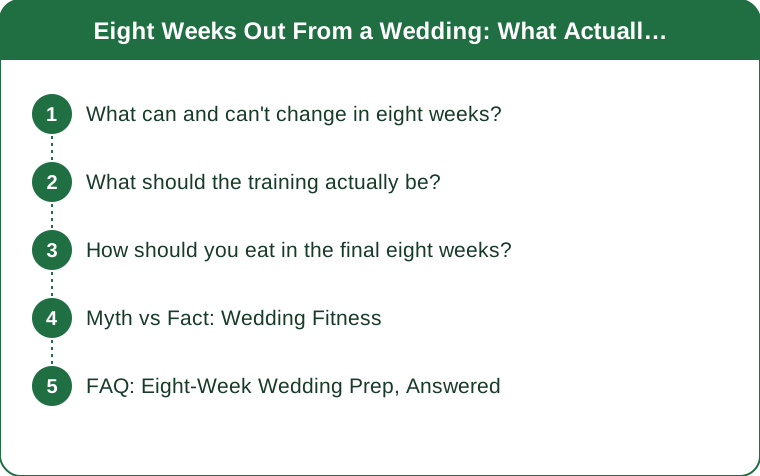
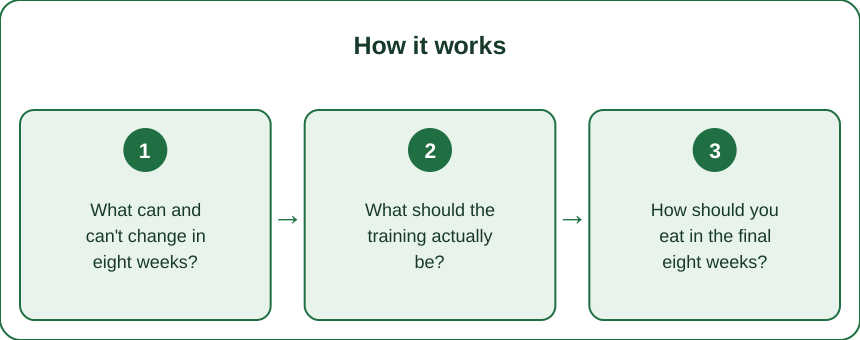
What can and can’t change in eight weeks?
Being clear about this is what makes the next eight weeks productive rather than miserable.
What genuinely changes in eight weeks:
- Posture. The most visible change available in this timeframe. Strengthening the upper back and improving thoracic mobility changes how you stand within weeks, and it’s what most people are actually noticing in photographs.
- Upper back and shoulder definition. Shoulders and upper back respond relatively quickly to training, and they’re what’s visible in most wedding dresses.
- Energy and mood. Regular training and adequate sleep make a substantial difference to how you feel on the day.
- Skin. Sleep, hydration, and a consistent routine show up in eight weeks.
- How clothes sit. Some of this is posture, some is modest body composition change, and some is reduced bloating from a more consistent eating pattern.
- Strength. Meaningful gains, mostly neural, arrive quickly.
What doesn’t change much in eight weeks:
- Substantial fat loss without compromise. A sustainable rate is roughly 0.5 to 1 percent of bodyweight per week, and pushing beyond that costs sleep, mood, energy, and training quality - all of which matter more in the final weeks than a few pounds.
- Significant muscle gain. Some, not a lot.
- Body shape. You can’t spot-reduce and you can’t change your frame.
The reframe that helps: the goal isn’t to look like someone else on the day. It’s to feel strong, sleep well, have energy for a genuinely long and demanding day, and stand tall in the photographs. All four of those are achievable, and all four are undermined by aggressive dieting.
What should the training actually be?
Three to four sessions a week, with a specific emphasis, for eight weeks.
The emphasis: posterior chain and upper back. Most dresses show the shoulders, upper back, and arms, and most people spend their days in a posture that rounds all three. This is where training produces the most visible change in the least time.
Session A - Upper body pull emphasis (40 min)
- Bent-over dumbbell row, 4 sets of 8
- Single-arm row, 3 sets of 10 per side
- Face pulls with a band, 3 sets of 15
- Reverse fly, 3 sets of 12
- Bicep curl, 2 sets of 12
- Thoracic extension over a foam roller, 2 minutes
Session B - Lower body (40 min)
- Goblet squat, 4 sets of 8
- Romanian deadlift, 4 sets of 8
- Split squat, 3 sets of 10 per leg
- Hip thrust, 3 sets of 12
- Calf raise, 2 sets of 15
Session C - Upper body push and core (35 min)
- Overhead press, 4 sets of 8
- Push-up progression, 3 sets to two reps short of failure
- Lateral raise, 3 sets of 12
- Tricep extension, 3 sets of 12
- Side plank, 3 x 30 seconds per side
- Dead bug, 3 sets of 10 per side
Session D (optional) - Repeat A, since the upper back is the priority.
Plus: walking daily, 30-40 minutes if you can. Low stress, good for energy, and it doesn’t interfere with recovery the way additional hard cardio does.
Progression: add weight or a rep each week. Do not add sessions in the final fortnight - that’s when accumulated fatigue starts showing on your face, and it’s the most common mistake in the whole eight weeks.

How should you eat in the final eight weeks?
Adequately. This is the part where most wedding plans go wrong and where the damage is most visible.
Protein first: roughly 1.6 to 2.2 grams per kilogram of bodyweight. It preserves muscle in any deficit, supports recovery, and is the most filling macronutrient. This is the single highest-value change for most people, and it’s about eating more of something rather than less.
If you want a modest deficit, keep it modest - around 300 to 500 calories below maintenance, no more. An aggressive deficit in the final eight weeks produces poor sleep, low mood, worse skin, low energy, and worse training - which collectively affect how you look and feel far more than a few pounds do.
Do not attempt anything drastic in the final two weeks. Very low carbohydrate approaches, juice cleanses, extreme deficits, and ‘detox’ protocols all cause fluid shifts that make clothes fit unpredictably, and dresses are fitted to a specific body. Alterations are booked at a specific size and you want that size to be stable.
Things that genuinely reduce bloating in the final week:
- Consistent meal timing
- Adequate water - dehydration causes retention rather than preventing it
- Moderate sodium, consistently, rather than swinging from high to very low
- Enough fibre, introduced gradually rather than suddenly
- Not experimenting with new foods in the final week. This one is worth stating plainly.
Alcohol in the final fortnight affects sleep, skin, and retention more than most people account for, and the run-up to a wedding usually involves more of it than usual between events.
And on the scale: stop weighing. Weight fluctuates by several pounds for reasons unrelated to fat, and in a period this emotionally loaded, a bad number on a Tuesday can genuinely affect the rest of the week. Judge by how the dress fits at the fittings, which is the only measurement that’s actually relevant.
Myth vs Fact: Wedding Fitness
Myth: You need to train every day for the last eight weeks. Fact: Three to four quality sessions with adequate recovery produce better results than daily training on inadequate sleep. Overtraining in a high-stress period shows up as fatigue and poor skin, which is the opposite of the goal.
Myth: Cardio is the fastest route to changing how you look. Fact: Resistance training is what changes shape and posture. Cardio supports energy and cardiovascular health and is worth doing. If you have limited time and energy, lifting is the higher-value use of it.
Myth: You can target arms specifically. Fact: You can build the muscle in a region and you can’t decide where fat is lost from. Training the upper back, shoulders, and arms produces visible definition; it doesn’t spot-reduce.
Myth: A juice cleanse the week before will help. Fact: It causes rapid fluid and glycogen loss that reverses immediately, leaves you underfuelled for a demanding day, and makes dress fit unpredictable after alterations. Of everything on this list, this is the one most likely to actively backfire.
Myth: If you haven’t started yet, eight weeks is too late. Fact: Eight weeks of consistent training produces real strength gains, meaningful posture change, and a genuine difference in how you feel - which shows in photographs more than people expect. Starting now beats not starting.
FAQ: Eight-Week Wedding Prep, Answered
What should I do in the final week?
Reduce training volume by about half, keep moving, sleep as much as possible, eat normally, and stay hydrated. The final week is for recovery, not for a last push - and looking rested is worth more on the day than anything you could gain from training hard.
When should the final dress fitting be?
Usually two to three weeks before, which means avoiding any dramatic change after that point. Tell your seamstress if you’re actively training so they can account for it - shoulder and back measurements do change with upper-body work.
How do I handle the stress alongside the training?
Training helps with stress, up to a point. If you’re sleeping badly and everything feels like too much, cutting to two sessions a week and prioritising sleep is the better call. Sleep affects how you look and feel more than an extra session does.
Should I do anything about the honeymoon straight after?
Worth doing nothing at all for a week or two. Then continue the same training - the most common pattern is a hard eight weeks followed by six months of nothing, and the version where you keep three sessions a week going is far better for everything that comes after the wedding.
TL;DR:
- Eight weeks changes posture, upper back and shoulder definition, energy, skin, and how clothes sit
- It doesn’t produce dramatic body composition change without costing sleep, mood, and energy
- Train 3-4 times weekly with a posterior chain and upper back emphasis - that’s the most visible change available
- Protein at 1.6-2.2 g/kg is the highest-value nutrition change; keep any deficit modest
- Nothing drastic in the final fortnight - fluid shifts make an altered dress fit unpredictably
- Halve the volume in the final week, sleep, and stop weighing yourself entirely
The day is long, physical, and emotional. Being strong and well-rested serves you better on it than anything a crash plan could produce.
Keep Reading
This article is for general informational and styling purposes only. Fit, sizing, and product availability may vary.