How to Train Around the Dress Fitting Schedule

Quick Answer: Make any deliberate change to your training or eating before the first fitting, and hold steady from the first fitting onward. Alterations are cut to your measurements on the day, so significant change after that point means either a rushed re-alteration or a garment that no longer fits. Talk to whoever is doing the alterations about their schedule first, then build the training plan backward from that date rather than from the wedding date.
The date that constrains your training is the fitting, not the wedding - and almost everyone plans around the wrong one.

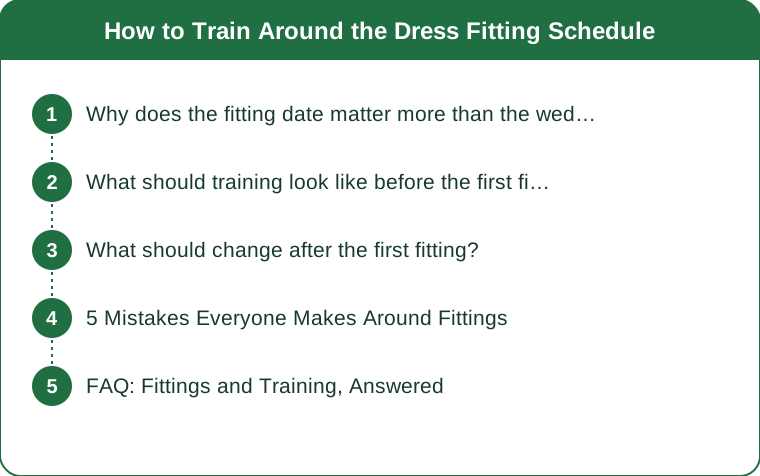
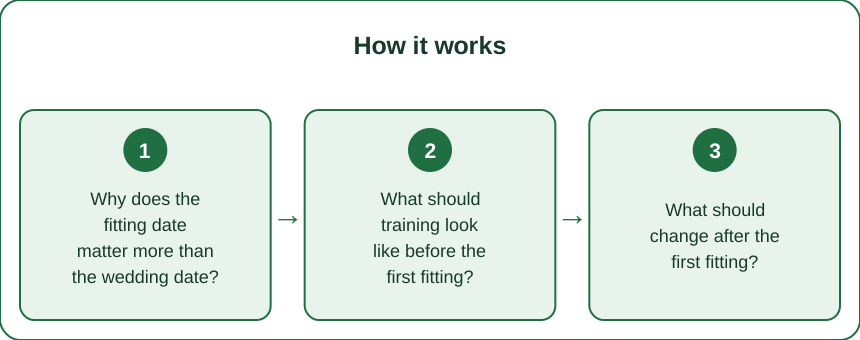
Why does the fitting date matter more than the wedding date?
Because alterations are physical and permanent, and they are made to a body measured on a specific day.
A dress is taken in or let out to specific measurements, and a seamstress cuts and sews accordingly. Fabric that has been removed cannot easily be replaced, particularly on structured bodices, beaded fabrics, or anything with boning.
Fitting schedules vary but often follow a pattern: a first fitting some weeks or months out, one or two subsequent fittings, and a final fitting relatively close to the date. The first fitting is where the major alterations are decided, and changes after that get progressively harder and more expensive to accommodate.
This means the deadline for any deliberate body change is the first fitting, not the wedding. Someone who starts a significant training or eating change six weeks before the wedding may well be doing it four weeks after their major alterations were cut.
The first practical step is a conversation, not a workout. Ask whoever is doing the alterations: when is my first fitting, when is the final one, and what change can you accommodate between them? Some can absorb a fair amount; others, particularly with structured or heavily embellished fabrics, can accommodate very little.
Then build backward. Any deliberate change happens before the first fitting. From the first fitting onward, the plan is maintenance.
What should training look like before the first fitting?
Ordinary, progressive, and unremarkable - which is exactly what produces change over a few months.
If you have more than about twelve weeks:
- Three strength sessions a week, full body, progressing in load. Squats or leg press, a hinge, a press, a row, and some direct core work. Progression is what makes the difference - the same weights for twelve weeks produces very little.
- Two or three easy cardio sessions or walks, for general health and stress rather than for any dramatic effect.
- Protein at every meal, around 1.6g per kilogram of bodyweight per day if you are training regularly.
- Enough total food. Aggressive restriction alongside wedding planning produces fatigue, poor sleep, and irritability, all of which show more than a small difference in size does.
If you have less than twelve weeks: the same programme, with expectations adjusted. Strength, posture, and how you feel improve meaningfully in eight weeks; large changes in size do not, reliably or healthily.
Upper back and posture work deserves specific attention in the run-up to fittings, because it genuinely affects how a garment sits across the shoulders and chest. Rows, face pulls, and thoracic mobility, done consistently, change how you carry yourself within weeks - and unlike size, this works in your favour with a fitted bodice rather than against it.
If you have a history of disordered eating, this period is a recognised high-risk window, and arranging support in advance is worthwhile. This is general information, not medical advice.

What should change after the first fitting?
Almost nothing. This is the maintenance phase, and it runs from the first fitting to the wedding.
Keep training, stop chasing progress. Continue the same sessions at roughly the same loads. Stop adding weight, stop adding sessions, and do not start anything new. Novel exercise produces the worst soreness, and being sore during a fitting is genuinely unhelpful - you stand differently, and the fit is assessed on how you are standing.
Hold your eating steady. Not restricted, not loosened. Both directions cause problems when a garment has been cut to specific measurements.
Time sessions away from fittings. Do not train heavily the day before or the morning of a fitting. Muscle swelling after a hard session, and general fluid shifts, are enough to change how a fitted garment sits - and you do not want an alteration decided on a temporarily different measurement.
Tell your seamstress what you are doing. If you are training regularly, say so. A good alterations professional will factor it in, and will tell you if what you are planning is a problem.
Two things worth flagging:
- Shoulder and back training can genuinely change how a fitted bodice sits over a few months. It is usually a positive change, but it is a change - so it belongs before the first fitting, not after.
- Water retention varies with salt, sleep, stress, alcohol, and menstrual cycle. A single day’s measurement is not a fixed truth, and a good seamstress builds in some tolerance.
5 Mistakes Everyone Makes Around Fittings
Mistake 1: Planning the training around the wedding date. The binding constraint is the first fitting, often weeks or months earlier. Everything deliberate has to happen before it, and the plan should be built backward from that date.
Mistake 2: Starting a significant diet after alterations are cut. This is the most expensive mistake on the list. Re-alterations close to the date are stressful, sometimes impossible on structured fabrics, and always more expensive than getting it right the first time.
Mistake 3: Training hard the day before a fitting. Soreness changes how you stand, and post-session swelling changes measurements slightly. Both feed into decisions that then get sewn in permanently.
Mistake 4: Not telling the seamstress about training plans. The third mistake is common, but this is the one that is entirely avoidable with one sentence. A professional can build in tolerance if they know what is coming, and cannot if they do not.
Mistake 5: Wearing different underwear or shoes to different fittings. The fit depends on both. Bring the actual underwear and the actual shoes to every fitting, and if the shoes have not arrived, bring shoes of the same heel height - the hem is cut to it.
FAQ: Fittings and Training, Answered
How far ahead is the first fitting usually?
It varies considerably by dressmaker and by dress. Ask directly rather than assuming, and get the whole schedule in writing so you can plan around it.
Can alterations be redone if I change size?
Sometimes, at additional cost and with less flexibility as the date approaches. Taking in is generally easier than letting out, since fabric that has been removed may not be recoverable.
Should I stop training entirely before the wedding?
No. Keep training lightly - it helps with stress and sleep, both of which matter more in the final weeks than any physical change. Just stop progressing and avoid anything that makes you sore.
What if I am told my measurements changed between fittings?
Small variation is normal and expected - fluid, sleep, salt, and cycle all contribute. A good seamstress works with it. Consistent change in one direction is what needs discussing.
Does strength training change how a fitted dress sits?
Over a few months, it can - particularly around the back and shoulders, and usually favourably. Which is exactly why that training belongs before the first fitting rather than after it.
TL;DR:
- The first fitting, not the wedding, is the deadline for any deliberate change
- Ask for the full fitting schedule first, then build the training plan backward from it
- Before the first fitting: progressive strength work, adequate protein, enough food
- After the first fitting: hold steady, stop progressing, and start nothing new
- Do not train hard the day before a fitting, and bring the actual shoes and underwear every time
Most of the stress around dresses and training comes from planning to a date that is not the operative one. Get the fitting schedule, mark the first one in the calendar, and treat it as the line - everything ambitious happens before it, and everything after it is maintenance.
Keep Reading
This article is for general informational and styling purposes only. Fit, sizing, and product availability may vary.