Training Around a Wedding Season When You Are in Three of Them

Quick Answer: Wedding season disrupts training through travel, late nights, and disrupted eating rather than through the events themselves - so the plan that survives is one built around a reduced non-negotiable minimum plus flexible extras. Aim to protect two strength sessions a week as the floor, treat travel weekends as maintenance rather than progress, and stop trying to out-train the schedule. Three months of consistent maintenance beats six weeks of intensity followed by six weeks of nothing.
You are not the bride. You are in the wedding party for two of them and a guest at another, and your training plan has quietly become a list of things you did not do.

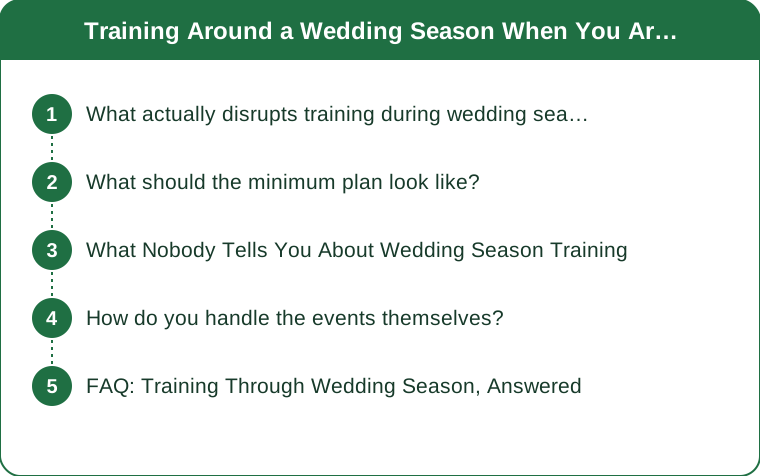
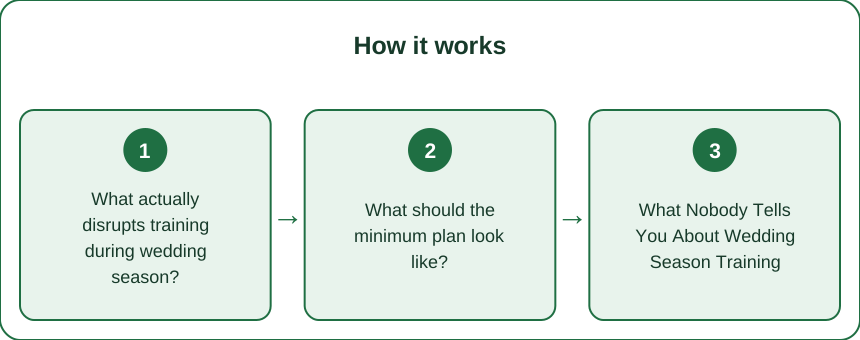
What actually disrupts training during wedding season?
Travel, not the wedding day itself. One evening is a small thing. A Friday flight, a Saturday of standing in shoes you cannot walk in, and a Sunday of getting home is a lost training weekend plus a recovery deficit into the next week.
Sleep debt accumulates across a season. Late nights every second or third weekend, without the ability to sleep in on Monday, compounds - and short sleep affects both training performance and food choices.
Eating patterns become unpredictable. Long gaps followed by a large late meal, plus alcohol, is a pattern that leaves most people feeling flat for a couple of days rather than one.
The obligations extend well beyond the day. Dress fittings, hen weekends, shopping trips, and rehearsal dinners each consume an evening or a weekend, and collectively they are a bigger schedule problem than the weddings.
And the all-or-nothing response makes it worse. Missing the planned Saturday session frequently leads people to write off the whole week, which turns a two-session week into a zero-session one for no good reason.
What should the minimum plan look like?
Two strength sessions a week, protected. This is enough to maintain strength for most people, and maintenance is the correct goal during a disrupted period. Full-body sessions rather than a split, so missing one is less costly.
Make them short and hard rather than long. Thirty-five to forty minutes of compound work - a squat or hinge, a push, a pull, and a carry - does the job. Long sessions are the first thing to become impossible.
Schedule them on the most protected days of your week. For most people that is Tuesday and Thursday, since Friday through Sunday is where wedding season lives.
Walk daily as the baseline. It requires no equipment, works while travelling, and holds the general activity level up while structured training is compressed.
Add extras only when the week allows. A third session, a class, or a long run is a bonus rather than part of the plan - which means a normal week feels like a win instead of a shortfall.
And plan the deload weeks deliberately. A wedding weekend is an excellent deload. Naming it as one, rather than experiencing it as failure, is the difference between a plan that survives the season and one that collapses in week three.

What Nobody Tells You About Wedding Season Training
Nobody tells you the shoes are a training variable. A full day standing and dancing in heels loads calves, feet, and lower back substantially, and it is entirely reasonable to treat the day after as a genuine recovery day rather than a missed session.
Nobody tells you that hotel gyms are usually enough. Two dumbbells and a bench covers a full-body session, and the session you do in a mediocre hotel gym is worth infinitely more than the one you would have done at home if you had been home.
Nobody tells you that the hen weekend is harder on training than the wedding. It is longer, involves more alcohol, and frequently more travel - and it is the one people fail to account for when planning.
Nobody tells you to eat before the reception. Long gaps between a hotel breakfast and a nine o’clock dinner are the actual reason people feel awful the next day, alongside the alcohol. A proper lunch and a snack changes the whole experience.
Nobody tells you that alcohol is the biggest single recovery variable. It affects sleep quality specifically, which is why a late night with drinking costs more training days than a late night without.
And nobody tells you the season ends. Most wedding seasons run through the warmer months and taper off from autumn, so the pressure people feel in August is genuinely temporary - which is an argument for maintenance rather than for either heroics or surrender.
How do you handle the events themselves?
Eat properly during the day. A real breakfast and lunch with protein means you arrive at the reception without the desperate hunger that drives both overeating and faster drinking.
Hydrate deliberately between drinks. Alternating water is the least original advice available and it remains the most effective single intervention for how you feel the next morning.
Move on the morning of the event. Twenty minutes of walking or easy mobility work before a long day of standing genuinely helps, and it is frequently the only movement the day contains.
Pack the smallest possible kit. A resistance band and a pair of trainers fits in any bag and makes a hotel-room session possible on the days the gym is closed, occupied, or nonexistent.
Plan the day after rather than hoping. A walk and an early night is a plan. Waking up and deciding how you feel is how a Sunday becomes a write-off that spills into Monday.
And enjoy the actual wedding. The training plan exists to support a life that includes these things. A season with three weddings in it is a good season, and a maintenance block is exactly the right way to train through one.
FAQ: Training Through Wedding Season, Answered
How do I stay consistent with a busy social calendar?
Drop to a protected minimum - two full-body strength sessions a week plus daily walking - and treat anything beyond that as a bonus. A reduced plan you complete beats an ambitious one you abandon by week three.
Is two strength sessions a week enough?
For maintaining strength during a disrupted period, generally yes. Maintenance requires considerably less than progress does, and maintenance is the correct goal while the calendar is full.
What should I do the day after a wedding?
Plan it in advance: a walk, proper meals, water, and an early night. Treating it as a scheduled recovery day rather than a missed session is what keeps the following week intact.
How do I train while travelling for weddings?
Pack a resistance band and trainers, use whatever hotel gym exists without judging it, and default to walking. A short imperfect session while away is worth far more than the ideal session you were not there to do.
TL;DR:
- Travel, sleep debt, and disrupted eating disrupt training far more than the wedding days themselves do.
- Protect two short full-body strength sessions a week as your floor and treat everything else as a bonus.
- Schedule them Tuesday and Thursday, since the weekends belong to the season.
- Name wedding weekends as deloads in advance - they are excellent ones, and naming them prevents the all-or-nothing spiral.
- Eat properly during the event day, alternate water with drinks, and plan the day after rather than hoping.
Maintenance is the right goal for a season with three weddings in it. The plan resumes in October, and you will not have lost anything worth having.
Keep Reading
This article is for general informational and styling purposes only. Fit, sizing, and product availability may vary.