Training Together Before the Wedding: What Works and What Ends in an Argument

Quick Answer: Couples training works when both people follow the same schedule rather than the same workout - shared sessions, individual loads and progressions. It fails when one person’s programme is imposed on the other, when the fitter partner sets the pace, or when the goals are framed around appearance. Plan for three shared sessions weekly at most, and keep one activity each that is entirely your own.
Training together before a wedding sounds like an obviously good idea. Sometimes it is. It is also a documented way to introduce a new source of friction into a period that already has several, and the difference comes down to how it is set up.
Why do couples training plans usually fail?
Four reasons, and they are predictable enough to design around.
1. Mismatched starting points. One person has trained for years and one has not trained since school. A shared workout is either too easy for one or genuinely unpleasant for the other, and the second is where resentment grows. The less experienced partner ends up feeling watched and behind, which is the fastest way to end a new habit.
2. One person’s programme becomes the default. Usually whoever trains already. Their routine, their gym, their time of day, their music. The other person becomes a guest in someone else’s habit rather than building their own, and guests stop turning up.
3. Appearance-based goals. Wedding fitness is frequently framed around fitting a dress or looking a certain way in photographs. Two people pursuing appearance goals on a shared deadline creates comparison, competition, and often disordered patterns around food. Performance and habit goals are considerably more robust and considerably less likely to end badly.
4. Scheduling collision. Wedding planning already occupies the evenings and weekends that training would use. Adding three shared sessions to a calendar that is already producing arguments is a compounding rather than an offsetting move.
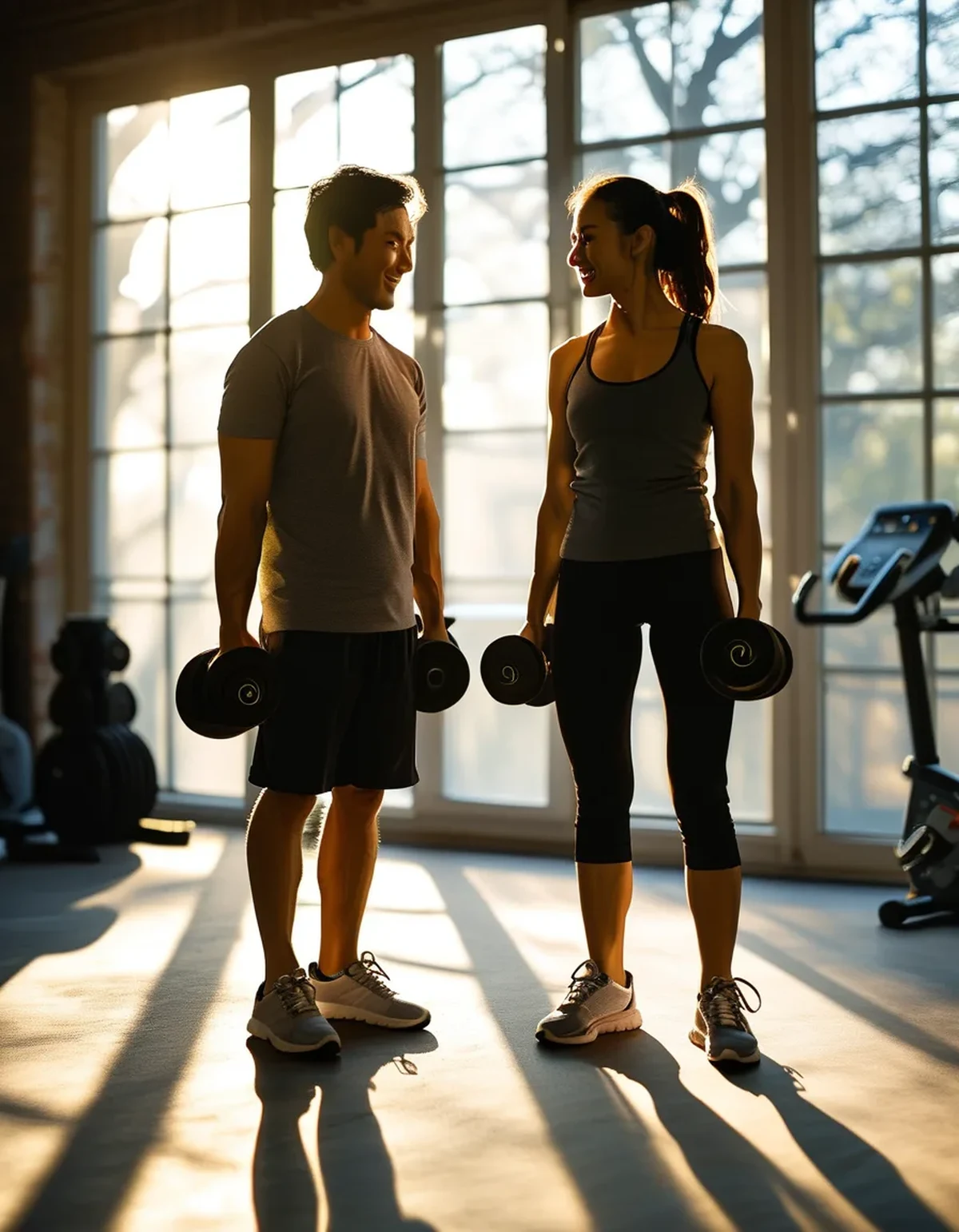
What does work, in short: shared time, individual programmes. You go together, you warm up together, you finish together, and in between you each do what suits your level. The togetherness is the schedule, not the sets.
The structure that actually holds
Two to three shared sessions weekly, no more. Beyond that it becomes an obligation that competes with everything else in a busy period.
Session structure that accommodates two levels:
- Warm up together - 8 to 10 minutes, same movements, it is genuinely shared time
- Same exercises, different loads and reps. Both do goblet squats; one uses 8kg for 12, the other 20kg for 8. Same movement, same rest periods, entirely different training stimulus.
- Alternate sets on shared equipment, which builds in natural rest and conversation
- Finish together - a short conditioning piece or a stretch
A workable weekly shape with 12 weeks to go:
- Monday: shared strength session, full body
- Wednesday: individual - each person does whatever they want alone
- Friday: shared strength session, full body
- Saturday or Sunday: shared activity that is not a workout - a long walk, a hike, a swim, cycling
- Anything else: individual
Why the individual sessions matter as much as the shared ones: keeping something that is entirely yours prevents training from becoming another joint project to negotiate. The couples who sustain this have separate activities as well as shared ones, and the separate ones are often what they protect most.
Progression, handled separately:
- Each person adds weight on their own schedule
- Do not compare loads. It is the single most common source of friction, and it is meaningless across two different bodies and histories.
- Track your own numbers privately if tracking motivates you
Timeline realism for 12 weeks: meaningful strength gains, better conditioning, improved sleep, and a habit that might survive the wedding. Dramatic body composition change is not usually what twelve weeks produces, and setting that expectation is where couples end up in a shared calorie deficit and a shorter temper.

Handling the difficult conversations before they happen
The goals conversation, up front. Ten minutes, before you start:
- What does each of you actually want? Feeling stronger, sleeping better, managing stress, having energy on the day. These are all different goals and they lead to different programmes.
- Are they compatible? One person wanting to lose 10kg and the other wanting to gain muscle need different eating approaches in the same kitchen, and that is worth knowing before it becomes an argument about dinner.
- What is off the table? Comments about each other’s bodies, food, or progress. Agree this explicitly. It is the single most useful thing on this list.
The comment problem, which deserves its own paragraph. Well-intentioned encouragement about a partner’s appearance or eating is one of the most reliable ways to damage both the training and the relationship in this period. Even positive comments about weight loss set up an implicit standard, and the wedding context makes everything about appearance louder than usual. Comment on effort, consistency, and how sessions went. Not on bodies.
When one person is much fitter:
- The fitter partner does not set the pace. They can train harder within the same session - heavier weights, more reps, shorter rest.
- On shared cardio, the fitter partner goes at the other’s pace and accepts it as an easy session. Alternatively, run intervals - they go ahead and come back.
- Coaching your partner is usually a bad idea. Even qualified people find coaching a spouse difficult. Get a few sessions with a trainer for the less experienced person instead - the information lands differently from someone who is not your partner.
When one person loses interest: it happens, and it is not a betrayal. The habit should survive one person dropping out. Keeping the shared slot as a walk, or accepting that it becomes individual training, is better than the whole thing collapsing.
When wedding stress peaks - usually the final three weeks: reduce rather than abandon. Two short sessions is a maintenance dose and keeps the habit alive through the busiest stretch. Something is dramatically better than nothing here.
What Nobody Tells You About Training Together Before a Wedding
It is often better for the relationship than for the fitness. Shared time that is not wedding admin, with endorphins and no phones, is genuinely valuable in a period when most conversations are about seating plans and suppliers. Several couples report that the training slot became the only reliably enjoyable hour of their week, and that is a legitimate reason to do it even if the training itself is mediocre.
The final two weeks should be a taper, not a push. People instinctively train hardest in the final fortnight, which produces fatigue, soreness, and occasionally injury at the worst possible moment. Reduce volume by roughly half in the last two weeks, keep the intensity, and arrive fresh rather than depleted.
Do not try anything new in the last month. New class, new sport, first-ever spin session, a fitness challenge with friends. Novel activity produces novel soreness, and delayed onset muscle soreness peaks at 24 to 72 hours - which is a poor thing to discover on a wedding morning.
Shoes, dancing, and standing are the actual physical demands of the day. Twelve hours upright, largely in shoes you do not normally wear, with several hours of dancing. Calf and foot conditioning, plus wearing the shoes in beforehand, will matter more on the day than anything else in the programme.
Sleep is doing more work than the training is. In a high-stress planning period, the sessions that get sacrificed for late-night admin cost more than they give. If it is a choice between a workout and an hour of sleep in the final month, take the sleep.
The habit is the actual prize. Couples who train together through a wedding build a routine that frequently outlasts it - and the first year of marriage, with its own upheavals, is a good time to already have one. The wedding is a deadline that happens to be useful, not the point.
Both of you eating differently in the same house is harder than it sounds. If one is in a deficit and one is not, plan meals that scale rather than cooking twice - the same dish with different portions and additions. Two separate eating projects in one kitchen is a recipe for both being abandoned.
FAQ: Couples Wedding Training Questions, Answered
How far out should we start?
Twelve to sixteen weeks is realistic for meaningful change without desperation. Eight weeks still produces real strength and conditioning gains. Starting four weeks out is better used for stress management and sleep than for transformation.
Should we use the same programme?
Same schedule and same exercises, different loads and rep ranges. Identical programmes across different fitness levels leave one person under-trained and the other overwhelmed.
What if one of us is much fitter?
Train the same session at different intensities. On cardio, the fitter person treats it as an easy day or runs intervals. Avoid making the less experienced person the project - a few sessions with an actual trainer works far better than partner coaching.
Is it a bad idea to diet together before a wedding?
Shared eating changes can work if the goals are compatible and the framing is health rather than appearance. Two aggressive deficits in one household, with a high-stress deadline, tends to end in irritability and abandonment. Speak to a dietitian if either of you is making significant changes.
What should we do in the last two weeks?
Halve the volume, keep intensity moderate, walk, sleep, and wear in your shoes. Nothing new, nothing maximal, and no fitness challenges with the wedding party. This is general information, not medical advice.
TL;DR:
- Share the schedule, not the workout - same session, individual loads and progressions
- Two to three shared sessions weekly maximum, and keep one activity each that is entirely your own
- Agree up front that comments about each other’s bodies, food, and progress are off the table
- Taper in the final two weeks, try nothing new in the last month, and wear the shoes in
- Sleep beats an extra session during the highest-stress weeks, every time
The couples who make this work treat it as protected time together that happens to involve weights. Set it up that way, keep the comparison out of it, and there is a reasonable chance you are still doing it a year after the wedding - which is a considerably better outcome than any twelve-week transformation.
Keep Reading
This article is for general informational and styling purposes only. Fit, sizing, and product availability may vary.