The Wedding-Day Neck Pain Nobody Warns Brides About
Quick Answer: A formal updo applies steady, low-level tension at the scalp for eight-plus hours — very different from a ponytail’s brief pull — and extensions or a heavy veil add real weight your neck carries all day. Prevent it with a scalp massage the night before, good hydration, and telling your stylist about any tension-headache history. Relieve it mid-day with 30 seconds of pressure at the base of your skull, without touching the hair.
Hour six. The photos are going well, everyone looks wonderful, and there’s a band of tightness across the back of your skull that arrived so gradually you can’t say when it started.
Nobody mentions this one. It’s not on any checklist, it’s entirely preventable, and by the time you notice it, the fixes that would have worked all needed doing yesterday.

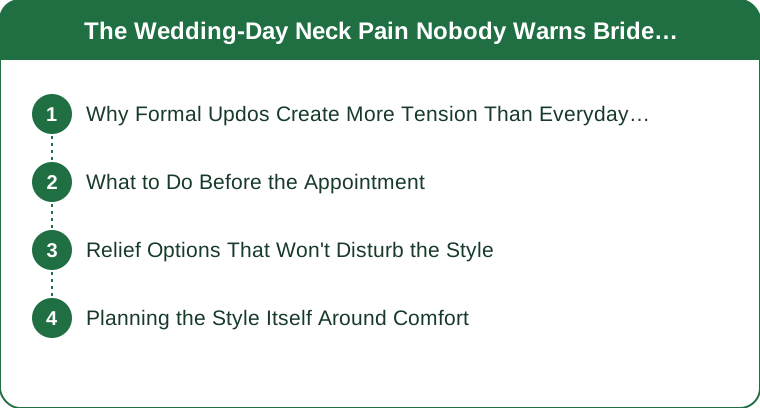
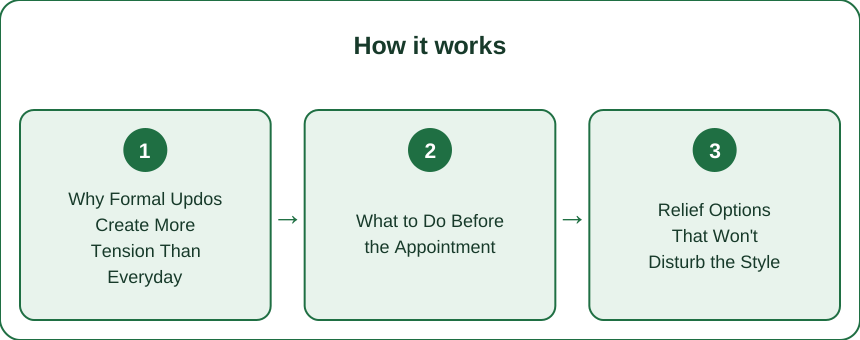
Why Do Formal Updos Cause More Tension Than Everyday Styles?
It’s sustained tension, not a momentary pull. A tight ponytail pulls hard for a moment. A formal updo applies continuous low-level tension at dozens of pin points for eight hours or more. Low-level and continuous is exactly the recipe for a headache that builds so slowly you don’t notice it starting.
Extensions, pieces and veils add real weight. Volumising pieces, extensions, and a heavy veil attachment all add weight your scalp and neck muscles support all day. It’s not much at hour one. It’s very much something by hour six.
Camera posture compounds it. Photos ask for a tilted, angled head position, held, repeatedly, across hours. Those are the same muscles the hairstyle is already loading — so the day stacks two demands on one set of tissue.
What Should You Do Before the Appointment?
Scalp massage the night before. Five minutes with your fingertips, working in small circles across the whole scalp. It loosens surface tension and improves blood flow before the pulling starts, and it’s the easiest item on this list.
Tell your stylist about tension headaches. Directly, before they start. If you get them, a good stylist can place pins and sections with slightly looser tension in the sensitive areas — usually the temples and the base of the skull — without compromising how the style holds. They can only do that if they know.
Hydrate in the days beforehand. Dehydration independently makes muscles more prone to tension and cramping. Wedding week is when hydration usually slips, which is precisely when it matters. This won’t feel like it’s doing anything, which is the point.

How Do You Get Relief Without Disturbing the Style?
Targeted pressure at the base of the skull. Press gently with your fingertips where your skull meets your neck, holding about 30 seconds, then release. Repeat a couple of times. It works on the muscles rather than the hair, so nothing gets touched or loosened.
Strategic repositioning breaks. Between photo sessions, deliberately look straight ahead — neutral, level, unposed — for two or three minutes. Sounds trivial. Gives the loaded muscles a genuine rest, and it’s the intervention most brides never think to take.
Discreet topical relief. A small dab of menthol or a cooling roll-on at the base of the neck during a bathroom break. Quick, invisible, and nowhere near the hair. Worth adding to the emergency kit alongside the blister pads.
How Do You Plan the Style Itself Around Comfort?
Discuss a lighter alternative at the trial. Ask your stylist to show you a slightly looser or lower version alongside the one you’re considering, specifically so you can compare how much tension each creates. You may find you prefer the looser one anyway — and if not, at least you chose the tighter one knowingly.
Treat the trial as a genuine tension test. This is the big one, and almost nobody does it. Most brides judge a trial in the mirror ten minutes after it’s finished. Keep it in for several hours instead — go about your day, do something normal, and notice how your head feels at hour five. That’s the only way to know how the wedding version will actually feel.
Ask about veil weight distribution. A heavy veil anchored at a single point concentrates all its weight there. Ask your stylist to distribute the anchoring across several points instead. Same look, considerably less load on any one spot.
5 Mistakes Brides Make With Wedding Hair Comfort
- Judging the trial in the first ten minutes — the mirror check that tells you nothing about hour six.
- Not mentioning a headache history — a fixable problem the stylist never hears about.
- Adding the veil only on the day — its weight is a variable you should have tested.
- Never taking a neutral-head break — the free intervention, skipped all day.
- Waiting until it genuinely hurts — 30 seconds of pressure at hour three works far better than painkillers at hour seven.
Frequently Asked Questions
Can a tight updo actually cause a headache?
Yes — it’s common enough to have a name (sometimes called a ponytail headache). Sustained traction on the scalp irritates the nerves and muscles there, and it typically builds over hours rather than appearing suddenly, which is why brides so often notice it mid-reception.
How long should a hair trial last?
Keep the trial style in for several hours at minimum. Anything less tests only how it looks, not how it feels — and the feel is precisely what you’re trying to find out.
What if the tension starts during the ceremony?
Use the pressure-point release at the base of the skull, take neutral-head breaks between photos, and ask your stylist — most attend or are reachable — to loosen a pin or two if it’s severe. A skilled stylist can usually ease tension without the style losing its shape.
Does anything else help on the day?
Staying hydrated and having eaten properly both make a real difference — tension headaches worsen considerably on an empty stomach and low fluids. Comfortable clothing during the long getting-ready hours helps more than people expect too: shoulders that stay relaxed while you sit still for hours are shoulders that aren’t compounding the neck load.
When to Get Professional Input
If you get frequent tension headaches or migraines, speak to your doctor before the wedding rather than planning to manage on the day — knowing what works for you and having it packed is worth far more than improvising at hour seven. Severe pain, visual changes, or a headache unlike your usual pattern warrant medical attention on the day regardless of the schedule. This article is general information, not medical advice.
TL;DR:
- Formal updos apply sustained low-level scalp tension for hours — a different problem from a ponytail’s brief pull.
- Extensions, volumising pieces and heavy veils add weight your neck carries all day, compounded by camera posture.
- Before: scalp massage the night before, hydrate through the week, and tell your stylist about any headache history.
- On the day: 30 seconds of pressure at the base of the skull, neutral-head breaks between photos, a discreet cooling roll-on.
- Treat the hair trial as a comfort test — wear it several hours, not ten minutes.
- Ask for heavy veils to be anchored across several points rather than one.
Keep Reading
This article is for general informational and styling purposes only. Fit, sizing, and product availability may vary.