The Aisle Walk: Posture and Presence Training for Your Longest Thirty Meters

Quick Answer: Train the aisle walk like any other skill: one minute of wall-stands daily, band pull-aparts three times a week for the upper back, and one song’s worth of tall walking. Break in the shoes for four weeks, rehearse in a long skirt, and take one slow breath at the door — nerves make everyone walk about 30% faster than they think they are.
Thirty meters. Every camera in the room. Roughly 120 people who all stood up at once, and a photographer walking backwards in front of you.
And nobody rehearses it.
Brides train for the dress, the diet, the dance — and then walk the single most photographed thirty meters of their life completely cold. The good news is that posture and pace are trainable in about eight weeks, using drills that take under ten minutes a day.
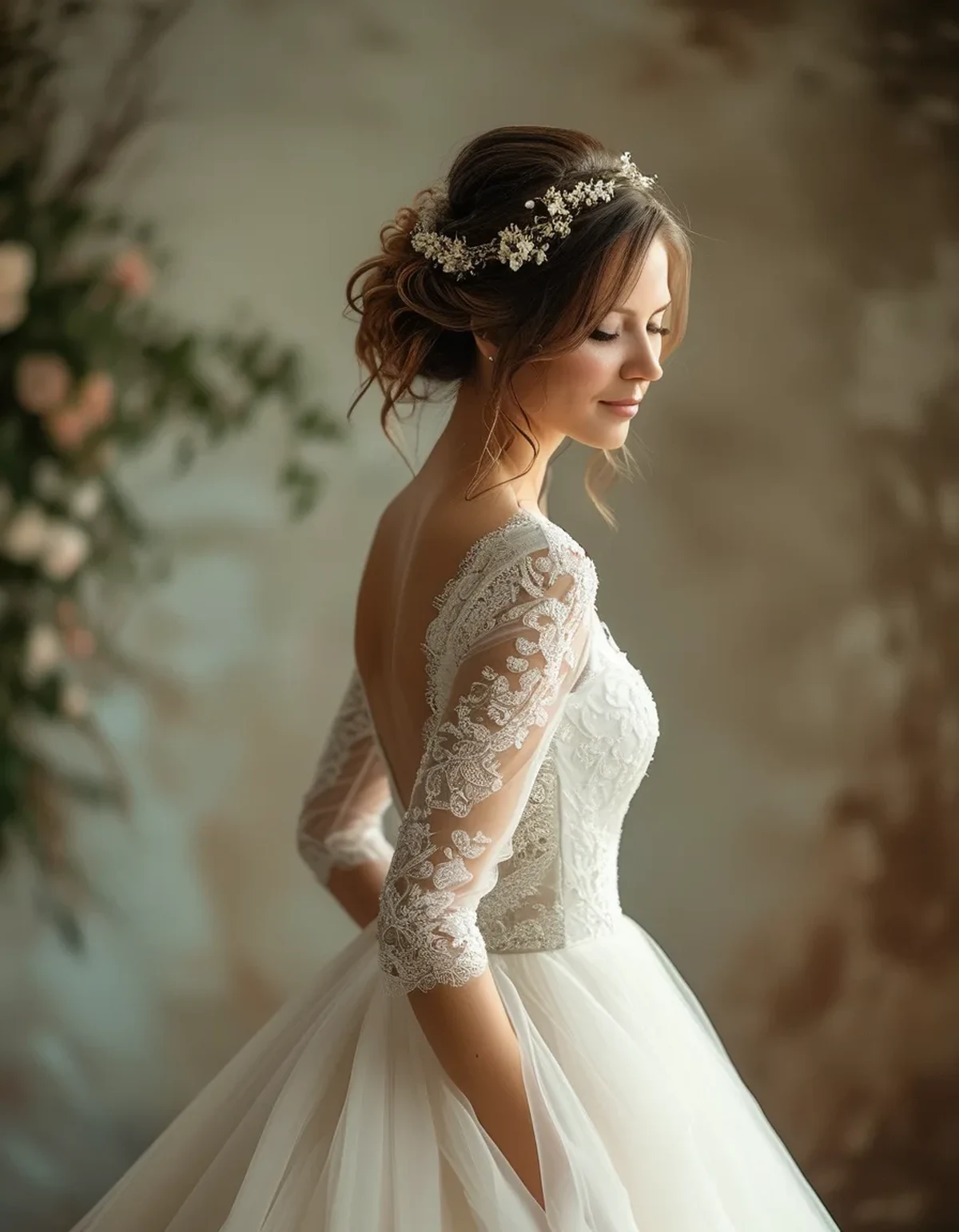
How do I improve my posture before my wedding?
Posture is muscle, not willpower. You can’t decide to stand taller on the day — you can only build the strength that makes tall your default.
Four drills, eight weeks out:
- Wall stand, 1 minute daily. Heels, hips, shoulder blades, and back of head against a wall. Hold. This teaches your body its actual tallest line, which is usually about an inch above where you’ve been living.
- Band pull-aparts, 3 sets of 15, three times a week. Arms straight, band at chest height, pull to the sides until the band touches your sternum. This is the desk-shoulder antidote and the single highest-value exercise here.
- Rows, 3 sets of 10, twice a week. Band, dumbbell, or cable — doesn’t matter. The upper back is what holds the line once the wall isn’t there.
- Tall walking, one song a day. Crown lifting, chin level, eyes forward. Posture standing still is easy. Posture in motion is the skill you’re actually being photographed doing.
Eight weeks of that is enough to change how you carry yourself. Four weeks still helps. Two weeks is better than nothing and mostly builds awareness rather than strength.
What does walking in a wedding dress actually feel like?
Different from anything you’ve practiced in. Two variables change at once: the shoes and the hem.
The shoes. Wedding heels get worn once a week for at least a month before the day — around the house, on hard floors, up and down stairs. The aisle is a terrible place for a first date with footwear. Add gel pads at the ball of the foot early so you break in the shoe with the pad in place.
The hem. A floor-length skirt changes your gait. You need a slight forward kick so the fabric moves ahead of your foot instead of under it. Practice in the actual crinoline if you have one, or a long skirt of similar weight. Ten minutes of this and it stops feeling alarming.
Also plan for terrain. Grass, cobblestones, and stairs all exist at venues, and none of them care about a 4-inch stiletto. A block-heel backup in your bag costs nothing and has saved a lot of entrances. If you’re being escorted, rehearse the arm hold too — matching someone else’s stride is its own small skill.
Your dress fitting is a free rehearsal. Ask to walk the length of the room in the real dress while you’re there.
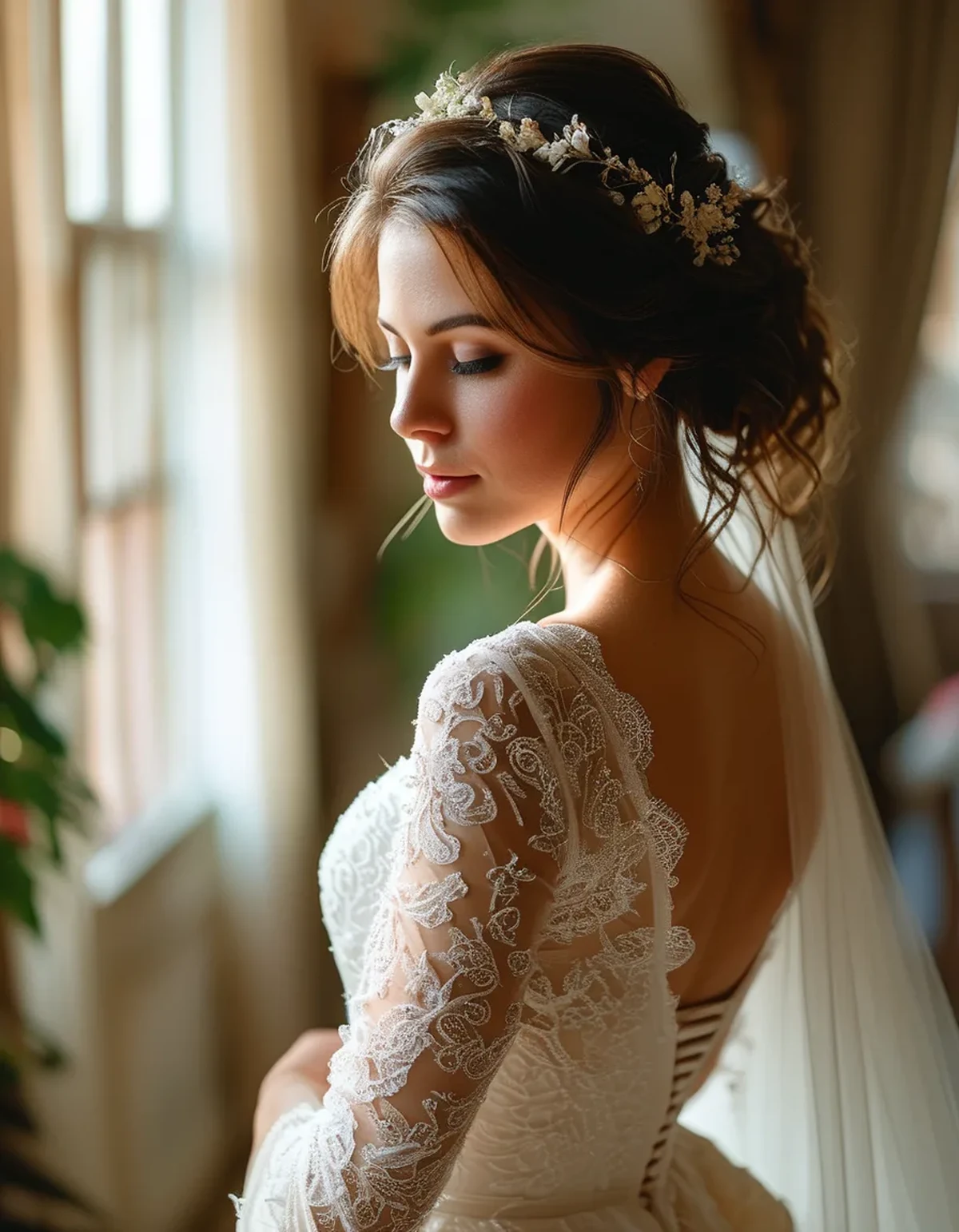
Why does everyone walk too fast down the aisle?
Because adrenaline compresses your sense of time. What feels stately from the inside is a brisk trot on the video — it’s the single most common note photographers give, and it’s nearly universal.
Three fixes that work:
- Practice to your actual processional song. Not a metronome, not a vague idea of slow. The real track, at home, walking the length of a hallway. Your body learns the tempo.
- Pause at the door. One full breath before the first step. That single beat resets your internal clock and gives the photographer a shot they’ll thank you for.
- Pick three landmarks. Decide in advance — third row, the aisle runner seam, the step — that you’ll slow at each one. Discrete checkpoints work far better than “remember to go slow,” which your nervous system will simply not hear.
And have a plan for your eyes. A soft gaze that moves between faces and then back to the end of the aisle is the fix for the deer-in-headlights photo. The problem is never the face; it’s not having decided where to look.
What Nobody Tells You
Your hands are the tell. The bouquet is an anti-fidget device — held at hip height, elbows soft, arms not locked. A death-grip bouquet held at the chest reads as tension in every single photo, and it also hides the dress you spent months choosing.
One cue word beats ten instructions. Pick a private word — “crown,” “float,” “tall” — and use it during your wall stands and walking practice. After a few weeks it triggers the entire posture stack at once. On the day, you get one word instead of a checklist.
The breath fits in the doorway. In for four, out for eight, twice. Long exhales genuinely slow the heart rate, and the whole thing takes about 24 seconds — which is roughly how long you’ll be standing at the door anyway.
The reframe that fixes everything else: this isn’t a performance being judged. It’s thirty meters of walking toward the best part of your day, and the people standing up are not critics. They’re the people who already love you, and they stood up because they’re happy.
FAQ
How far in advance should I start posture training for a wedding?
Eight weeks gives you real strength change in the upper back, which is what holds posture without conscious effort. Four weeks still improves things noticeably. Under two weeks, focus on the walking practice and the breath rather than trying to build strength you won’t have time to gain.
How slowly should I walk down the aisle?
Roughly half your normal walking pace — most processionals are designed for about 30 seconds to cover the aisle, not 12. The reliable way to hit it is practicing at home to your actual song rather than trying to judge speed in the moment, since adrenaline makes everything feel slower than it is.
What should I do with my hands while walking down the aisle?
Hold the bouquet at hip height with soft elbows, arms slightly away from your body. Chest-height grips look tense and block the dress. If you’re not carrying flowers, a light hold on your escort’s arm or loosely clasped hands at hip level does the same job.
TL;DR:
- Posture is strength, not intention — wall stands daily, band pull-aparts and rows three times a week, one song of tall walking.
- Break in the shoes weekly for a month; rehearse the gait in a long skirt and use your dress fitting as practice.
- Nerves speed everyone up: practice to the real song, pause for one breath at the door, pick three slow-down landmarks.
- Bouquet at hip height, elbows soft — hands are what read as nerves in photos.
- One cue word, one long exhale, and a reminder that everyone standing up is on your side.
Keep Reading
This article is for general informational and styling purposes only. Fit, sizing, and product availability may vary.