Training for an Autumn Wedding: What Changes in the Final Weeks

Quick Answer: The final six weeks before an autumn wedding coincide with darker mornings, a busier social calendar, and peak planning stress - which is why training that worked all summer falls apart in September. Shift sessions to lunchtime or evening, drop to a maintenance volume rather than pushing, and prioritise sleep and stress management over adding training load.
The last stretch before a wedding is when most people intend to train hardest and are least able to. For autumn weddings that collision is worse, because the seasonal factors that reduce training adherence arrive at exactly the same time.

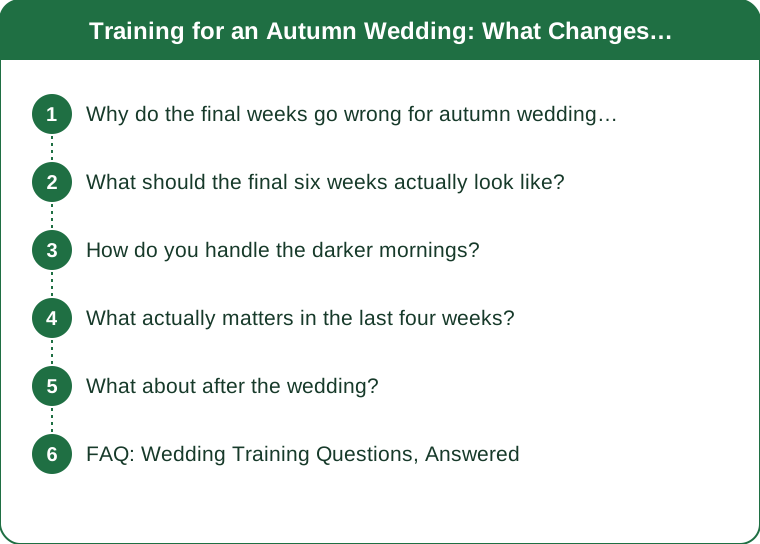
Why do the final weeks go wrong for autumn weddings specifically?
Four things arrive at once, and each one alone would be manageable.
Mornings get dark. If your training has been a 6.30am run all summer, sunrise moving later removes the thing that made it possible. This is the single most common reason autumn training routines collapse, and it is entirely predictable.
Planning intensity peaks in the final six weeks. Final numbers, seating, suppliers, and the accumulated decisions that were deferred all land in the same period. That consumes time and, more significantly, decision-making capacity.
The social calendar fills. Hen or stag events, family gatherings, and pre-wedding meals cluster in the run-up. These are enjoyable and they displace training sessions and disrupt sleep.
Stress affects recovery. Elevated stress affects sleep quality and recovery capacity, which means the same training load feels harder and produces less adaptation than it did in July.
The mistake this produces: noticing that training has slipped and responding by adding more. That increases the load at precisely the point when recovery capacity is lowest, which reliably produces fatigue, illness, or an injury in the last month.
The correct response is the opposite: reduce planned volume to something genuinely achievable, and protect consistency rather than intensity.
What should the final six weeks actually look like?
Weeks 6-4 out: maintain, do not build.
Three sessions weekly, at the intensity you have been working at. No new programme, no added volume, no starting anything you have not done before.
Why not build: meaningful strength or body composition change in six weeks requires consistency you are unlikely to have, and the attempt adds fatigue at the wrong moment. What you have built over months is what you arrive with.
Weeks 3-2 out: reduce to two sessions.
Keep the movements, reduce the volume by roughly a third. This is a deliberate taper and it is what athletes do before competition for good reason - accumulated fatigue lifts and you feel and look better rather than worse.
Final week: movement, not training.
Walking, gentle mobility, and one very light session if you want it. No new exercises, no heavy loading, nothing that could produce soreness or injury.
The single most important rule in the final week: do not try anything new. No new class, no new intensity, no first-ever session of anything. Every year people injure themselves in a novel workout days before their wedding, and it is completely avoidable.
What to keep throughout: daily walking, which supports mood and stress far more than it appears to on paper, and is the one thing that survives a busy schedule.
How do you handle the darker mornings?
This is the practical problem that determines whether anything else in the plan happens.
Accept the routine has to move rather than trying to preserve it. A 6.30am session that worked in June requires waking in darkness in October, and willpower does not reliably compensate for that.
The options, in rough order of how well they hold up:
Lunchtime. The most reliable autumn slot. It is light, it is naturally protected by being between commitments, and it uses the part of the day when energy is often highest. If you can arrange it, this is the answer.
Immediately after work, before going home. Effective because going home first is where the plan usually dies. Requires bringing kit with you.
Home-based short sessions. Twenty-five minutes of bodyweight or dumbbell work at home is worth considerably more than a gym session that does not happen. Lower the barrier as far as it needs to go.
Weekend front-loading. Two of the three weekly sessions at the weekend, one during the week. Less ideal for distribution and much more likely to actually occur.
What to change about the sessions themselves: shorter and denser. Three compound movements in a circuit for 25 minutes beats an hour-long programme you skip. In this period, the session that happens is the good session.
One thing worth doing now: get outside in daylight regardless of training. Morning light exposure supports mood and sleep, and both matter more in the final weeks than any individual workout.

What actually matters in the last four weeks?
Not training. Several other things have a much larger effect on how you feel and look on the day.
Sleep. It affects skin, under-eye appearance, mood, stress tolerance, and how you handle the day itself. Seven to nine hours consistently in the final month does more visible good than any training programme. It is also the first thing sacrificed to planning, which is why it needs protecting deliberately.
Stress management. Elevated cortisol affects sleep, skin, and digestion. Whatever works for you - walking, breathing practice, time with people who are not discussing the wedding - is worth protecting as seriously as a training session.
Eating consistently. Not restricting. The final weeks are when people attempt aggressive dietary changes, and the reliable results are low energy, poor sleep, irritability, and worse skin. Adequate protein, adequate total intake, and enough vegetables is the whole brief.
Hydration, which is unglamorous and genuinely affects how skin looks.
Alcohol. The run-up involves more social drinking than usual, and it affects sleep quality substantially. Reducing it in the final two weeks has a more visible effect than an extra weekly workout.
Nothing new on your skin. The final month is not the time to start a new active or have a first-time treatment. Reactions happen, and the timeline for recovery is not one you control.
The dress or outfit fitting timeline should account for the fact that maintaining rather than changing is the goal. Significant intentional body change in the final six weeks makes fittings unreliable, which is a practical argument for the maintenance approach as much as a physiological one.
What about after the wedding?
Worth thinking about now, because the post-wedding drop is real and predictable.
Training motivation frequently collapses afterwards because the goal that structured it has passed. This catches people by surprise and can undo a year of consistency in a month.
The fix is deciding on the next thing before the wedding, not after. A race entry, a strength target, a class you have wanted to try. It does not need to be ambitious - it needs to exist.
Why beforehand: in the two weeks after the wedding, nobody wants to plan a training goal. If it is already booked, you turn up. If it is not, three months pass.
Reduce deliberately rather than stopping. Two sessions a week for the first month afterwards is a reasonable, sustainable plan and considerably better than an intended four that becomes zero.
The honest note about wedding training generally: the framing that a wedding requires physical transformation is doing nobody much good, and the pressure attached to it is largely manufactured. Training in the run-up is genuinely worth doing for how it makes you feel, how you sleep, and how you handle the stress of the day. Those are good reasons and they hold up on the day itself.
What people report afterwards: almost nobody mentions how they looked. They mention how present they felt, and how much they enjoyed it. Sleep and stress management contribute more to that than any training block does.
This is general information, not medical advice. Anyone making significant changes to training or diet, particularly under a deadline, should speak to a professional if they have any health considerations.
FAQ: Wedding Training Questions, Answered
How far out should I start training?
Six months gives time for genuine change without pressure. Three is workable. Under six weeks is a maintenance and wellbeing period rather than a transformation window, and treating it as the latter causes problems.
Should I taper before the wedding?
Yes. Reducing volume in the final two weeks lets accumulated fatigue lift, and most people look and feel better for it. This is standard practice before competition for exactly that reason.
Will I lose progress by reducing volume in the last month?
No. Strength and fitness are maintained at considerably lower volumes than are needed to build them. Two sessions weekly maintains what three or four built.
Is it worth doing something the morning of?
A short walk or gentle mobility helps with nerves and stiffness. A workout does not, and adds a variable you do not need.
What if I’ve done no training at all and the wedding is in six weeks?
Walk daily, sleep properly, eat adequately. Starting a demanding programme six weeks out produces soreness and fatigue, not visible change, and it is the version most likely to end in injury.
TL;DR:
- Autumn weddings collide with darker mornings, peak planning stress, and a full social calendar all at once
- Maintain rather than build in the final six weeks - three sessions, then two, then movement only
- Move training to lunchtime; the morning slot that worked in June will not survive October
- Sleep, stress management and consistent eating affect the day more than any training block
- Never try anything new in the final week, in training or on your skin
Decide on the next training goal before the wedding. The post-wedding motivation drop is predictable and a booked plan is what survives it.
Keep Reading
This article is for general informational and styling purposes only. Fit, sizing, and product availability may vary.